


Electrical conductivity and oxygen nonstoichiometry of acceptor (Ga)-doped titania
Literature Information
Publication Date
2008-10-09
DOI
10.1039/B811319J
Impact Factor
3.676
Authors
Doh-Kwon Lee, Han-Ill Yoo
View Original
Abstract
Electrical conductivity and oxygen nonstoichiometry (δ) have been measured, respectively, by a dc 4-probe technique and coulometric titrometry on the system of polycrystalline Ti0.99Ga0.01O1.995−δ against oxygen activity in the range of –20 < log aO2≤ 0 at different temperatures in the range of 1073 ≤T/K ≤ 1373. It is found that isothermal conductivity varies as with m≈–1/4, –1/5, –1/4, +1/4, in order of increasing aO2, finally exhibiting an n-type (m = −1/4) to p-type (m = +1/4) transition crossing the stoichiometric composition (δ = 0), in perfect agreement with the oxygen nonstoichiometry variation. The electrical conductivity and oxygen nonstoichiometry isotherms are combined to evaluate the ionic partial conductivity and transference number, the intrinsic electronic excitation equilibrium constant, and eventually both mobilities of electrons and holes without employing any assumption at all. The partial molar enthalpy and entropy of the component oxygen are also evaluated as functions of nonstoichiometry.
Recommended Journals

Heterocyclic Communications

Bio-Medical Materials and Engineering

Current Medicinal Chemistry

Diamond and Related Materials

Construction and Building Materials

Cement and Concrete Composites

Computational Materials Science

Advanced Composite Materials

Main Group Metal Chemistry

Journal of Physical Organic Chemistry
Related Literature
Exchange equilibria of carboxylate-terminated ligands at PbS nanocrystal surfaces
Melody L. Kessler, Hannah E. Starr, Robin R. Knauf, Kelley J. Rountree, Jillian L. Dempsey
2018-09-07
Paper
DOI: 10.1039/C8CP04275F
Modeling of aromatics formation in fuel-rich methane oxy-combustion with an automatically generated pressure-dependent mechanism
Te-Chun Chu, Zachary J. Buras, Patrick Oßwald, Mengjie Liu, Mark Jacob Goldman, William H. Green
2018-12-07
Paper
DOI: 10.1039/C8CP06097E
Correction: Two-dimensional nitrides as highly efficient potential candidates for CO2 capture and activation
Raul Morales-Salvador, Ángel Morales-García, Francesc Viñes, Francesc Illas
2018-09-14
Correction
DOI: 10.1039/C8CP91852J
The oxygen reduction reaction on [NiFe] hydrogenases
Seth Olsen
2018-08-24
Paper
DOI: 10.1039/C8CP04160A
Unravelling the solvent polarity effect on the excited state intramolecular proton transfer mechanism of the 1- and 2-salicylideneanthrylamine. A TD-DFT case study
Wilver A. Muriel, Rodrigo Morales-Cueto, William Rodríguez-Córdoba
2018-12-10
Paper
DOI: 10.1039/C8CP06298F
Identification of the maze in the conformational landscape of fenchol
E. M. Neeman, T. R. Huet
2018-09-12
Paper
DOI: 10.1039/C8CP04011G
Nucleation of pseudo hard-spheres and dumbbells at moderate metastability: appearance of A15 Frank–Kasper phase at intermediate elongations
Itziar Zubieta, Pablo Llombart, Carlos Vega, Eva G. Noya
2018-10-12
Paper
DOI: 10.1039/C8CP04964E
Molecular dynamics study on the role of solvation water in the adsorption of hyperactive AFP to the ice surface
2018-09-27
Paper
DOI: 10.1039/C8CP05027A
Statistical thermodynamics for the unexpectedly large difference between disaccharide stereoisomers in terms of solubility in water
Tomohiko Hayashi, Masahiro Kinoshita
2018-08-30
Paper
DOI: 10.1039/C8CP04377A
You might also like
Compound Q&A
How is 3-(2-Bromoimidazo[2,1-b]thiazol-6-yl)propanoic acid hydrochloride (CAS: 1187830-80-3) typically synthesized?
3-(2-Bromoimidazo[2,1-b]thiazol-6-yl)propanoic acid hydrochloride is typically s...
1187830-80-33-(2-Bromoimidazo[2,...
Compound Q&A
How is 2-Isopropyl-1,3-dioxane-5-carboxylic acid (CAS: 116193-72-7) typically synthesized?
2-Isopropyl-1,3-dioxane-5-carboxylic acid is typically synthesized by the carbox...
116193-72-72-Isopropyl-1,3-diox...
Compound Q&A
What is Alisporivir (CAS: 254435-95-5)?
Alisporivir (CAS: 254435-95-5) is an antiviral medication used in the treatment ...
254435-95-5Alisporivir
Compound Q&A
What are the physical and chemical properties of [1,2,4]triazolo[3,4-a]phthalazine (CAS: 234-80-0)?
[1,2,4]triazolo[3,4-a]phthalazine (CAS: 234-80-0) is a crystalline compound with...
234-80-0[1,2,4]triazolo[3,4-...
Compound Q&A
What regulatory guidelines apply to (2S)-5-Hydroxy-2-(4-hydroxyphenyl)-4-oxo-3,4-dihydro-2H-chromen-7-yl methyl beta-D-glucopyranosiduronate (CAS: 1985597-72-5)?
Regulatory guidelines for (2S)-5-Hydroxy-2-(4-hydroxyphenyl)-4-oxo-3,4-dihydro-2...
1985597-72-5(2S)-5-Hydroxy-2-(4-...
Compound Q&A
Is 2,2-Difluorocyclohexanamine hydrochloride (CAS: 921602-83-7) safe?
2,2-Difluorocyclohexanamine hydrochloride is generally safe when handled under p...
921602-83-72,2-Difluorocyclohex...
Compound Q&A
What are the main uses of 3-Nitro-2-phenylthiophene (CAS: 18150-94-2)?
3-Nitro-2-phenylthiophene is primarily used in the synthesis of other organic co...
18150-94-23-Nitro-2-phenylthio...
Compound Q&A
What is 1-(Trifluoroacetyl)-4-piperidinecarbonitrile (CAS: 77940-79-5)?
1-(Trifluoroacetyl)-4-piperidinecarbonitrile (CAS: 77940-79-5) is a colorless to...
77940-79-51-(Trifluoroacetyl)-...
Compound Q&A
What is the market or research trend for 1,3,6,8-Tetranitro-9H-carbazole (CAS: 4543-33-3)?
Research and market trends for 1,3,6,8-Tetranitro-9H-carbazole (CAS: 4543-33-3) ...
4543-33-31,3,6,8-Tetranitro-9...
Compound Q&A
How should waste containing Dibenzo[b,d]thiophen-1-ylboronic acid (CAS: 1245943-60-5) be handled?
Waste containing Dibenzo[b,d]thiophen-1-ylboronic acid (CAS: 1245943-60-5) shoul...
1245943-60-5Dibenzo[b,d]thiophen...
Source Journal
Physical Chemistry Chemical Physics

CiteScore:
5.5
Self-citation Rate:
10.3%
Articles per Year:
3036
Physical Chemistry Chemical Physics (PCCP) is an international journal co-owned by 19 physical chemistry and physics societies from around the world. This journal publishes original, cutting-edge research in physical chemistry, chemical physics and biophysical chemistry. To be suitable for publication in PCCP, articles must include significant innovation and/or insight into physical chemistry; this is the most important criterion that reviewers and Editors will judge against when evaluating submissions. The journal has a broad scope and welcomes contributions spanning experiment, theory, computation and data science. Topical coverage includes spectroscopy, dynamics, kinetics, statistical mechanics, thermodynamics, electrochemistry, catalysis, surface science, quantum mechanics, quantum computing and machine learning. Interdisciplinary research areas such as polymers and soft matter, materials, nanoscience, energy, surfaces/interfaces, and biophysical chemistry are welcomed if they demonstrate significant innovation and/or insight into physical chemistry. Joined experimental/theoretical studies are particularly appreciated when complementary and based on up-to-date approaches.
Recommended Compounds
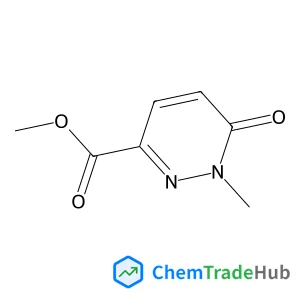
Methyl 1-methyl-6-oxo-1,6-dihydro-3-pyridazinecarboxylate
CAS Number:
74173-58-3
Molecular Formula:
C7H8N2O3
Recommended Suppliers






Disclaimer
This page provides academic journal information for reference and research purposes only. We are not affiliated with any journal publishers and do not handle publication submissions. For publication-related inquiries, please contact the respective journal publishers directly.
If you notice any inaccuracies in the information displayed, please contact us at support@chemtradehub.com. We will promptly review and address your concerns.