












Quantitative formation of a tetraporphyrin [2]catenaneviacopper and zinc coordination
Literature Information
Publication Date
2008-09-17
DOI
10.1039/B811013A
Impact Factor
6.222
Authors
Maryline Beyler, Valérie Heitz, Jean-Pierre Sauvage
View Original
Abstract
A [2]catenane is formed quantitatively by mixing substituted 1,10-phenanthroline-based chelates with copper(I) acting as central template, the ring-forming reaction being based on the coordination of pyridinic bidentate ligands onto the zinc atoms of the four porphyrins surrounding the core of the molecule.
Related Literature
Assessing doping strategies for monolayer MoS2 towards non-enzymatic detection of cortisol: a first-principles study
Gabriele Boschetto, Aida Todri-Sanial
2021-12-14
Paper
DOI: 10.1039/D1CP04116A
Integration of global ring currents using the Ampère–Maxwell law
Raphael J. F. Berger, Rinat T. Nasibullin, Dage Sundholm
2021-12-10
Communication
DOI: 10.1039/D1CP05061C
Implementation of the interacting quantum atom energy decomposition using the CASPT2 method
Jesús Jara-Cortés, Edith Leal-Sánchez, Evelio Francisco, José A. Pérez-Pimienta, Ángel Martín Pendás, Jesús Hernández-Trujillo
2021-11-19
Paper
DOI: 10.1039/D1CP02837E
Modified fullerenes as acceptors in bulk heterojunction organic solar cells – a theoretical study
S. Krishnan, K. Senthilkumar
2021-11-27
Paper
DOI: 10.1039/D1CP04402H
Terahertz pump–probe of liquid water at 12.3 THz
Fabio Novelli, Claudius Hoberg, Ellen M. Adams, J. Michael Klopf, Martina Havenith
2021-09-17
Paper
DOI: 10.1039/D1CP03207K
A DFT-design of single component bifunctional organocatalysts for the carbon dioxide/propylene oxide coupling reaction
Morad M. El-Hendawy, Ibtesam M. Desoky, Mahmoud M. A. Mohamed
2021-11-08
Paper
DOI: 10.1039/D1CP04091J
Structured light using carbon nanostructures driven by Kerr nonlinearities and a magnetic field
Eric Abraham Hurtado-Aviles, Juan José Vilatela, Hilario Martines-Arano, Jhovani Bornacelli, Felipe Cervantes-Sodi, Carlos Torres-Torres
2021-12-15
Paper
DOI: 10.1039/D1CP05195D
Fe–N–C electrocatalysts in the oxygen and nitrogen cycles in alkaline media: the role of iron carbide‡
Tomer Y. Burshtein, Denial Aias, Jin Wang, Matan Sananis, Eliyahu M. Farber, Oz M. Gazit, Ilya Grinberg, David Eisenberg
2021-10-01
Paper
DOI: 10.1039/D1CP03650E
Excited-state structure of copper phenanthroline-based photosensitizers
Alexander Guda, Johannes Windisch, Benjamin Probst, Roger Alberto, Maarten Nachtegaal, Grigory Smolentsev
2021-11-15
Paper
DOI: 10.1039/D1CP02823E
How does excess phenylalanine affect the packing density and fluidity of a lipid membrane?
Shakkira Erimban, Snehasis Daschakraborty
2021-11-16
Paper
DOI: 10.1039/D1CP05004D
You might also like
Compound Q&A
What are the main uses of 1-(3-Aminophenyl)-3-[(3R)-1-(3,3-dimethyl-2-oxobutyl)-2-oxo-5-(2-pyridinyl)-2,3-dihydro-1H-1,4-benzodiazepin-3-yl]urea (CAS: 155412-88-7)?
This compound is mainly used as an intermediate in the synthesis of antipsychoti...
155412-88-71-(3-Aminophenyl)-3-...
Compound Q&A
How should waste containing 1-(D-Ribofuranosyl)-1,4-dihydro-3-pyridinecarboxamide (CAS: 19132-12-8) be handled?
Waste containing 1-(D-Ribofuranosyl)-1,4-dihydro-3-pyridinecarboxamide (CAS: 191...
19132-12-81-(D-Ribofuranosyl)-...
Compound Q&A
What regulatory guidelines apply to 2-Methyl-2-propanyl 3-bromo-3-(hydroxymethyl)-1-azetidinecarboxylate (CAS: 2007919-81-3)?
2-Methyl-2-propanyl 3-bromo-3-(hydroxymethyl)-1-azetidinecarboxylate (CAS: 20079...
2007919-81-32-Methyl-2-propanyl ...
Compound Q&A
What is N-(4-Chloro-2-pyridinyl)acetamide (CAS: 245056-66-0)?
N-(4-Chloro-2-pyridinyl)acetamide (CAS: 245056-66-0) is a chemical compound with...
245056-66-0N-(4-Chloro-2-pyridi...
Compound Q&A
What is 5-Chloro-2-hydroxybenzoic acid (CAS: 321-14-2)?
5-Chloro-2-hydroxybenzoic acid, also known as 5-chlorosalicylic acid, is an arom...
321-14-25-Chloro-2-hydroxybe...
Compound Q&A
What precautions should be taken when handling 1,1-Dichloro-1-fluoroethane (CAS: 1717-00-6)?
When handling 1,1-Dichloro-1-fluoroethane (CAS: 1717-00-6), it is important to u...
1717-00-61,1-Dichloro-1-fluor...
Compound Q&A
What are the physical and chemical properties of Fmoc-(2S,3R)-3-phenylpyrrolidine-2-carboxylic acid (CAS: 281655-32-1)?
Fmoc-(2S,3R)-3-phenylpyrrolidine-2-carboxylic acid is a white crystalline solid ...
281655-32-1Fmoc-(2S,3R)-3-pheny...
Compound Q&A
What are the main uses of 4-Amino-5-bromo-2-pyridinecarboxylic acid (CAS: 1363381-01-4)?
4-Amino-5-bromo-2-pyridinecarboxylic acid is primarily used as a precursor in th...
1363381-01-44-Amino-5-bromo-2-py...
Compound Q&A
What precautions should be taken when handling (S)-tert-butyl 2-((2-(4-bromophenyl)-2-oxoethyl)carbamoyl)pyrrolidine-1-carboxylate (CAS: 1007881-98-2)?
Handling this compound should be done with personal protective equipment (PPE) i...
1007881-98-2(S)-tert-butyl 2-((2...
Compound Q&A
What precautions should be taken when handling 8-bromo-2,2-dimethyl-3,4-dihydro-2H-1,4-benzoxazin-3-one (CAS: 688363-73-7)?
When handling 8-bromo-2,2-dimethyl-3,4-dihydro-2H-1,4-benzoxazin-3-one, use prop...
688363-73-78-bromo-2,2-dimethyl...
Source Journal
Chemical Communications

CiteScore:
8.6
Self-citation Rate:
4.7%
Articles per Year:
2458
ChemComm publishes urgent research which is of outstanding significance and interest to experts in the field, while also appealing to the journal’s broad chemistry readership. Our communication format is ideally suited to short, urgent studies that are of such importance that they require accelerated publication. Our scope covers all topics in chemistry, and research at the interface of chemistry and other disciplines (such as materials science, nanoscience, physics, engineering and biology) where there is a significant novelty in the chemistry aspects. Major topic areas covered include: Analytical Chemistry Catalysis Chemical Biology and medicinal chemistry Computational Chemistry and Machine Learning Energy and sustainable chemistry Environmental Chemistry Green Chemistry Inorganic Chemistry Materials Chemistry Nanoscience Organic Chemistry Physical Chemistry Polymer Chemistry Supramolecular Chemistry
Recommended Compounds
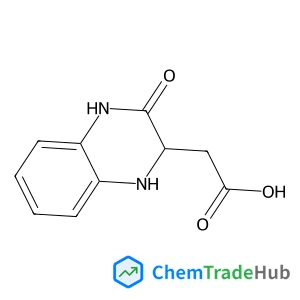
(3-Oxo-1,2,3,4-tetrahydro-2-quinoxalinyl)acetic acid
CAS Number:
136584-14-0
Molecular Formula:
C10H10N2O3
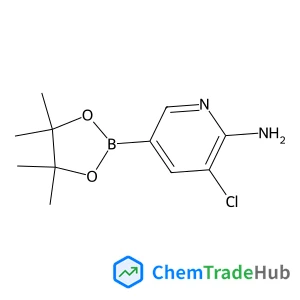
3-Chloro-5-(4,4,5,5-tetramethyl-1,3,2-dioxaborolan-2-yl)-2-pyridinamine
CAS Number:
1032758-99-8
Molecular Formula:
C11H16BClN2O2
Recommended Suppliers





Disclaimer
This page provides academic journal information for reference and research purposes only. We are not affiliated with any journal publishers and do not handle publication submissions. For publication-related inquiries, please contact the respective journal publishers directly.
If you notice any inaccuracies in the information displayed, please contact us at support@chemtradehub.com. We will promptly review and address your concerns.