












Terahertz pump–probe of liquid water at 12.3 THz
Literature Information
Publication Date
2021-09-17
DOI
10.1039/D1CP03207K
Impact Factor
3.676
Authors
Fabio Novelli, Claudius Hoberg, Ellen M. Adams, J. Michael Klopf, Martina Havenith
View Original
Abstract
The dynamical complexity of the hydrogen-bonded water network can be investigated with intense Terahertz (THz) spectroscopy, which can drive the liquid into the nonlinear response regime and probe anharmonicity effects. Here we report single-color and polarization-dependent pump–probe experiments at 12.3 THz on liquid water, exciting the librational mode. By comparing results obtained on a static sample and a free-flowing water jet, we are able to disentangle the distinct contributions by thermal, acoustic, and nonlinear optical effects. We show that the transient transmission by the static water layer on a time scale of hundreds of microseconds can be described by thermal (slow) and acoustic (temperature-dependent) effects. In addition, during pump probe overlap we observe an anisotropic nonlinear optical response. This nonlinear signal is more prominent in the liquid jet than in the static cell, where temperature and density perturbations are more pronounced. Our measurements confirm that the THz excitation resonates with the rotationally-damped motion of water molecules, resulting in enhanced transient anisotropy. This model can be used to explain the non-linear response of water in the frequency range between about 1 and 20 THz.
Related Literature
Role of cationic groups on structural and dynamical correlations in hydrated quaternary ammonium-functionalized poly(p-phenylene oxide)-based anion exchange membranes
Dengpan Dong, Xiaoyu Wei, Justin B. Hooper, Hongchao Pan, Dmitry Bedrov
2018-06-26
Paper
DOI: 10.1039/C8CP02211A
The RbSr 2Σ+ ground state investigated via spectroscopy of hot and ultracold molecules‡
Alessio Ciamei, Jacek Szczepkowski, Alex Bayerle, Vincent Barbé, Lukas Reichsöllner, Slava M. Tzanova, Chun-Chia Chen, Benjamin Pasquiou, Anna Grochola, Pawel Kowalczyk, Wlodzimierz Jastrzebski, Florian Schreck
2018-09-21
Paper
DOI: 10.1039/C8CP03919D
An in situ DRIFTS mechanistic study of CeO2-catalyzed acetylene semihydrogenation reaction
Tian Cao, Rui You, Xuanyu Zhang, Shilong Chen, Dan Li, Zhenhua Zhang, Weixin Huang
2018-03-08
Paper
DOI: 10.1039/C8CP00668G
Determination of the protonation preferences of bilin pigments in cryptophyte antenna complexes
Marina Corbella, Zi S. D. Toa, Gregory D. Scholes, F. Javier Luque, Carles Curutchet
2018-07-30
Paper
DOI: 10.1039/C8CP02541J
Nitric oxide oxidation of a Ta encapsulating Si cage nanocluster superatom (Ta@Si16) deposited on an organic substrate; a Si cage collapse indicator
Masahiro Shibuta, Toshiki Niikura, Toshiaki Kamoshida, Hironori Tsunoyama
2018-10-01
Paper
DOI: 10.1039/C8CP05580G
Photogalvanic effect induced fully spin polarized current and pure spin current in zigzag SiC nanoribbons
Jian Wang
2018-09-25
Paper
DOI: 10.1039/C8CP05046E
Long-distance perturbation on Schiff base–counterion interactions by His30 and the extracellular Na+-binding site in Krokinobacter rhodopsin 2
Arisu Shigeta, Shota Ito, Rina Kaneko, Sahoko Tomida
2018-03-05
Communication
DOI: 10.1039/C8CP00626A
Spin–orbit effects in optical spectra of gold–silver trimers
D. A. Götz, R. Schäfer
2018-03-07
Paper
DOI: 10.1039/C8CP00672E
Full elucidation of the transmembrane anion transport mechanism of squaramides using in silico investigations
Igor Marques, Pedro M. R. Costa, Margarida Q. Miranda, Nathalie Busschaert, Harriet J. Clarke, Cally J. E. Haynes, Isabelle L. Kirby, Ananda M. Rodilla, Ricardo Pérez-Tomás, Vítor Félix
2018-07-03
Paper
DOI: 10.1039/C8CP02576B
You might also like
Compound Q&A
What are the main uses of 1-(3-Aminophenyl)-3-[(3R)-1-(3,3-dimethyl-2-oxobutyl)-2-oxo-5-(2-pyridinyl)-2,3-dihydro-1H-1,4-benzodiazepin-3-yl]urea (CAS: 155412-88-7)?
This compound is mainly used as an intermediate in the synthesis of antipsychoti...
155412-88-71-(3-Aminophenyl)-3-...
Compound Q&A
How should waste containing 1-(D-Ribofuranosyl)-1,4-dihydro-3-pyridinecarboxamide (CAS: 19132-12-8) be handled?
Waste containing 1-(D-Ribofuranosyl)-1,4-dihydro-3-pyridinecarboxamide (CAS: 191...
19132-12-81-(D-Ribofuranosyl)-...
Compound Q&A
What regulatory guidelines apply to 2-Methyl-2-propanyl 3-bromo-3-(hydroxymethyl)-1-azetidinecarboxylate (CAS: 2007919-81-3)?
2-Methyl-2-propanyl 3-bromo-3-(hydroxymethyl)-1-azetidinecarboxylate (CAS: 20079...
2007919-81-32-Methyl-2-propanyl ...
Compound Q&A
What is N-(4-Chloro-2-pyridinyl)acetamide (CAS: 245056-66-0)?
N-(4-Chloro-2-pyridinyl)acetamide (CAS: 245056-66-0) is a chemical compound with...
245056-66-0N-(4-Chloro-2-pyridi...
Compound Q&A
What is 5-Chloro-2-hydroxybenzoic acid (CAS: 321-14-2)?
5-Chloro-2-hydroxybenzoic acid, also known as 5-chlorosalicylic acid, is an arom...
321-14-25-Chloro-2-hydroxybe...
Compound Q&A
What precautions should be taken when handling 1,1-Dichloro-1-fluoroethane (CAS: 1717-00-6)?
When handling 1,1-Dichloro-1-fluoroethane (CAS: 1717-00-6), it is important to u...
1717-00-61,1-Dichloro-1-fluor...
Compound Q&A
What are the physical and chemical properties of Fmoc-(2S,3R)-3-phenylpyrrolidine-2-carboxylic acid (CAS: 281655-32-1)?
Fmoc-(2S,3R)-3-phenylpyrrolidine-2-carboxylic acid is a white crystalline solid ...
281655-32-1Fmoc-(2S,3R)-3-pheny...
Compound Q&A
What are the main uses of 4-Amino-5-bromo-2-pyridinecarboxylic acid (CAS: 1363381-01-4)?
4-Amino-5-bromo-2-pyridinecarboxylic acid is primarily used as a precursor in th...
1363381-01-44-Amino-5-bromo-2-py...
Compound Q&A
What precautions should be taken when handling (S)-tert-butyl 2-((2-(4-bromophenyl)-2-oxoethyl)carbamoyl)pyrrolidine-1-carboxylate (CAS: 1007881-98-2)?
Handling this compound should be done with personal protective equipment (PPE) i...
1007881-98-2(S)-tert-butyl 2-((2...
Compound Q&A
What precautions should be taken when handling 8-bromo-2,2-dimethyl-3,4-dihydro-2H-1,4-benzoxazin-3-one (CAS: 688363-73-7)?
When handling 8-bromo-2,2-dimethyl-3,4-dihydro-2H-1,4-benzoxazin-3-one, use prop...
688363-73-78-bromo-2,2-dimethyl...
Source Journal
Physical Chemistry Chemical Physics

CiteScore:
5.5
Self-citation Rate:
10.3%
Articles per Year:
3036
Physical Chemistry Chemical Physics (PCCP) is an international journal co-owned by 19 physical chemistry and physics societies from around the world. This journal publishes original, cutting-edge research in physical chemistry, chemical physics and biophysical chemistry. To be suitable for publication in PCCP, articles must include significant innovation and/or insight into physical chemistry; this is the most important criterion that reviewers and Editors will judge against when evaluating submissions. The journal has a broad scope and welcomes contributions spanning experiment, theory, computation and data science. Topical coverage includes spectroscopy, dynamics, kinetics, statistical mechanics, thermodynamics, electrochemistry, catalysis, surface science, quantum mechanics, quantum computing and machine learning. Interdisciplinary research areas such as polymers and soft matter, materials, nanoscience, energy, surfaces/interfaces, and biophysical chemistry are welcomed if they demonstrate significant innovation and/or insight into physical chemistry. Joined experimental/theoretical studies are particularly appreciated when complementary and based on up-to-date approaches.
Recommended Compounds
![2,6-Di(thiophen-2-yl)dithieno[3,2-b:2',3'-d]thiophene structure](https://static.chemtradehub.com/structs/910/910788-24-8-5b70.webp "2,6-Di(thiophen-2-yl)dithieno[3,2-b:2',3'-d]thiophene structure")
2,6-Di(thiophen-2-yl)dithieno[3,2-b:2',3'-d]thiophene
CAS Number:
910788-24-8
Molecular Formula:
C16H8S5
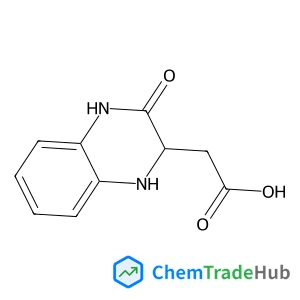
(3-Oxo-1,2,3,4-tetrahydro-2-quinoxalinyl)acetic acid
CAS Number:
136584-14-0
Molecular Formula:
C10H10N2O3
Recommended Suppliers





Disclaimer
This page provides academic journal information for reference and research purposes only. We are not affiliated with any journal publishers and do not handle publication submissions. For publication-related inquiries, please contact the respective journal publishers directly.
If you notice any inaccuracies in the information displayed, please contact us at support@chemtradehub.com. We will promptly review and address your concerns.