












Implementation of the interacting quantum atom energy decomposition using the CASPT2 method
Literature Information
Publication Date
2021-11-19
DOI
10.1039/D1CP02837E
Impact Factor
3.676
Authors
Jesús Jara-Cortés, Edith Leal-Sánchez, Evelio Francisco, José A. Pérez-Pimienta, Ángel Martín Pendás, Jesús Hernández-Trujillo
View Original
Abstract
We present an implementation of the interacting quantum atom (IQA) energy decomposition scheme using the complete active space second-order perturbation theory (CASPT2). This combination yields a real-space interpretation tool with a proper account of the static and dynamic correlation that is particularly relevant for the description of processes in electronic excited states. The IQA/CASPT2 approach allows determination of the energy redistribution that takes place along a photophysical/photochemical deactivation path in terms of self- and interatomic contributions. The applicability of the method is illustrated by the description of representative processes spanning different bonding regimes: noble gas excimer and exciplex formation, the reaction of ozone with a chlorine atom, and the photodissociations of formaldehyde and cyclobutane. These examples show the versatility of using CASPT2 with the significant information provided by the IQA partition to describe chemical processes with a large multiconfigurational character.
Related Literature
Electrochemical synthesis of poly(3-aminophenylboronic acid) in ethylene glycol without exogenous protons
Feifan Wang, Feixue Zou, Xinxin Yu, Zhenyu Feng, Na Du, Yaohua Zhong
2016-03-11
Paper
DOI: 10.1039/C6CP00800C
Enhanced electron extraction capability of polymer solar cells via modifying the cathode buffer layer with inorganic quantum dots
Zhiqi Li, Shujun Li, Zhihui Zhang, Xinyuan Zhang, Jingfeng Li, Chunyu Liu, Wenbin Guo, Shengping Ruan
2016-04-04
Paper
DOI: 10.1039/C6CP00989A
Thickness-dependent photocatalytic performance of graphite oxide for degrading organic pollutants under visible light
Junghoon Oh, Yun Hee Chang, Yong-Hyun Kim, Sungjin Park
2016-03-16
Paper
DOI: 10.1039/C6CP00582A
Incorrect DFT-GGA predictions of the stability of non-stoichiometric/polar dielectric surfaces: the case of Cu2O(111)
Niklas Nilius, Hanna Fedderwitz, Boris Groß, Claudine Noguera, Jacek Goniakowski
2016-02-09
Paper
DOI: 10.1039/C5CP06933E
Homonuclear decoupling for spectral simplification of carbon-13 enriched molecules in solution-state NMR enhanced by dissolution DNP
Aurélien Bornet, Sami Jannin
2016-03-31
Paper
DOI: 10.1039/C5CP07884A
Exploring the mechanism of water-splitting reaction in NiOx/β-Ga2O3 photocatalysts by first-principles calculations
Xin Zhou, Hao Dong, Ai-Min Ren
2016-03-22
Paper
DOI: 10.1039/C5CP07260C
Effect of the alkaline cation size on the conductivity in gel polymer electrolytes and their influence on photo electrochemical solar cells
M. Furlani, I. Albinsson, J. L. Ratnasekera, B.-E. Mellander
2016-03-16
Paper
DOI: 10.1039/C6CP00013D
Molecular dynamics study on the nucleation of methane + tetrahydrofuran mixed guest hydrate
Jyun-Yi Wu, Li-Jen Chen, Yan-Ping Chen, Shiang-Tai Lin
2015-12-22
Paper
DOI: 10.1039/C5CP06419H
Oxygen vacancies as active sites for H2S dissociation on the rutile TiO2(110) surface: a first-principles study
Shiqian Wei, Zhi Zhang, Great R. Patzke
2016-02-03
Paper
DOI: 10.1039/C5CP06835E
You might also like
Compound Q&A
What are the main uses of 1-(3-Aminophenyl)-3-[(3R)-1-(3,3-dimethyl-2-oxobutyl)-2-oxo-5-(2-pyridinyl)-2,3-dihydro-1H-1,4-benzodiazepin-3-yl]urea (CAS: 155412-88-7)?
This compound is mainly used as an intermediate in the synthesis of antipsychoti...
155412-88-71-(3-Aminophenyl)-3-...
Compound Q&A
How should waste containing 1-(D-Ribofuranosyl)-1,4-dihydro-3-pyridinecarboxamide (CAS: 19132-12-8) be handled?
Waste containing 1-(D-Ribofuranosyl)-1,4-dihydro-3-pyridinecarboxamide (CAS: 191...
19132-12-81-(D-Ribofuranosyl)-...
Compound Q&A
What regulatory guidelines apply to 2-Methyl-2-propanyl 3-bromo-3-(hydroxymethyl)-1-azetidinecarboxylate (CAS: 2007919-81-3)?
2-Methyl-2-propanyl 3-bromo-3-(hydroxymethyl)-1-azetidinecarboxylate (CAS: 20079...
2007919-81-32-Methyl-2-propanyl ...
Compound Q&A
What is N-(4-Chloro-2-pyridinyl)acetamide (CAS: 245056-66-0)?
N-(4-Chloro-2-pyridinyl)acetamide (CAS: 245056-66-0) is a chemical compound with...
245056-66-0N-(4-Chloro-2-pyridi...
Compound Q&A
What is 5-Chloro-2-hydroxybenzoic acid (CAS: 321-14-2)?
5-Chloro-2-hydroxybenzoic acid, also known as 5-chlorosalicylic acid, is an arom...
321-14-25-Chloro-2-hydroxybe...
Compound Q&A
What precautions should be taken when handling 1,1-Dichloro-1-fluoroethane (CAS: 1717-00-6)?
When handling 1,1-Dichloro-1-fluoroethane (CAS: 1717-00-6), it is important to u...
1717-00-61,1-Dichloro-1-fluor...
Compound Q&A
What are the physical and chemical properties of Fmoc-(2S,3R)-3-phenylpyrrolidine-2-carboxylic acid (CAS: 281655-32-1)?
Fmoc-(2S,3R)-3-phenylpyrrolidine-2-carboxylic acid is a white crystalline solid ...
281655-32-1Fmoc-(2S,3R)-3-pheny...
Compound Q&A
What are the main uses of 4-Amino-5-bromo-2-pyridinecarboxylic acid (CAS: 1363381-01-4)?
4-Amino-5-bromo-2-pyridinecarboxylic acid is primarily used as a precursor in th...
1363381-01-44-Amino-5-bromo-2-py...
Compound Q&A
What precautions should be taken when handling (S)-tert-butyl 2-((2-(4-bromophenyl)-2-oxoethyl)carbamoyl)pyrrolidine-1-carboxylate (CAS: 1007881-98-2)?
Handling this compound should be done with personal protective equipment (PPE) i...
1007881-98-2(S)-tert-butyl 2-((2...
Compound Q&A
What precautions should be taken when handling 8-bromo-2,2-dimethyl-3,4-dihydro-2H-1,4-benzoxazin-3-one (CAS: 688363-73-7)?
When handling 8-bromo-2,2-dimethyl-3,4-dihydro-2H-1,4-benzoxazin-3-one, use prop...
688363-73-78-bromo-2,2-dimethyl...
Source Journal
Physical Chemistry Chemical Physics

CiteScore:
5.5
Self-citation Rate:
10.3%
Articles per Year:
3036
Physical Chemistry Chemical Physics (PCCP) is an international journal co-owned by 19 physical chemistry and physics societies from around the world. This journal publishes original, cutting-edge research in physical chemistry, chemical physics and biophysical chemistry. To be suitable for publication in PCCP, articles must include significant innovation and/or insight into physical chemistry; this is the most important criterion that reviewers and Editors will judge against when evaluating submissions. The journal has a broad scope and welcomes contributions spanning experiment, theory, computation and data science. Topical coverage includes spectroscopy, dynamics, kinetics, statistical mechanics, thermodynamics, electrochemistry, catalysis, surface science, quantum mechanics, quantum computing and machine learning. Interdisciplinary research areas such as polymers and soft matter, materials, nanoscience, energy, surfaces/interfaces, and biophysical chemistry are welcomed if they demonstrate significant innovation and/or insight into physical chemistry. Joined experimental/theoretical studies are particularly appreciated when complementary and based on up-to-date approaches.
Recommended Compounds
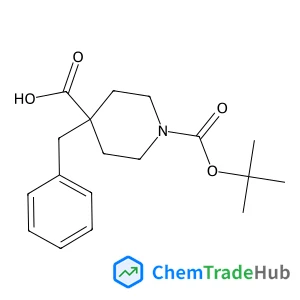
4-Benzyl-1-(tert-butoxycarbonyl)piperidine-4-carboxylic acid
CAS Number:
170838-87-6
Molecular Formula:
C18H25NO4
![tert-Butyl N-[(2-chloropyridin-4-yl)methyl]carbamate structure](https://static.chemtradehub.com/structs/916/916210-27-0-9f95.webp "tert-Butyl N-[(2-chloropyridin-4-yl)methyl]carbamate structure")
tert-Butyl N-[(2-chloropyridin-4-yl)methyl]carbamate
CAS Number:
916210-27-0
Molecular Formula:
C11H15ClN2O2
Recommended Suppliers



Disclaimer
This page provides academic journal information for reference and research purposes only. We are not affiliated with any journal publishers and do not handle publication submissions. For publication-related inquiries, please contact the respective journal publishers directly.
If you notice any inaccuracies in the information displayed, please contact us at support@chemtradehub.com. We will promptly review and address your concerns.