












The electrochemistry of “solid/water” interfaces involved in PEM-H2O reactors Part I. The “Pt/water” interfaces
Literature Information
Publication Date
2008-11-25
DOI
10.1039/B810429H
Impact Factor
3.676
Authors
Qiang Wang, Chuan-Sin Cha, Juntao Lu, Lin Zhuang
View Original
Abstract
The nature and properties of Pt surfaces in contact with pure water in PEM-H2O reactors were mimetically studied by employing CV measurements with microelectrode techniques. These “Pt/water” interfaces were found to be electrochemically polarizable, and the local interfacial potential relative to reversible hydrogen electrode (RHE) potential in pure water is numerically the same as the potential value measured against a RHE in contact with PEM as the reference electrode. However, the structural parameters of the electric double layer at the “Pt/water” interfaces can be quite different from those at the “Pt/PEM” interfaces, and the kinetics of electrode processes could be seriously affected by the structure of electric double layer in pure water media. Besides, there is active diffusional flow of intermediates of electrode reactions between the “Pt/water” and the “Pt/PEM” interfaces, thus facilitating the active involvement of the “Pt/water” interfaces in the current-generation mechanism of PEM fuel cells and other types of PEM-H2O reactors.
Recommended Journals
Related Literature
Synthesis and characterization of supramolecular cross-linkers containing cyclodextrin dimer and trimer
Keisuke Iijima, Daisuke Aoki, Hiromitsu Sogawa, Shigeo Asai, Toshikazu Takata
2016-04-13
Communication
DOI: 10.1039/C6PY00367B
Influence of the spacer and molecular weight on the phase behavior of side-chain liquid crystalline polymers containing triphenylene discotic mesogen units as side groups
Jianfeng Ban, Sheng Chen, Cheng Li, Xingzhu Wang, Hailiang Zhang
2014-07-21
Paper
DOI: 10.1039/C4PY00788C
A two-dimensional conjugated polymer framework with fully sp2-bonded carbon skeleton
Xiaodong Zhuang, Wuxue Zhao, Fan Zhang, Yu Cao, Feng Liu, Shuai Bi
2016-05-09
Paper
DOI: 10.1039/C6PY00561F
Light-mediated curing of CO2-based unsaturated polyethercarbonates via thiol–ene click chemistry
M. A. Subhani, B. Köhler, C. Gürtler, W. Leitner
2016-05-24
Paper
DOI: 10.1039/C6PY00458J
The enhanced actuation response of an ionic polymer–metal composite actuator based on sulfonated polyphenylsulfone
Yongjun Tang, Chao Chen, Yun Sheng Ye, Zhigang Xue, Xingping Zhou, Xiaolin Xie
2014-07-07
Paper
DOI: 10.1039/C4PY00663A
A novel method to prepare water-soluble core microcapsules with controlled burst release
Mingming Zuo, Tianqing Liu, Jingjing Han
2014-06-30
Paper
DOI: 10.1039/C4PY00616J
Enhancing the melt stability of polylactide stereocomplexes using a solid-state cross-linking strategy during a melt-blending process
Huili Liu, Dongyu Bai, Qin Zhang, Ke Wang, Hua Deng, Feng Chen, Qiang Fu
2014-06-19
Paper
DOI: 10.1039/C4PY00700J
Controlled synthesis of β-sheet polymers based on side-chain amyloidogenic short peptide segments via RAFT polymerization
Sonu Kumar, Rituparna Acharya, Urmi Chatterji, Priyadarsi De
2014-07-01
Paper
DOI: 10.1039/C4PY00620H
Chain-growth cationic polymerization of 2-halogenated thiophenes promoted by Brønsted acids
Arumugam Balasubramanian, Ting-Chia Ku, Hong-Pin Shih, Alishetty Suman, Huang-Jyun Lin, Ting-Wen Shih, Chien-Chung Han
2014-06-16
Paper
DOI: 10.1039/C4PY00521J
You might also like
Compound Q&A
Are there alternatives to 1-(4-Chlorophenyl)-N-hydroxymethanimine (CAS: 3848-36-0) in synthesis?
When considering alternatives to 1-(4-Chlorophenyl)-N-hydroxymethanimine (CAS: 3...
3848-36-01-(4-Chlorophenyl)-N...
Compound Q&A
How should (1R,9S,10S,12S,14E,16S,19R,20R,21S,22R)-3,9,21-Trihydroxy-5,10,12,14,16,20,22-heptamethyl-23,24-dioxatetracyclo[17.3.1.1~6,9~.0~2,7~]tetracosa-2,5,7,14-tetraen-4-one (CAS: 183202-73-5) be stored?
This compound should be stored in a cool, dry place away from direct sunlight. I...
183202-73-5(1R,9S,10S,12S,14E,1...
Compound Q&A
How is 3-(4-Bromophenyl)-5-(2-fluorophenyl)-1,2,4-oxadiazole (CAS: 419553-16-5) typically synthesized?
3-(4-Bromophenyl)-5-(2-fluorophenyl)-1,2,4-oxadiazole is synthesized through a m...
419553-16-53-(4-Bromophenyl)-5-...
Compound Q&A
How is 5-Chloro-2-(4-chlorophenyl)-4-methyl-6-[3-(1-piperidinyl)propoxy]pyrimidine (CAS: 1639220-19-1) typically synthesized?
5-Chloro-2-(4-chlorophenyl)-4-methyl-6-[3-(1-piperidinyl)propoxy]pyrimidine (CAS...
1639220-19-15-Chloro-2-(4-chloro...
Compound Q&A
What industries use 2-Chloro-4-(difluoromethoxy)pyridine (CAS: 1206978-15-5)?
2-Chloro-4-(difluoromethoxy)pyridine is used in the pharmaceutical industry for ...
1206978-15-52-Chloro-4-(difluoro...
Compound Q&A
What regulatory guidelines apply to 3-Chloro-6-methylpyridazine (CAS: 1121-79-5)?
3-Chloro-6-methylpyridazine (CAS: 1121-79-5) is classified under the Globally Ha...
1121-79-53-Chloro-6-methylpyr...
Compound Q&A
Are there alternatives to Methyl 4,5-dimethyl-2-nitrobenzoate in synthesis?
Several alternatives can be used in the synthesis of Methyl 4,5-dimethyl-2-nitro...
90922-74-0Methyl 4,5-dimethyl-...
Compound Q&A
Are there alternatives to (2E,2'E)-3,3'-(1,4-Phenylene)bisacrylaldehyde in synthesis?
Alternatives to (2E,2'E)-3,3'-(1,4-Phenylene)bisacrylaldehyde include other acry...
63405-68-5(2E,2'E)-3,3'-(1,4-P...
Compound Q&A
What is 3-Amino-5-chloropyridin-2-ol hydrochloride (CAS: 1261906-29-9)?
3-Amino-5-chloropyridin-2-ol hydrochloride is an organic compound with the CAS n...
1261906-29-93-Amino-5-chloropyri...
Compound Q&A
What precautions should be taken when handling 6,7-Difluoro-2,3-dihydro-4H-chromen-4-one (CAS: 1092349-93-3)?
When handling 6,7-Difluoro-2,3-dihydro-4H-chromen-4-one, it is essential to wear...
1092349-93-36,7-Difluoro-2,3-dih...
Source Journal
Physical Chemistry Chemical Physics

CiteScore:
5.5
Self-citation Rate:
10.3%
Articles per Year:
3036
Physical Chemistry Chemical Physics (PCCP) is an international journal co-owned by 19 physical chemistry and physics societies from around the world. This journal publishes original, cutting-edge research in physical chemistry, chemical physics and biophysical chemistry. To be suitable for publication in PCCP, articles must include significant innovation and/or insight into physical chemistry; this is the most important criterion that reviewers and Editors will judge against when evaluating submissions. The journal has a broad scope and welcomes contributions spanning experiment, theory, computation and data science. Topical coverage includes spectroscopy, dynamics, kinetics, statistical mechanics, thermodynamics, electrochemistry, catalysis, surface science, quantum mechanics, quantum computing and machine learning. Interdisciplinary research areas such as polymers and soft matter, materials, nanoscience, energy, surfaces/interfaces, and biophysical chemistry are welcomed if they demonstrate significant innovation and/or insight into physical chemistry. Joined experimental/theoretical studies are particularly appreciated when complementary and based on up-to-date approaches.
Recommended Compounds
![(2S)-2-{[(9H-Fluoren-9-ylmethoxy)carbonyl]amino}-4-(methylselanyl)butanoic acid structure](https://static.chemtradehub.com/structs/121/1217852-49-7-f252.webp "(2S)-2-{[(9H-Fluoren-9-ylmethoxy)carbonyl]amino}-4-(methylselanyl)butanoic acid structure")
(2S)-2-{[(9H-Fluoren-9-ylmethoxy)carbonyl]amino}-4-(methylselanyl)butanoic acid
CAS Number:
1217852-49-7
Molecular Formula:
C20H21NO4Se

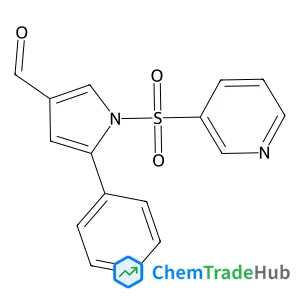
5-Phenyl-1-(pyridin-3-ylsulfonyl)-1H-pyrrole-3-carbaldehyde
CAS Number:
881676-90-0
Molecular Formula:
C16H12N2O3S
Recommended Suppliers






Disclaimer
This page provides academic journal information for reference and research purposes only. We are not affiliated with any journal publishers and do not handle publication submissions. For publication-related inquiries, please contact the respective journal publishers directly.
If you notice any inaccuracies in the information displayed, please contact us at support@chemtradehub.com. We will promptly review and address your concerns.