












High-conversion-efficiency organic dye-sensitized solar cells with a novel indoline dye
Literature Information
Publication Date
2008-09-12
DOI
10.1039/B809093A
Impact Factor
6.222
Authors
Hidetoshi Miura, Satoshi Uchida, Masakazu Takata, Koichi Sumioka, Paul Liska, Pascal Comte, Peter Péchy, Michael Grätzel
View Original
Abstract
An indoline dye (D205), the synthesis method of which is disclosed in this report, gave high-efficiency organic dye-sensitized solar cells (9.52%) using an anti-aggregation reagent (chenodeoxycholic acid).
Related Literature
Analytically and empirically consistent characterization of the resistive switching mechanism in a Ag conducting-bridge random-access memory device through a pseudo-liquid interpretation approach
Yeon-Joon Choi, Suhyun Bang, Tae-Hyeon Kim, Kyungho Hong, Sungjoon Kim, Sungjun Kim, Seongjae Cho, Byung-Gook Park
2021-11-09
Paper
DOI: 10.1039/D1CP04637C
Ultrafast nonequilibrium dynamics of short-range protein electron transfer in flavodoxin
Jie Yang, Yifei Zhang, Ting-Fang He, Yangyi Lu, Lijuan Wang, Bei Ding
2021-11-18
Paper
DOI: 10.1039/D1CP04445A
Fragmentation and rearrangement of Breslow intermediates: branches to both radical and ionic pathways
Ming-Hsiu Hsieh, Jen-Shiang K. Yu
2021-11-17
Paper
DOI: 10.1039/D1CP03118J
Assessing doping strategies for monolayer MoS2 towards non-enzymatic detection of cortisol: a first-principles study
Gabriele Boschetto, Aida Todri-Sanial
2021-12-14
Paper
DOI: 10.1039/D1CP04116A
Structured light using carbon nanostructures driven by Kerr nonlinearities and a magnetic field
Eric Abraham Hurtado-Aviles, Juan José Vilatela, Hilario Martines-Arano, Jhovani Bornacelli, Felipe Cervantes-Sodi, Carlos Torres-Torres
2021-12-15
Paper
DOI: 10.1039/D1CP05195D
Model free analysis of experimental residual dipolar couplings in small organic compounds
Felix A. Roth, Volker Schmidts, Jan Rettig, Christina M. Thiele
2021-11-30
Paper
DOI: 10.1039/D1CP02324A
Raman spectroscopy and DFT calculations of PEDOT:PSS in a dipolar field
Stanislav Nešpůrek, Petr Kuberský, Radek Polanský, Miroslava Trchová, Jakub Šebera, Vladimír Sychrovský
2021-12-14
Paper
DOI: 10.1039/D1CP03899K
Investigation into the performance decay of proton-exchange membranes based on sulfonated heterocyclic poly(aryl ether ketone)s in Fenton's reagent
Qian Liu, Shouhai Zhang, Zhaoqi Wang, Jianhua Han, Ce Song, Peiqi Xu, Xu Wang, Shaokui Fu, Xigao Jian
2021-12-13
Paper
DOI: 10.1039/D1CP04531H
Time-resolved relaxation and cage opening in diamondoids following XUV ultrafast ionization
Alexie Boyer, Marius Hervé, Audrey Scognamiglio, Vincent Loriot, Franck Lépine
2021-11-29
Paper
DOI: 10.1039/D1CP03502A
Terahertz pump–probe of liquid water at 12.3 THz
Fabio Novelli, Claudius Hoberg, Ellen M. Adams, J. Michael Klopf, Martina Havenith
2021-09-17
Paper
DOI: 10.1039/D1CP03207K
You might also like
Compound Q&A
What are the main uses of 1-(3-Aminophenyl)-3-[(3R)-1-(3,3-dimethyl-2-oxobutyl)-2-oxo-5-(2-pyridinyl)-2,3-dihydro-1H-1,4-benzodiazepin-3-yl]urea (CAS: 155412-88-7)?
This compound is mainly used as an intermediate in the synthesis of antipsychoti...
155412-88-71-(3-Aminophenyl)-3-...
Compound Q&A
How should waste containing 1-(D-Ribofuranosyl)-1,4-dihydro-3-pyridinecarboxamide (CAS: 19132-12-8) be handled?
Waste containing 1-(D-Ribofuranosyl)-1,4-dihydro-3-pyridinecarboxamide (CAS: 191...
19132-12-81-(D-Ribofuranosyl)-...
Compound Q&A
What regulatory guidelines apply to 2-Methyl-2-propanyl 3-bromo-3-(hydroxymethyl)-1-azetidinecarboxylate (CAS: 2007919-81-3)?
2-Methyl-2-propanyl 3-bromo-3-(hydroxymethyl)-1-azetidinecarboxylate (CAS: 20079...
2007919-81-32-Methyl-2-propanyl ...
Compound Q&A
What is N-(4-Chloro-2-pyridinyl)acetamide (CAS: 245056-66-0)?
N-(4-Chloro-2-pyridinyl)acetamide (CAS: 245056-66-0) is a chemical compound with...
245056-66-0N-(4-Chloro-2-pyridi...
Compound Q&A
What is 5-Chloro-2-hydroxybenzoic acid (CAS: 321-14-2)?
5-Chloro-2-hydroxybenzoic acid, also known as 5-chlorosalicylic acid, is an arom...
321-14-25-Chloro-2-hydroxybe...
Compound Q&A
What precautions should be taken when handling 1,1-Dichloro-1-fluoroethane (CAS: 1717-00-6)?
When handling 1,1-Dichloro-1-fluoroethane (CAS: 1717-00-6), it is important to u...
1717-00-61,1-Dichloro-1-fluor...
Compound Q&A
What are the physical and chemical properties of Fmoc-(2S,3R)-3-phenylpyrrolidine-2-carboxylic acid (CAS: 281655-32-1)?
Fmoc-(2S,3R)-3-phenylpyrrolidine-2-carboxylic acid is a white crystalline solid ...
281655-32-1Fmoc-(2S,3R)-3-pheny...
Compound Q&A
What are the main uses of 4-Amino-5-bromo-2-pyridinecarboxylic acid (CAS: 1363381-01-4)?
4-Amino-5-bromo-2-pyridinecarboxylic acid is primarily used as a precursor in th...
1363381-01-44-Amino-5-bromo-2-py...
Compound Q&A
What precautions should be taken when handling (S)-tert-butyl 2-((2-(4-bromophenyl)-2-oxoethyl)carbamoyl)pyrrolidine-1-carboxylate (CAS: 1007881-98-2)?
Handling this compound should be done with personal protective equipment (PPE) i...
1007881-98-2(S)-tert-butyl 2-((2...
Compound Q&A
What precautions should be taken when handling 8-bromo-2,2-dimethyl-3,4-dihydro-2H-1,4-benzoxazin-3-one (CAS: 688363-73-7)?
When handling 8-bromo-2,2-dimethyl-3,4-dihydro-2H-1,4-benzoxazin-3-one, use prop...
688363-73-78-bromo-2,2-dimethyl...
Source Journal
Chemical Communications

CiteScore:
8.6
Self-citation Rate:
4.7%
Articles per Year:
2458
ChemComm publishes urgent research which is of outstanding significance and interest to experts in the field, while also appealing to the journal’s broad chemistry readership. Our communication format is ideally suited to short, urgent studies that are of such importance that they require accelerated publication. Our scope covers all topics in chemistry, and research at the interface of chemistry and other disciplines (such as materials science, nanoscience, physics, engineering and biology) where there is a significant novelty in the chemistry aspects. Major topic areas covered include: Analytical Chemistry Catalysis Chemical Biology and medicinal chemistry Computational Chemistry and Machine Learning Energy and sustainable chemistry Environmental Chemistry Green Chemistry Inorganic Chemistry Materials Chemistry Nanoscience Organic Chemistry Physical Chemistry Polymer Chemistry Supramolecular Chemistry
Recommended Compounds
![Methyl 4-({[(2-methyl-2-propanyl)oxy]carbonyl}amino)bicyclo[2.2.2]octane-1-carboxylate structure](https://static.chemtradehub.com/structs/943/943845-74-7-b7e5.webp "Methyl 4-({[(2-methyl-2-propanyl)oxy]carbonyl}amino)bicyclo[2.2.2]octane-1-carboxylate structure")
Methyl 4-({[(2-methyl-2-propanyl)oxy]carbonyl}amino)bicyclo[2.2.2]octane-1-carboxylate
CAS Number:
943845-74-7
Molecular Formula:
C15H25NO4
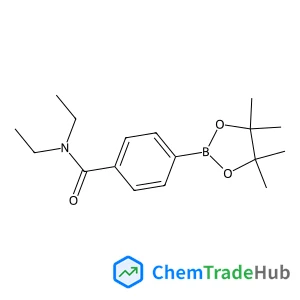
N,N-Diethyl-4-(4,4,5,5-tetramethyl-1,3,2-dioxaborolan-2-yl)benzamide
CAS Number:
325142-99-2
Molecular Formula:
C17H26BNO3
![Pyrazolo[1,5-a]pyridine-3-carbothioamide structure](https://static.chemtradehub.com/structs/885/885275-44-5-aae0.webp "Pyrazolo[1,5-a]pyridine-3-carbothioamide structure")
Recommended Suppliers






Disclaimer
This page provides academic journal information for reference and research purposes only. We are not affiliated with any journal publishers and do not handle publication submissions. For publication-related inquiries, please contact the respective journal publishers directly.
If you notice any inaccuracies in the information displayed, please contact us at support@chemtradehub.com. We will promptly review and address your concerns.