












Asymmetric autocatalytic Mannich reaction in the presence of water and its implication in prebiotic chemistry
Literature Information
Publication Date
2008-04-23
DOI
10.1039/B804142N
Impact Factor
6.222
Authors
Mohamed Amedjkouh, Maria Brandberg
View Original
Abstract
An enantioselective process in which the chiral Mannich product acts as a catalyst for its own replication was observed to occur under various conditions in the presence of water.
Recommended Journals
Related Literature
Rovibrational quantum dynamical computations for deuterated isotopologues of the methane–water dimer
Edit Mátyus
2017-05-18
Paper
DOI: 10.1039/C7CP02061A
Determinants of the host–guest interactions between α-, β- and γ-cyclodextrins and group IA, IIA and IIIA metal cations: a DFT/PCM study
S. E. Angelova, V. K. Nikolova, T. M. Dudev
2017-05-16
Paper
DOI: 10.1039/C7CP01253E
The role of acid–base equilibria in formal hydrogen transfer reactions: tryptophan radical repair by uric acid as a paradigmatic case
Leonardo Muñoz-Rugeles, Annia Galano, Juan Raúl Alvarez-Idaboy
2017-05-16
Paper
DOI: 10.1039/C7CP01557G
Direct and cluster-assisted dehydrogenation of methane by Nb+ and Ta+: a theoretical investigation
Emilia Sicilia, Gloria Mazzone, Adriana Pérez-González, Jenny Pirillo, Annia Galano, Thomas Heine, Nino Russo
2017-05-24
Paper
DOI: 10.1039/C7CP01833A
A new mechanism for the low dielectric property of POSS nanocomposites: the key role of interfacial effect
Yuan Yuan, Yawen Huang, Hongtao Yu, Junxiao Yang
2017-05-11
Paper
DOI: 10.1039/C7CP02678A
Molecular dynamics simulations of the structure and the morphology of graphene/polymer nanocomposites
S. Güryel, M. Walker, P. Geerlings, F. De Proft, M. R. Wilson
2017-04-28
Paper
DOI: 10.1039/C7CP01552F
Reaction mechanism and product branching ratios of the CH + C3H4 reactions: a theoretical study
Joao Marcelo Ribeiro, Alexander M. Mebel
2017-05-05
Paper
DOI: 10.1039/C7CP01873H
Determination of bending rigidity and tilt modulus of lipid membranes from real-space fluctuation analysis of molecular dynamics simulations
D. Harries
2017-06-12
Paper
DOI: 10.1039/C7CP01921A
The atmospheric oxidation of CH3OOH by the OH radical: the effect of water vapor
Josep M. Anglada, Ramon Crehuet, Marilia Martins-Costa, Joseph S. Francisco, Manuel Ruiz-López
2017-04-13
Paper
DOI: 10.1039/C7CP01976A
You might also like
Compound Q&A
Are there alternatives to 1-(4-Chlorophenyl)-N-hydroxymethanimine (CAS: 3848-36-0) in synthesis?
When considering alternatives to 1-(4-Chlorophenyl)-N-hydroxymethanimine (CAS: 3...
3848-36-01-(4-Chlorophenyl)-N...
Compound Q&A
How should (1R,9S,10S,12S,14E,16S,19R,20R,21S,22R)-3,9,21-Trihydroxy-5,10,12,14,16,20,22-heptamethyl-23,24-dioxatetracyclo[17.3.1.1~6,9~.0~2,7~]tetracosa-2,5,7,14-tetraen-4-one (CAS: 183202-73-5) be stored?
This compound should be stored in a cool, dry place away from direct sunlight. I...
183202-73-5(1R,9S,10S,12S,14E,1...
Compound Q&A
How is 3-(4-Bromophenyl)-5-(2-fluorophenyl)-1,2,4-oxadiazole (CAS: 419553-16-5) typically synthesized?
3-(4-Bromophenyl)-5-(2-fluorophenyl)-1,2,4-oxadiazole is synthesized through a m...
419553-16-53-(4-Bromophenyl)-5-...
Compound Q&A
How is 5-Chloro-2-(4-chlorophenyl)-4-methyl-6-[3-(1-piperidinyl)propoxy]pyrimidine (CAS: 1639220-19-1) typically synthesized?
5-Chloro-2-(4-chlorophenyl)-4-methyl-6-[3-(1-piperidinyl)propoxy]pyrimidine (CAS...
1639220-19-15-Chloro-2-(4-chloro...
Compound Q&A
What industries use 2-Chloro-4-(difluoromethoxy)pyridine (CAS: 1206978-15-5)?
2-Chloro-4-(difluoromethoxy)pyridine is used in the pharmaceutical industry for ...
1206978-15-52-Chloro-4-(difluoro...
Compound Q&A
What regulatory guidelines apply to 3-Chloro-6-methylpyridazine (CAS: 1121-79-5)?
3-Chloro-6-methylpyridazine (CAS: 1121-79-5) is classified under the Globally Ha...
1121-79-53-Chloro-6-methylpyr...
Compound Q&A
Are there alternatives to Methyl 4,5-dimethyl-2-nitrobenzoate in synthesis?
Several alternatives can be used in the synthesis of Methyl 4,5-dimethyl-2-nitro...
90922-74-0Methyl 4,5-dimethyl-...
Compound Q&A
Are there alternatives to (2E,2'E)-3,3'-(1,4-Phenylene)bisacrylaldehyde in synthesis?
Alternatives to (2E,2'E)-3,3'-(1,4-Phenylene)bisacrylaldehyde include other acry...
63405-68-5(2E,2'E)-3,3'-(1,4-P...
Compound Q&A
What is 3-Amino-5-chloropyridin-2-ol hydrochloride (CAS: 1261906-29-9)?
3-Amino-5-chloropyridin-2-ol hydrochloride is an organic compound with the CAS n...
1261906-29-93-Amino-5-chloropyri...
Compound Q&A
What precautions should be taken when handling 6,7-Difluoro-2,3-dihydro-4H-chromen-4-one (CAS: 1092349-93-3)?
When handling 6,7-Difluoro-2,3-dihydro-4H-chromen-4-one, it is essential to wear...
1092349-93-36,7-Difluoro-2,3-dih...
Source Journal
Chemical Communications

CiteScore:
8.6
Self-citation Rate:
4.7%
Articles per Year:
2458
ChemComm publishes urgent research which is of outstanding significance and interest to experts in the field, while also appealing to the journal’s broad chemistry readership. Our communication format is ideally suited to short, urgent studies that are of such importance that they require accelerated publication. Our scope covers all topics in chemistry, and research at the interface of chemistry and other disciplines (such as materials science, nanoscience, physics, engineering and biology) where there is a significant novelty in the chemistry aspects. Major topic areas covered include: Analytical Chemistry Catalysis Chemical Biology and medicinal chemistry Computational Chemistry and Machine Learning Energy and sustainable chemistry Environmental Chemistry Green Chemistry Inorganic Chemistry Materials Chemistry Nanoscience Organic Chemistry Physical Chemistry Polymer Chemistry Supramolecular Chemistry
Recommended Compounds
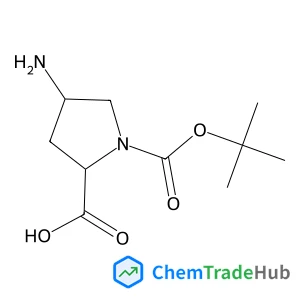
(2R,4R)-1-Boc-4-Aminopyrrolidine-2-carboxylic acid
CAS Number:
132622-98-1
Molecular Formula:
C10H18N2O4
Recommended Suppliers








Disclaimer
This page provides academic journal information for reference and research purposes only. We are not affiliated with any journal publishers and do not handle publication submissions. For publication-related inquiries, please contact the respective journal publishers directly.
If you notice any inaccuracies in the information displayed, please contact us at support@chemtradehub.com. We will promptly review and address your concerns.