












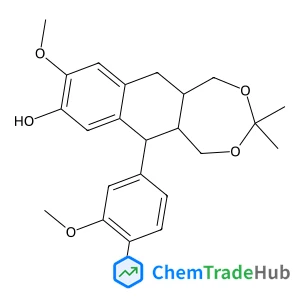
Molecular BioSystems issue 4 contents pages
Literature Information
Publication Date
DOI
10.1039/B803677M
Impact Factor
6.222
Authors
View Original
Abstract
The first page of this article is displayed as the abstract.
Related Literature
Low impact synthesis of β-nitroacrylates under fully heterogeneous conditions
Alessandro Palmieri, Serena Gabrielli, Roberto Ballini
2013-07-02
Communication
DOI: 10.1039/C3GC40936H
Benzoylation for the recovery of structure directing agent (di-n-propylamine) from the process effluent of aluminophosphate synthesis
Nageswara N. Rao, Smita Masid
2013-04-26
Communication
DOI: 10.1039/C3GC40759D
On the solubility of wood in non-derivatising ionic liquids
Lasse Kyllönen, Arno Parviainen, Somdatta Deb, Martin Lawoko, Mikhail Gorlov, Ilkka Kilpeläinen, Alistair W. T. King
2013-07-11
Communication
DOI: 10.1039/C3GC41273C
The electrocatalytic hydrogenation of furanic compounds in a continuous electrocatalytic membrane reactor
Sara K. Green, Jechan Lee, Hyung Ju Kim, Geoffrey A. Tompsett, Won Bae Kim, George W. Huber
2013-05-10
Paper
DOI: 10.1039/C3GC00090G
A highly stable and active magnetically separable Pd nanocatalyst in aqueous phase heterogeneously catalyzed couplings
Mohammad Ali Zolfigol, Vahid Khakyzadeh, Ahmad Reza Moosavi-Zare, Abed Rostami, Abdolkarim Zare, Nasser Iranpoor, Mohammad Hassan Beyzavi, Rafael Luque
2013-05-15
Paper
DOI: 10.1039/C3GC40421H
Metal- and solvent-free synthesis of N-sulfonylformamidines
Navneet Chandak, Pawan Kumar, Jitander K. Kapoor, Pawan K. Sharma
2013-06-13
Paper
DOI: 10.1039/C3GC40797G
A waste-minimized protocol for the preparation of 1,2-azido alcohols and 1,2-amino alcohols
Eleonora Ballerini, Paolo Crotti, Ileana Frau, Daniela Lanari, Ferdinando Pizzo, Luigi Vaccaro
2013-06-21
Paper
DOI: 10.1039/C3GC40988K
Photocatalysis on supported gold and silver nanoparticles under ultraviolet and visible light irradiation
Sarina Sarina, Eric R. Waclawik, Huaiyong Zhu
2013-05-10
Tutorial Review
DOI: 10.1039/C3GC40450A
Chemical conversion of biomass-derived hexose sugars to levulinic acid over sulfonic acid-functionalized graphene oxide catalysts
Ji-Woong Yoon, Dong Won Hwang, Harold H. Kung
2013-08-29
Paper
DOI: 10.1039/C3GC40353J
You might also like
Compound Q&A
What precautions should be taken when handling 4-Methyl-6-(trifluoromethyl)quinoline (CAS: 40716-16-3)?
When handling 4-Methyl-6-(trifluoromethyl)quinoline (CAS: 40716-16-3), safety go...
40716-16-34-Methyl-6-(trifluor...
Compound Q&A
What is 4-(3,5-Difluorophenyl)aniline (CAS: 405058-00-6)?
4-(3,5-Difluorophenyl)aniline is an aromatic organic compound with the CAS numbe...
405058-00-64-(3,5-Difluoropheny...
Compound Q&A
How is 5-{[4-(Trifluoromethyl)phenyl]sulfanyl}-1,2,3-thiadiazole-4-carboxylic acid (CAS: 338982-07-3) typically synthesized?
5-{[4-(Trifluoromethyl)phenyl]sulfanyl}-1,2,3-thiadiazole-4-carboxylic acid can ...
338982-07-35-{[4-(Trifluorometh...
Compound Q&A
What is the market or research trend for 4-Benzylaniline hydrochloride (CAS: 6317-57-3)?
The market for 4-Benzylaniline hydrochloride (CAS: 6317-57-3) is steadily growin...
6317-57-34-Benzylaniline hydr...
Compound Q&A
Is [3-(Diethylsulfamoyl)phenyl]boronic acid (CAS: 871329-58-7) safe?
[3-(Diethylsulfamoyl)phenyl]boronic acid is generally considered safe when handl...
871329-58-7[3-(Diethylsulfamoyl...
Compound Q&A
What are the main uses of 3-Bromo-2,5-dimethoxyaniline (CAS: 115929-62-9)?
3-Bromo-2,5-dimethoxyaniline is mainly used in the pharmaceutical and chemical i...
115929-62-93-Bromo-2,5-dimethox...
Compound Q&A
What regulatory guidelines apply to N-Methyl-1-(5-methyl-1H-indol-3-yl)methanamine (CAS: 915922-67-7)?
N-Methyl-1-(5-methyl-1H-indol-3-yl)methanamine (CAS: 915922-67-7) is subject to ...
915922-67-7N-Methyl-1-(5-methyl...
Compound Q&A
What industries use Carbamic acid, N-[(5S)-5,6-diamino-6-oxohexyl]-, 1,1-dimethylethyl ester (CAS: 24828-96-4)?
This compound is primarily used in the pharmaceutical industry for the synthesis...
24828-96-4Carbamic acid, N-[(5...
Compound Q&A
How should 2-Methyl-2-propanyl [(1S,3R)-3-aminocyclohexyl]carbamate (CAS: 1298101-47-9) be stored?
2-Methyl-2-propanyl [(1S,3R)-3-aminocyclohexyl]carbamate (CAS: 1298101-47-9) sho...
1298101-47-92-Methyl-2-propanyl ...
Compound Q&A
What industries use Ethyl 2-bromo-4,4,4-trifluorobutanoate (CAS: 367-33-9)?
Ethyl 2-bromo-4,4,4-trifluorobutanoate (CAS: 367-33-9) is utilized in the pharma...
367-33-9Ethyl 2-bromo-4,4,4-...
Source Journal
Chemical Communications

CiteScore:
8.6
Self-citation Rate:
4.7%
Articles per Year:
2458
ChemComm publishes urgent research which is of outstanding significance and interest to experts in the field, while also appealing to the journal’s broad chemistry readership. Our communication format is ideally suited to short, urgent studies that are of such importance that they require accelerated publication. Our scope covers all topics in chemistry, and research at the interface of chemistry and other disciplines (such as materials science, nanoscience, physics, engineering and biology) where there is a significant novelty in the chemistry aspects. Major topic areas covered include: Analytical Chemistry Catalysis Chemical Biology and medicinal chemistry Computational Chemistry and Machine Learning Energy and sustainable chemistry Environmental Chemistry Green Chemistry Inorganic Chemistry Materials Chemistry Nanoscience Organic Chemistry Physical Chemistry Polymer Chemistry Supramolecular Chemistry
Recommended Compounds
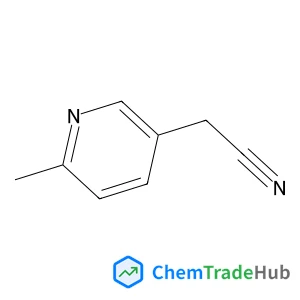
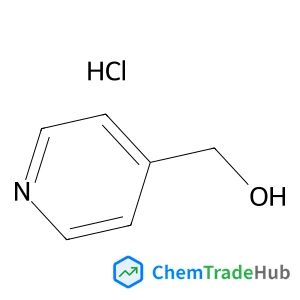
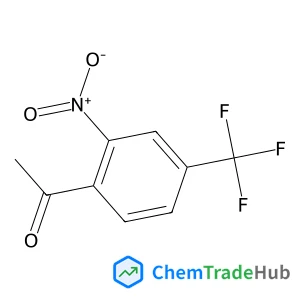
![2-[(5Z,8Z,11Z,14Z)-5,8,11,14-Icosatetraen-1-yloxy]-1,3-propanediol structure](https://static.chemtradehub.com/structs/222/222723-55-9-0348.webp "2-[(5Z,8Z,11Z,14Z)-5,8,11,14-Icosatetraen-1-yloxy]-1,3-propanediol structure")
2-[(5Z,8Z,11Z,14Z)-5,8,11,14-Icosatetraen-1-yloxy]-1,3-propanediol
CAS Number:
222723-55-9
Molecular Formula:
C23H40O3
Recommended Suppliers






Disclaimer
This page provides academic journal information for reference and research purposes only. We are not affiliated with any journal publishers and do not handle publication submissions. For publication-related inquiries, please contact the respective journal publishers directly.
If you notice any inaccuracies in the information displayed, please contact us at support@chemtradehub.com. We will promptly review and address your concerns.