












Metal- and solvent-free synthesis of N-sulfonylformamidines
Literature Information
Publication Date
2013-06-13
DOI
10.1039/C3GC40797G
Impact Factor
10.182
Authors
Navneet Chandak, Pawan Kumar, Jitander K. Kapoor, Pawan K. Sharma
View Original
Abstract
A solvent-free green synthesis of N-sulfonylformamidines is reported via the direct condensation of N,N-dimethylformamide dimethyl acetal (DMF-DMA) and sulfonamide derivatives at room temperature. The described method avoids the use of metal catalysts as well as hazardous solvents, which are not permitted for pharmaceutical manufacture, for the reactions or isolation of products. Hence, the current work presents a fast and efficient alternative to earlier reported methods. The mild nature of the procedure is demonstrated by varied functional group tolerance.
Related Literature
Oxidative annulations triggered by a simple Lewis acid: facile synthesis of benzofurans
Chinnabattigalla Sreenivasulu, A. Gopi Krishna Reddy, G. Satyanarayana
2017-02-08
Research Article
DOI: 10.1039/C6QO00531D
The influence of the central acceptor unit on the optoelectronic properties and photovoltaic performance of A–D–A–D–A-type co-oligomers
Ibrahim Ata, Duško Popovic, Mika Lindén, Amaresh Mishra, Peter Bäuerle
2017-02-10
Research Article
DOI: 10.1039/C7QO00043J
Temperature-induced large amplitude conformational change in the complex of oxatub[4]arene revealed via rotaxane synthesis
Dong-Hao Li, Liu-Pan Yang, Hongxin Chai, Fei Jia, Hua Ke, Wei Jiang
2019-02-21
Research Article
DOI: 10.1039/C9QO00159J
Methodology and applications of the hexadehydro-Diels–Alder (HDDA) reaction
Todd B. Marder
2017-03-20
Review Article
DOI: 10.1039/C7QO00071E
Synthesis of largely π-extended naphthalenediimides via C–H activation towards highly soluble and narrow band-gap organic optoelectronic materials
Wenting Wu, Zheng Zhao, Xiaodi Yang, Xike Gao
2017-03-22
Research Article
DOI: 10.1039/C7QO00061H
Iron-catalyzed boration of cinnamyl carbonates: a highly stereoselective approach to cyclopropylboronates
Yang Liu, Yuhan Zhou, Dong Li, Han Chen, Jinfeng Zhao, Jingping Qu
2019-02-20
Research Article
DOI: 10.1039/C8QO01163J
Guest-mediated chirality transfer in the host–guest complexes of an atropisomeric perylene bisimide cyclophane host‡
Meike Sapotta, Peter Spenst, Chantu R. Saha-Möller
2019-03-05
Research Article
DOI: 10.1039/C9QO00172G
Unexpected formation of [5]helicenes from hexaarylbenzenes containing pyrrole moieties
Felix Ammon, Stephanie Theresia Sauer, Rainer Lippert, Dominik Lungerich, David Reger, Frank Hampel, Norbert Jux
2017-03-23
Research Article
DOI: 10.1039/C7QO00112F
Selective deprotonation of tetra[3,4]thienylene in the presence of n-BuLi
Bingbing Li, Chunli Li, Zhiying Ma, Li Xu, Hua Wang
2017-02-06
Research Article
DOI: 10.1039/C6QO00754F
Quasi-planar diazadithio and diazodiseleno[8]circulenes: synthesis, structures and properties
Xiaodong Xiong, Chun-Lin Deng, Zhiming Li
2016-12-07
Research Article
DOI: 10.1039/C6QO00662K
You might also like
Compound Q&A
What precautions should be taken when handling 4-Methyl-6-(trifluoromethyl)quinoline (CAS: 40716-16-3)?
When handling 4-Methyl-6-(trifluoromethyl)quinoline (CAS: 40716-16-3), safety go...
40716-16-34-Methyl-6-(trifluor...
Compound Q&A
What is 4-(3,5-Difluorophenyl)aniline (CAS: 405058-00-6)?
4-(3,5-Difluorophenyl)aniline is an aromatic organic compound with the CAS numbe...
405058-00-64-(3,5-Difluoropheny...
Compound Q&A
How is 5-{[4-(Trifluoromethyl)phenyl]sulfanyl}-1,2,3-thiadiazole-4-carboxylic acid (CAS: 338982-07-3) typically synthesized?
5-{[4-(Trifluoromethyl)phenyl]sulfanyl}-1,2,3-thiadiazole-4-carboxylic acid can ...
338982-07-35-{[4-(Trifluorometh...
Compound Q&A
What is the market or research trend for 4-Benzylaniline hydrochloride (CAS: 6317-57-3)?
The market for 4-Benzylaniline hydrochloride (CAS: 6317-57-3) is steadily growin...
6317-57-34-Benzylaniline hydr...
Compound Q&A
Is [3-(Diethylsulfamoyl)phenyl]boronic acid (CAS: 871329-58-7) safe?
[3-(Diethylsulfamoyl)phenyl]boronic acid is generally considered safe when handl...
871329-58-7[3-(Diethylsulfamoyl...
Compound Q&A
What are the main uses of 3-Bromo-2,5-dimethoxyaniline (CAS: 115929-62-9)?
3-Bromo-2,5-dimethoxyaniline is mainly used in the pharmaceutical and chemical i...
115929-62-93-Bromo-2,5-dimethox...
Compound Q&A
What regulatory guidelines apply to N-Methyl-1-(5-methyl-1H-indol-3-yl)methanamine (CAS: 915922-67-7)?
N-Methyl-1-(5-methyl-1H-indol-3-yl)methanamine (CAS: 915922-67-7) is subject to ...
915922-67-7N-Methyl-1-(5-methyl...
Compound Q&A
What industries use Carbamic acid, N-[(5S)-5,6-diamino-6-oxohexyl]-, 1,1-dimethylethyl ester (CAS: 24828-96-4)?
This compound is primarily used in the pharmaceutical industry for the synthesis...
24828-96-4Carbamic acid, N-[(5...
Compound Q&A
How should 2-Methyl-2-propanyl [(1S,3R)-3-aminocyclohexyl]carbamate (CAS: 1298101-47-9) be stored?
2-Methyl-2-propanyl [(1S,3R)-3-aminocyclohexyl]carbamate (CAS: 1298101-47-9) sho...
1298101-47-92-Methyl-2-propanyl ...
Compound Q&A
What industries use Ethyl 2-bromo-4,4,4-trifluorobutanoate (CAS: 367-33-9)?
Ethyl 2-bromo-4,4,4-trifluorobutanoate (CAS: 367-33-9) is utilized in the pharma...
367-33-9Ethyl 2-bromo-4,4,4-...
Source Journal
Green Chemistry

CiteScore:
16.1
Self-citation Rate:
7.5%
Articles per Year:
944
Green Chemistry provides a unique forum for the publication of innovative research on the development of alternative green and sustainable technologies. The scope of Green Chemistry is based on, but not limited to, the definition proposed by Anastas and Warner (Green Chemistry: Theory and Practice, P T Anastas and J C Warner, Oxford University Press, Oxford, 1998). Green chemistry is the utilisation of a set of principles that reduces or eliminates the use or generation of hazardous substances in the design, manufacture and application of chemical products. Green Chemistry is at the frontiers of this continuously-evolving interdisciplinary science and publishes research that attempts to reduce the environmental impact of the chemical enterprise by developing a technology base that is inherently non-toxic to living things and the environment. Submissions on all aspects of research relating to the endeavour are welcome. The journal publishes original and significant cutting-edge research that is likely to be of wide general appeal. To be published, work must present a significant advance in green chemistry. Papers must contain a comparison with existing methods and demonstrate advantages over those methods before publication can be considered. For more information please see this Editorial. Coverage includes the following, but is not limited to: Design (e.g. biomimicry, design for degradation/recycling/reduced toxicity…) Reagents & Feedstocks (e.g. renewables, CO2, solvents, auxiliary agents, waste utilization…) Synthesis (e.g. organic, inorganic, synthetic biology…) Catalysis (e.g. homogeneous, heterogeneous, enzyme, whole cell…) Process (e.g. process design, intensification, separations, recycling, efficiency…) Energy (e.g. renewable energy, fuels, photovoltaics, fuel cells, energy storage, energy carriers…) Applications (e.g. electronics, dyes, consumer products, coatings, pharmaceuticals, preservatives, building materials, chemicals for industry/agriculture/mining…) Impact (e.g. safety, metrics, LCA, sustainability, (eco)toxicology…) Green chemistry is, by definition, a continuously-evolving frontier. Therefore, the inclusion of a particular material or technology does not, of itself, guarantee that a paper is suitable for the journal. To be suitable, the novel advance should have the potential for reduced environmental impact relative to the state of the art. Green Chemistry does not normally deal with research associated with 'end-of-pipe' or remediation issues.
Recommended Compounds
![(4aR,5S,6R,8aS)-5-[2-(3-Furyl)ethyl]-8a-(hydroxymethyl)-5,6-dimethyl-3,4,4a,5,6,7,8,8a-octahydro-1-naphthalenecarboxylic acid structure](https://static.chemtradehub.com/structs/184/18411-75-1-d4cd.webp "(4aR,5S,6R,8aS)-5-[2-(3-Furyl)ethyl]-8a-(hydroxymethyl)-5,6-dimethyl-3,4,4a,5,6,7,8,8a-octahydro-1-naphthalenecarboxylic acid structure")
(4aR,5S,6R,8aS)-5-[2-(3-Furyl)ethyl]-8a-(hydroxymethyl)-5,6-dimethyl-3,4,4a,5,6,7,8,8a-octahydro-1-naphthalenecarboxylic acid
CAS Number:
18411-75-1
Molecular Formula:
C20H28O4
![6,7-Dihydro-5H-pyrrolo[1,2-a]imidazole-6-carboxylic acid structure](https://static.chemtradehub.com/structs/136/1369160-12-2-6524.webp "6,7-Dihydro-5H-pyrrolo[1,2-a]imidazole-6-carboxylic acid structure")
6,7-Dihydro-5H-pyrrolo[1,2-a]imidazole-6-carboxylic acid
CAS Number:
1369160-12-2
Molecular Formula:
C7H8N2O2
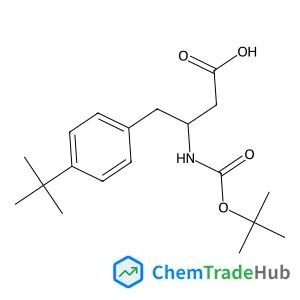
(S)-3-((tert-Butoxycarbonyl)amino)-4-(4-(tert-butyl)phenyl)butanoic acid
CAS Number:
403661-85-8
Molecular Formula:
C19H29NO4
Recommended Suppliers



Disclaimer
This page provides academic journal information for reference and research purposes only. We are not affiliated with any journal publishers and do not handle publication submissions. For publication-related inquiries, please contact the respective journal publishers directly.
If you notice any inaccuracies in the information displayed, please contact us at support@chemtradehub.com. We will promptly review and address your concerns.