


A waste-minimized protocol for the preparation of 1,2-azido alcohols and 1,2-amino alcohols
Literature Information
Publication Date
2013-06-21
DOI
10.1039/C3GC40988K
Impact Factor
10.182
Authors
Eleonora Ballerini, Paolo Crotti, Ileana Frau, Daniela Lanari, Ferdinando Pizzo, Luigi Vaccaro
View Original
Abstract
Under solvent-free conditions the reaction of epoxides 1a–i with trimethylsilylazide (2) catalyzed by polystiryl-supported fluoride (PS-DABCOF2) has led to the efficient preparation of the corresponding O-TMS protected 1,2-azido alcohols 3a–i that, by treatment with Dowex-H, gave the related 1,2-azido alcohols 4a–i in excellent yields (83–99% and 82–96%, respectively). The use of a flow procedure has allowed us to significantly minimize waste in the preparation of representative 1,2-azido alcohols 4a, 4c and 4i that have been obtained with E-factors of 1.6, 2.1, and 1.9, respectively. The 1,2-amino alcohols 5a, 5c and 5f have been also prepared, in quantitative yields, by reduction of the corresponding O-TMS protected 1,2-azido alcohols 3a, 3c, and 3f by Pd on the Al2O3/HCOOH system.
Recommended Journals

NDT & E International

Biocatalysis and Biotransformation

Journal of Chemical Sciences

Journal of Asian Natural Products Research

Atomization and Sprays

Cellulose

Bioorganic & Medicinal Chemistry

Chinese Journal of Chemistry

Bioorganic & Medicinal Chemistry Letters

Critical Reviews in Solid State and Materials Sciences
Related Literature
A new water-soluble cavitand with deeper guest binding properties‡
Faiz-Ur Rahman, Yang Yu
2019-02-25
Research Article
DOI: 10.1039/C9QO00049F
Rotational isomerism of the amide units in rotaxanes based on a cyclic tetraamide and secondary ammonium ions
Yukari Okuma, Toshihiro Tsukamoto, Takayuki Inagaki, Shinobu Miyagawa, Masaki Kimura, Masaya Naito, Hikaru Takaya, Tsuneomi Kawasaki, Yuji Tokunaga
2019-02-20
Research Article
DOI: 10.1039/C9QO00096H
Guest-mediated chirality transfer in the host–guest complexes of an atropisomeric perylene bisimide cyclophane host‡
Meike Sapotta, Peter Spenst, Chantu R. Saha-Möller
2019-03-05
Research Article
DOI: 10.1039/C9QO00172G
Mechanistic studies for dirhodium-catalyzed chemoselective oxidative amination of alkynyl-tethered sulfamates
Dong Pan, Yin Wei
2019-02-19
Research Article
DOI: 10.1039/C9QO00050J
A concise approach for determining the relative configuration of H-7 and H-8 in 8,4′-oxyneolignans by 1H NMR spectroscopy
Ya-Nan Yang, Bing Han, Peng-Fei Yang, Zi-Ming Feng, Jian-Shuang Jiang, Pei-Cheng Zhang
2018-11-23
Research Article
DOI: 10.1039/C8QO01155A
Visible light enabled γ-trifluoromethylation of Baylis–Hillman acetates: stereoselective synthesis of trisubstituted alkenes
Arvind Kumar Yadav, Anup Kumar Sharma, Krishna Nand Singh
2019-02-14
Research Article
DOI: 10.1039/C9QO00166B
Synthesis and properties of electron accepting star-shaped phosphaviologen oligomers
Laura Striepe, Marcus Vespa, Thomas Baumgartner
2017-02-13
Research Article
DOI: 10.1039/C6QO00872K
The direct decarboxylative allylation of N-arylglycine derivatives by photoredox catalysis
Yingqian Duan, Muliang Zhang, Rehanguli Ruzi, Zhongkai Wu
2016-12-26
Research Article
DOI: 10.1039/C6QO00711B
1,3-Dipolar cycloadditions with meso-tetraarylchlorins – site selectivity and mixed bisadducts
José Almeida, António Aguiar, Andreia Leite, André M. N. Silva, Luís Cunha-Silva, Baltazar de Castro, Maria Rangel, Giampaolo Barone, Augusto C. Tomé, Ana M. G. Silva
2017-01-10
Research Article
DOI: 10.1039/C6QO00771F
Efficient synthesis of multiply substituted butenolides from keto acids and terminal alkynes promoted by combined acids
Wenbin Mao
2017-02-14
Research Article
DOI: 10.1039/C6QO00820H
You might also like
Compound Q&A
What precautions should be taken when handling 4-Methyl-6-(trifluoromethyl)quinoline (CAS: 40716-16-3)?
When handling 4-Methyl-6-(trifluoromethyl)quinoline (CAS: 40716-16-3), safety go...
40716-16-34-Methyl-6-(trifluor...
Compound Q&A
What is 4-(3,5-Difluorophenyl)aniline (CAS: 405058-00-6)?
4-(3,5-Difluorophenyl)aniline is an aromatic organic compound with the CAS numbe...
405058-00-64-(3,5-Difluoropheny...
Compound Q&A
How is 5-{[4-(Trifluoromethyl)phenyl]sulfanyl}-1,2,3-thiadiazole-4-carboxylic acid (CAS: 338982-07-3) typically synthesized?
5-{[4-(Trifluoromethyl)phenyl]sulfanyl}-1,2,3-thiadiazole-4-carboxylic acid can ...
338982-07-35-{[4-(Trifluorometh...
Compound Q&A
What is the market or research trend for 4-Benzylaniline hydrochloride (CAS: 6317-57-3)?
The market for 4-Benzylaniline hydrochloride (CAS: 6317-57-3) is steadily growin...
6317-57-34-Benzylaniline hydr...
Compound Q&A
Is [3-(Diethylsulfamoyl)phenyl]boronic acid (CAS: 871329-58-7) safe?
[3-(Diethylsulfamoyl)phenyl]boronic acid is generally considered safe when handl...
871329-58-7[3-(Diethylsulfamoyl...
Compound Q&A
What are the main uses of 3-Bromo-2,5-dimethoxyaniline (CAS: 115929-62-9)?
3-Bromo-2,5-dimethoxyaniline is mainly used in the pharmaceutical and chemical i...
115929-62-93-Bromo-2,5-dimethox...
Compound Q&A
What regulatory guidelines apply to N-Methyl-1-(5-methyl-1H-indol-3-yl)methanamine (CAS: 915922-67-7)?
N-Methyl-1-(5-methyl-1H-indol-3-yl)methanamine (CAS: 915922-67-7) is subject to ...
915922-67-7N-Methyl-1-(5-methyl...
Compound Q&A
What industries use Carbamic acid, N-[(5S)-5,6-diamino-6-oxohexyl]-, 1,1-dimethylethyl ester (CAS: 24828-96-4)?
This compound is primarily used in the pharmaceutical industry for the synthesis...
24828-96-4Carbamic acid, N-[(5...
Compound Q&A
How should 2-Methyl-2-propanyl [(1S,3R)-3-aminocyclohexyl]carbamate (CAS: 1298101-47-9) be stored?
2-Methyl-2-propanyl [(1S,3R)-3-aminocyclohexyl]carbamate (CAS: 1298101-47-9) sho...
1298101-47-92-Methyl-2-propanyl ...
Compound Q&A
What industries use Ethyl 2-bromo-4,4,4-trifluorobutanoate (CAS: 367-33-9)?
Ethyl 2-bromo-4,4,4-trifluorobutanoate (CAS: 367-33-9) is utilized in the pharma...
367-33-9Ethyl 2-bromo-4,4,4-...
Source Journal
Green Chemistry

CiteScore:
16.1
Self-citation Rate:
7.5%
Articles per Year:
944
Green Chemistry provides a unique forum for the publication of innovative research on the development of alternative green and sustainable technologies. The scope of Green Chemistry is based on, but not limited to, the definition proposed by Anastas and Warner (Green Chemistry: Theory and Practice, P T Anastas and J C Warner, Oxford University Press, Oxford, 1998). Green chemistry is the utilisation of a set of principles that reduces or eliminates the use or generation of hazardous substances in the design, manufacture and application of chemical products. Green Chemistry is at the frontiers of this continuously-evolving interdisciplinary science and publishes research that attempts to reduce the environmental impact of the chemical enterprise by developing a technology base that is inherently non-toxic to living things and the environment. Submissions on all aspects of research relating to the endeavour are welcome. The journal publishes original and significant cutting-edge research that is likely to be of wide general appeal. To be published, work must present a significant advance in green chemistry. Papers must contain a comparison with existing methods and demonstrate advantages over those methods before publication can be considered. For more information please see this Editorial. Coverage includes the following, but is not limited to: Design (e.g. biomimicry, design for degradation/recycling/reduced toxicity…) Reagents & Feedstocks (e.g. renewables, CO2, solvents, auxiliary agents, waste utilization…) Synthesis (e.g. organic, inorganic, synthetic biology…) Catalysis (e.g. homogeneous, heterogeneous, enzyme, whole cell…) Process (e.g. process design, intensification, separations, recycling, efficiency…) Energy (e.g. renewable energy, fuels, photovoltaics, fuel cells, energy storage, energy carriers…) Applications (e.g. electronics, dyes, consumer products, coatings, pharmaceuticals, preservatives, building materials, chemicals for industry/agriculture/mining…) Impact (e.g. safety, metrics, LCA, sustainability, (eco)toxicology…) Green chemistry is, by definition, a continuously-evolving frontier. Therefore, the inclusion of a particular material or technology does not, of itself, guarantee that a paper is suitable for the journal. To be suitable, the novel advance should have the potential for reduced environmental impact relative to the state of the art. Green Chemistry does not normally deal with research associated with 'end-of-pipe' or remediation issues.
Recommended Compounds

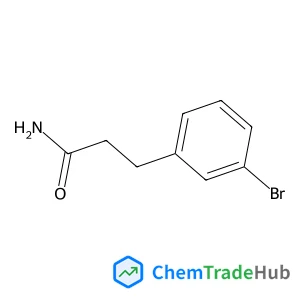
![N-{3-[Benzyl(methyl)amino]propyl}-9-chloro-5,6,7,8-tetrahydro-2-acridinecarboxamide structure](https://static.chemtradehub.com/structs/142/1426944-49-1-1e4c.webp "N-{3-[Benzyl(methyl)amino]propyl}-9-chloro-5,6,7,8-tetrahydro-2-acridinecarboxamide structure")
N-{3-[Benzyl(methyl)amino]propyl}-9-chloro-5,6,7,8-tetrahydro-2-acridinecarboxamide
CAS Number:
1426944-49-1
Molecular Formula:
C25H28ClN3O
Recommended Suppliers





Disclaimer
This page provides academic journal information for reference and research purposes only. We are not affiliated with any journal publishers and do not handle publication submissions. For publication-related inquiries, please contact the respective journal publishers directly.
If you notice any inaccuracies in the information displayed, please contact us at support@chemtradehub.com. We will promptly review and address your concerns.