












Use of the thyrocyte sodium iodide symporter as the basis for a perchlorate cell-based assay
Literature Information
Publication Date
2008-10-30
DOI
10.1039/B802710B
Impact Factor
4.616
Authors
Irene E. MacAllister, Michael G. Jakoby IV, Bruce Geryk, Roger L. Schneider, Donald M. Cropek
View Original
Abstract
Perchlorates are strong oxidants widely employed in military and civilian energetic materials and recently have been scrutinized as persistent environmental pollutants. The perchlorate anion, ClO4−, is a well-known and potent competitive inhibitor of iodide transport by the sodium iodide symporter (NIS) expressed in the basolateral membranes of thyroid follicular cells (thyrocytes). Iodide uptake by thyroid follicular cells is rapid and reproducible. The competitive radiotransporter assay in this study shows promise as a rapid and convenient method to assay for ClO4− in water samples at the nM level. This work describes the initial efforts to define the assay conditions that enhance NIS selectivity for ClO4−. Experiments of 10 min co-incubation of ClO4− and 125I− demonstrate a more significant effect on 125I−transport, with a quantifiable ClO4− concentration range of 50 nM (5 ppb) to 2 μM (200 ppb), and IC50 of 180 nM (18 ppb), nearly three-fold lower than previous reports. Since the IC50 in our assay for other known competitor anions (SCN−, ClO3−, NO3−) remains unchanged from previous research, the increased sensitivity for ClO4− also produces a three-fold enhancement in selectivity. In addition to the possible applicability of the thyrocyte to the development of a cellular perchlorate biosensor, we propose that the high affinity of the NIS for ClO4− also creates the potential for exploiting this membrane protein as a selective, sensitive, and broadly applicable biomechanical mechanism for controlled movement and concentration of perchlorate.
Related Literature
Topological analysis of vapor–liquid equilibrium diagrams for distillation process design
Sergei Blagov, Hans Hasse
2002-02-15
Paper
DOI: 10.1039/B109541B
Electrodeposition at polarisable liquid|liquid interfaces: The role of interfacial tension on nucleation kinetics
Christoffer Johans, Peter Liljeroth, Kyösti Kontturi
2002-02-13
Paper
DOI: 10.1039/B110182J
Infrared and Raman spectra, conformational stability, vibrational assignment, ab initio calculations and r0 structural parameters for N-methylpropargyl amine
Gamil A. Guirgis, Stephen Bell, Chao Zheng, James R. Durig
2002-03-19
Paper
DOI: 10.1039/B109222G
Inelastic neutron scattering spectra of the transverse acoustic modes of the normal alkanes
John Tomkinson, Stewart F. Parker, Dale A. Braden, Bruce S. Hudson
2002-01-30
Paper
DOI: 10.1039/B110091B
Excited-state hydrogen detachment and hydrogen transfer driven by repulsive 1πσ* states: A new paradigm for nonradiative decay in aromatic biomolecules
A. L. Sobolewski, W. Domcke, C. Dedonder-Lardeux, C. Jouvet
2002-02-28
Invited Article
DOI: 10.1039/B110941N
Solvent effects in the photodenitrogenation of the azoalkane diazabicyclo[2.2.1]hept-2-ene: viscosity- and polarity-controlled stereoselectivity in housane formation from the diazenyl diradical
Waldemar Adam, Manfred Diedering
2002-02-13
Paper
DOI: 10.1039/B110562K
On the chemical properties of sedimentary sulfur in estuarine environments
G. Billon, B. Ouddane, L. Gengembre, A. Boughriet
2002-01-23
Paper
DOI: 10.1039/B108638N
Direct evidence for fixed ionic groups in the hydrogel of an electrolyte diode
Kristóf Iván, Norbert Kirschner, Mária Wittmann, Viktor Jakab, Zoltán Noszticzius, John H. Merkin, Stephen K. Scott
2002-02-22
Paper
DOI: 10.1039/B109016J
On the classification of generic phenomena in one-parameter families of thermodynamic binary mixtures
P. Valentin
2002-02-15
Paper
DOI: 10.1039/B109105K
Photo- and radiation-chemical production of radical cations of methylbenzenes and benzyl alcohols and their reactivity in aqueous solution
2002-03-14
Paper
DOI: 10.1039/B109974D
You might also like
Compound Q&A
What regulatory guidelines apply to 6-Bromo-2-methylimidazo[1,2-a]pyrimidine (CAS: 1111638-05-1)?
6-Bromo-2-methylimidazo[1,2-a]pyrimidine (CAS: 1111638-05-1) falls under various...
1111638-05-16-Bromo-2-methylimid...
Compound Q&A
Are there alternatives to 1-Pyrrolidineethanol, β-methyl-α-phenyl-, (αS,βR) (CAS: 123620-80-4) in synthesis?
While there are no direct alternatives, similar compounds like 1-Pyrrolidineetha...
123620-80-41-Pyrrolidineethanol...
Compound Q&A
Is 4-Methyl-2,6-bis(2-methyl-2-propanyl)phenyl methylcarbamate (CAS: 1918-11-2) safe?
4-Methyl-2,6-bis(2-methyl-2-propanyl)phenyl methylcarbamate (CAS: 1918-11-2) is ...
1918-11-24-Methyl-2,6-bis(2-m...
Compound Q&A
How should 2-(3-Bromo-4-fluorophenyl)-1,3-dioxolane (CAS: 77771-04-1) be stored?
2-(3-Bromo-4-fluorophenyl)-1,3-dioxolane (CAS: 77771-04-1) should be stored in a...
77771-04-12-(3-Bromo-4-fluorop...
Compound Q&A
What are the physical and chemical properties of 4,5,6,7-Tetrahydro-1H-indazole hydrochloride (CAS: 18161-11-0)?
4,5,6,7-Tetrahydro-1H-indazole hydrochloride is a white crystalline solid with a...
18161-11-04,5,6,7-Tetrahydro-1...
Compound Q&A
What is (2R)-1-Methoxy-3-phenyl-2-propanamine (CAS: 59919-07-2)?
(2R)-1-Methoxy-3-phenyl-2-propanamine is a chiral organic compound with the CAS ...
59919-07-2(2R)-1-Methoxy-3-phe...
Compound Q&A
What industries use Ethyl 1-(1-phenylethyl)-1H-imidazole-5-carboxylate (CAS: 56649-47-9)?
Ethyl 1-(1-phenylethyl)-1H-imidazole-5-carboxylate is used in various industries...
56649-47-9Ethyl 1-(1-phenyleth...
Compound Q&A
What regulatory guidelines apply to 4-[(1E,3S)-1-(4-Hydroxyphenyl)-1,4-pentadien-3-yl]phenol (CAS: 17676-24-3)?
4-[(1E,3S)-1-(4-Hydroxyphenyl)-1,4-pentadien-3-yl]phenol (CAS: 17676-24-3) falls...
17676-24-34-[(1E,3S)-1-(4-Hydr...
Compound Q&A
What industries use (S)-3-Amino-5-phenylpentanoic acid hydrochloride (CAS: 331846-97-0)?
(S)-3-Amino-5-phenylpentanoic acid hydrochloride is primarily used in the pharma...
331846-97-0(S)-3-Amino-5-phenyl...
Compound Q&A
How is 7-methoxy-1-benzothiophene-2-carboxylic acid (CAS: 88791-07-5) typically synthesized?
7-Methoxy-1-benzothiophene-2-carboxylic acid is typically synthesized by reactin...
88791-07-57-methoxy-1-benzothi...
Source Journal
Analyst

CiteScore:
7.8
Self-citation Rate:
5.6%
Articles per Year:
653
Analyst publishes analytical and bioanalytical research that reports premier fundamental discoveries and inventions, and the applications of those discoveries, unconfined by traditional discipline barriers.
Recommended Compounds
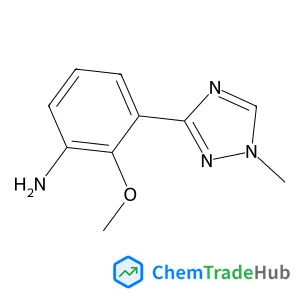
2-Methoxy-3-(1-methyl-1H-1,2,4-triazol-3-yl)aniline
CAS Number:
1609394-10-6
Molecular Formula:
C10H12N4O
![4-Penten-1-yl 2-[(2-furylmethyl)(1H-imidazol-1-ylcarbonyl)amino]butanoate structure](https://static.chemtradehub.com/structs/101/101903-30-4-ac34.webp "4-Penten-1-yl 2-[(2-furylmethyl)(1H-imidazol-1-ylcarbonyl)amino]butanoate structure")
4-Penten-1-yl 2-[(2-furylmethyl)(1H-imidazol-1-ylcarbonyl)amino]butanoate
CAS Number:
101903-30-4
Molecular Formula:
C18H23N3O4
Recommended Suppliers







Disclaimer
This page provides academic journal information for reference and research purposes only. We are not affiliated with any journal publishers and do not handle publication submissions. For publication-related inquiries, please contact the respective journal publishers directly.
If you notice any inaccuracies in the information displayed, please contact us at support@chemtradehub.com. We will promptly review and address your concerns.