



Topological analysis of vapor–liquid equilibrium diagrams for distillation process design
Literature Information
Publication Date
2002-02-15
DOI
10.1039/B109541B
Impact Factor
3.676
Authors
Sergei Blagov, Hans Hasse
View Original
Abstract
Residues curve and distillation line maps have become an important tool for conceptual distillation process design. These maps are based solely on thermodynamic information on the vapor–liquid equilibrium and are called vapor–liquid equilibrium (VLE) diagrams here. They give, among other, information on the composition regions, in which products of a distillation process can be found. The entire composition simplex can be divided into distinct distillation regions separated by distillation boundaries, which usually cannot be passed in distillative separations. Up to now, VLE-diagrams are mostly used for the well-studied case of ternary systems, for which analysis and visualization is straightforward. However, in many applications, systems containing more than three components have to be considered and, hence, multicomponent VLE-diagrams are needed. In the present work, two approaches are suggested for automated synthesis of VLE-diagrams, which can be applied to any system of interest without limitations to its complexity. The first method is hierarchical and based on a sequential consideration of all constituent subsystems of the system of interest and combining the results to synthezise the VLE-diagram. The second approach is evolutional, because the multicomponent system is considered as it is, but the structure of the diagram is changed from the simplest state of a zeotropic system to the end state with all azeotropes. Both approaches are in principle combinatorial, but the first one needs consistency criteria to discriminate the proposed diagrams, whereas the second one produces always consistent diagrams.
Recommended Journals

Journal of Peptide Science

Organic Process Research & Development

Russian Journal of Coordination Chemistry

Drug Discovery Today

Acta Materialia

Journal of Natural Medicines

Chemistry Education Research and Practice

Russian Journal of Bioorganic Chemistry

Russian Chemical Bulletin

Journal of Saudi Chemical Society
Related Literature
Metal-free late-stage C(sp2)–H functionalization of N-aryl amines with various sodium salts
Chandrashekar Mudithanapelli, Mi-hyun Kim
2019-11-26
Paper
DOI: 10.1039/C9OB02217A
δ-Cyano substituted para-quinone methides enable access to unsymmetric tri- and tetraarylmethanes containing all-carbon quaternary stereocenters
Yue Qi, Fang Zhang, Lin Wang, Aili Feng, Rongxiu Zhu, Shutao Sun, Wei Li, Lei Liu
2020-04-25
Paper
DOI: 10.1039/D0OB00551G
Free-base porphyrins with localized NH protons. Can substituents alone stabilize the elusive cis tautomer?
Kolle E. Thomas, Christine M. Beavers, Abhik Ghosh
2020-03-26
Paper
DOI: 10.1039/D0OB00452A
Toward the total synthesis of grayanane diterpene mollanol A by a Prins [3 + 2] strategy
Jianzhuang Miao, Yi-Xuan Zheng, Shi-Chao Lu, Shi-Peng Zhang, Ya-Ling Gong, Shu Xu
2020-02-15
Communication
DOI: 10.1039/D0OB00160K
Synthesis of trehalose glycolipids
Santanu Jana, Suvarn S. Kulkarni
2020-02-20
Review Article
DOI: 10.1039/D0OB00041H
Copper-catalyzed diastereoselective hydrothioetherification of oxa(aza)benzonorbornadienes
Yongqi Yao, Wen Yang, Yun Tan, Shuqi Chen, Donghan Chen, Dingqiao Yang
2020-04-20
Paper
DOI: 10.1039/D0OB00659A
You might also like
Compound Q&A
What regulatory guidelines apply to 6-Bromo-2-methylimidazo[1,2-a]pyrimidine (CAS: 1111638-05-1)?
6-Bromo-2-methylimidazo[1,2-a]pyrimidine (CAS: 1111638-05-1) falls under various...
1111638-05-16-Bromo-2-methylimid...
Compound Q&A
Are there alternatives to 1-Pyrrolidineethanol, β-methyl-α-phenyl-, (αS,βR) (CAS: 123620-80-4) in synthesis?
While there are no direct alternatives, similar compounds like 1-Pyrrolidineetha...
123620-80-41-Pyrrolidineethanol...
Compound Q&A
Is 4-Methyl-2,6-bis(2-methyl-2-propanyl)phenyl methylcarbamate (CAS: 1918-11-2) safe?
4-Methyl-2,6-bis(2-methyl-2-propanyl)phenyl methylcarbamate (CAS: 1918-11-2) is ...
1918-11-24-Methyl-2,6-bis(2-m...
Compound Q&A
How should 2-(3-Bromo-4-fluorophenyl)-1,3-dioxolane (CAS: 77771-04-1) be stored?
2-(3-Bromo-4-fluorophenyl)-1,3-dioxolane (CAS: 77771-04-1) should be stored in a...
77771-04-12-(3-Bromo-4-fluorop...
Compound Q&A
What are the physical and chemical properties of 4,5,6,7-Tetrahydro-1H-indazole hydrochloride (CAS: 18161-11-0)?
4,5,6,7-Tetrahydro-1H-indazole hydrochloride is a white crystalline solid with a...
18161-11-04,5,6,7-Tetrahydro-1...
Compound Q&A
What is (2R)-1-Methoxy-3-phenyl-2-propanamine (CAS: 59919-07-2)?
(2R)-1-Methoxy-3-phenyl-2-propanamine is a chiral organic compound with the CAS ...
59919-07-2(2R)-1-Methoxy-3-phe...
Compound Q&A
What industries use Ethyl 1-(1-phenylethyl)-1H-imidazole-5-carboxylate (CAS: 56649-47-9)?
Ethyl 1-(1-phenylethyl)-1H-imidazole-5-carboxylate is used in various industries...
56649-47-9Ethyl 1-(1-phenyleth...
Compound Q&A
What regulatory guidelines apply to 4-[(1E,3S)-1-(4-Hydroxyphenyl)-1,4-pentadien-3-yl]phenol (CAS: 17676-24-3)?
4-[(1E,3S)-1-(4-Hydroxyphenyl)-1,4-pentadien-3-yl]phenol (CAS: 17676-24-3) falls...
17676-24-34-[(1E,3S)-1-(4-Hydr...
Compound Q&A
What industries use (S)-3-Amino-5-phenylpentanoic acid hydrochloride (CAS: 331846-97-0)?
(S)-3-Amino-5-phenylpentanoic acid hydrochloride is primarily used in the pharma...
331846-97-0(S)-3-Amino-5-phenyl...
Compound Q&A
How is 7-methoxy-1-benzothiophene-2-carboxylic acid (CAS: 88791-07-5) typically synthesized?
7-Methoxy-1-benzothiophene-2-carboxylic acid is typically synthesized by reactin...
88791-07-57-methoxy-1-benzothi...
Source Journal
Physical Chemistry Chemical Physics

CiteScore:
5.5
Self-citation Rate:
10.3%
Articles per Year:
3036
Physical Chemistry Chemical Physics (PCCP) is an international journal co-owned by 19 physical chemistry and physics societies from around the world. This journal publishes original, cutting-edge research in physical chemistry, chemical physics and biophysical chemistry. To be suitable for publication in PCCP, articles must include significant innovation and/or insight into physical chemistry; this is the most important criterion that reviewers and Editors will judge against when evaluating submissions. The journal has a broad scope and welcomes contributions spanning experiment, theory, computation and data science. Topical coverage includes spectroscopy, dynamics, kinetics, statistical mechanics, thermodynamics, electrochemistry, catalysis, surface science, quantum mechanics, quantum computing and machine learning. Interdisciplinary research areas such as polymers and soft matter, materials, nanoscience, energy, surfaces/interfaces, and biophysical chemistry are welcomed if they demonstrate significant innovation and/or insight into physical chemistry. Joined experimental/theoretical studies are particularly appreciated when complementary and based on up-to-date approaches.
Recommended Compounds
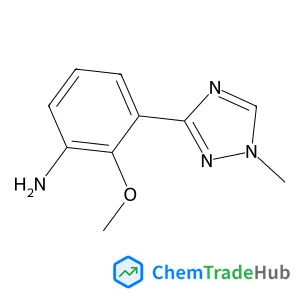
2-Methoxy-3-(1-methyl-1H-1,2,4-triazol-3-yl)aniline
CAS Number:
1609394-10-6
Molecular Formula:
C10H12N4O
![Benzeneacetic acid, 2-[(2,6-dichlorophenyl)amino]-, compd. with 1-pyrrolidineethanol (1:1) structure](https://static.chemtradehub.com/structs/119/119623-66-4-5301.webp "Benzeneacetic acid, 2-[(2,6-dichlorophenyl)amino]-, compd. with 1-pyrrolidineethanol (1:1) structure")
Benzeneacetic acid, 2-[(2,6-dichlorophenyl)amino]-, compd. with 1-pyrrolidineethanol (1:1)
CAS Number:
119623-66-4
Molecular Formula:
C20H24Cl2N2O3


Recommended Suppliers






Disclaimer
This page provides academic journal information for reference and research purposes only. We are not affiliated with any journal publishers and do not handle publication submissions. For publication-related inquiries, please contact the respective journal publishers directly.
If you notice any inaccuracies in the information displayed, please contact us at support@chemtradehub.com. We will promptly review and address your concerns.