













Zinc ferrite nanoparticles as MRI contrast agents
Literature Information
Publication Date
2008-03-11
DOI
10.1039/B801041B
Impact Factor
6.222
Authors
Carlos Bárcena, Amandeep K. Sra, Girija S. Chaubey, Chalermchai Khemtong, J. Ping Liu, Jinming Gao
View Original
Abstract
Mixed spinel hydrophobic ZnxFe1−xO·Fe2O3 (up to x = 0.34) nanoparticles encapsulated in polymeric micelles exhibited increased T2 relaxivity and sensitivity of detection over clinically used Feridex®.
Related Literature
Hole-transport functionalized copper(i) dye sensitized solar cells
Biljana Bozic-Weber, Sven Y. Brauchli, Edwin C. Constable, Sebastian O. Fürer, Catherine E. Housecroft, Iain A. Wright
2013-02-25
Communication
DOI: 10.1039/C3CP50562F
Nanoporous platinum thin films synthesized by electrochemical dealloying for nonenzymatic glucose detection
Sang Hoon Kim, Jeong Beom Choi, Joung Min Lee, Sejin Park, Taek Dong Chung, Ji Young Byun
2012-12-17
Paper
DOI: 10.1039/C2CP43097E
Multi-scale modeling and synthesis of polyester ionomers
Dragan Nikolić, Karen A. Moffat, Valerie M. Farrugia, Alexander E. Kobryn, Sergey Gusarov, Jordan H. Wosnick
2013-02-05
Paper
DOI: 10.1039/C3CP44285C
Effects of backbone rigidity on the local structure and dynamics in polymer melts and glasses
Rajeev Kumar, Monojoy Goswami, Bobby G. Sumpter
2013-01-28
Paper
DOI: 10.1039/C3CP43737J
77Se solid-state NMR of As2Se3, As4Se4 and As4Se3 crystals: a combined experimental and computational study
Kateryna Sykina, Guang Yang, Claire Roiland, Laurent Le Pollès, Eric Le Fur, Chris J. Pickard, Bruno Bureau, Eric Furet
2013-03-07
Paper
DOI: 10.1039/C3CP41689E
Template-free synthesis of 3D Nb3O7F hierarchical nanostructures and enhanced photocatalytic activities
Zheng Wang, Jungang Hou, Chao Yang, Shuqiang Jiao, Kai Huang, Hongmin Zhu
2013-01-24
Paper
DOI: 10.1039/C2CP44326K
Microsecond folding experiments and simulations: a match is made
M. B. Prigozhin
2013-01-29
Perspective
DOI: 10.1039/C3CP43992E
High-precision measurement-based correlation studies among atomic force microscopy, Rayleigh scattering, and surface-enhanced Raman scattering at the single-molecule level
Hae Mi Lee, Jung-Hoon Lee, Hyung Min Kim, Seung Min Jin, Hyo Sun Park, Jwa-Min Nam, Yung Doug Suh
2013-01-08
Paper
DOI: 10.1039/C3CP43817A
Formation and decay of a compressed phase of 4,4′-biphenyldicarboxylic acid on Cu(001)
Daniel Schwarz, Raoul van Gastel, Harold J. W. Zandvliet, Bene Poelsema
2013-02-07
Paper
DOI: 10.1039/C3CP00049D
You might also like
Compound Q&A
How should waste containing (6-Bromo-2-naphthyl)oxy](dimethyl)(2-methyl-2-propanyl)silane be handled?
Waste containing (6-Bromo-2-naphthyl)oxy](dimethyl)(2-methyl-2-propanyl)silane (...
100751-65-3[(6-Bromo-2-naphthyl...
Compound Q&A
How is 7-Fluoro-4-isoquinolinecarboxylic acid (CAS: 1841081-40-0) typically synthesized?
7-Fluoro-4-isoquinolinecarboxylic acid can be synthesized via a multi-step proce...
1841081-40-07-Fluoro-4-isoquinol...
Compound Q&A
What are the physical and chemical properties of 2,3,5,6-Tetrabromothieno[3,2-b]thiophene (CAS: 124638-53-5)?
2,3,5,6-Tetrabromothieno[3,2-b]thiophene is a crystalline compound with a high m...
124638-53-52,3,5,6-Tetrabromoth...
Compound Q&A
Is 1-[4-(Benzylamino)-7,8-dihydro-5H-pyrano[4,3-d]pyrimidin-2-yl]-2-methyl-1H-indole-4-carboxamide (CAS: 1542705-92-9) safe?
1-[4-(Benzylamino)-7,8-dihydro-5H-pyrano[4,3-d]pyrimidin-2-yl]-2-methyl-1H-indol...
1542705-92-91-[4-(Benzylamino)-7...
Compound Q&A
What is the market or research trend for imidazo[5,1-d]-1,2,3,5-tetrazine-8-carboxylic acid, 3,4-dihydro-3-methyl-4-oxo- (CAS: 113942-30-6)?
The market for imidazo[5,1-d]-1,2,3,5-tetrazine-8-carboxylic acid, 3,4-dihydro-3...
113942-30-6Imidazo[5,1-d]-1,2,3...
Compound Q&A
What is 3-(Triisopropylsilyl)propiolaldehyde (CAS: 163271-80-5)?
3-(Triisopropylsilyl)propiolaldehyde is a synthetic organic compound with the CA...
163271-80-53-(Triisopropylsilyl...
Compound Q&A
What regulatory guidelines apply to 6-Nitro-2H-1,4-benzoxazin-3(4H)-one (CAS: 81721-87-1)?
6-Nitro-2H-1,4-benzoxazin-3(4H)-one (CAS: 81721-87-1) is subject to various regu...
81721-87-16-Nitro-2H-1,4-benzo...
Compound Q&A
How should waste containing (3-Fluorophenyl)(4-{[(2-methyl-2-propanyl)oxy]carbonyl}-1-piperazinyl)acetic acid (CAS: 885272-91-3) be handled?
Waste containing (3-Fluorophenyl)(4-{[(2-methyl-2-propanyl)oxy]carbonyl}-1-piper...
885272-91-3(3-Fluorophenyl)(4-{...
Compound Q&A
What are the physical and chemical properties of N,N'-4,4'-Biphenyldiyldiisonicotinamide (CAS: 55119-40-9)?
N,N'-4,4'-Biphenyldiyldiisonicotinamide is a white crystalline solid with a mole...
55119-40-9N,N'-4,4'-Biphenyldi...
Compound Q&A
What industries use 6-Bromo-8-fluoro-2-quinazolinol (CAS: 1036756-15-6)?
6-Bromo-8-fluoro-2-quinazolinol is primarily used in the pharmaceutical industry...
1036756-15-66-Bromo-8-fluoro-2-q...
Source Journal
Chemical Communications

CiteScore:
8.6
Self-citation Rate:
4.7%
Articles per Year:
2458
ChemComm publishes urgent research which is of outstanding significance and interest to experts in the field, while also appealing to the journal’s broad chemistry readership. Our communication format is ideally suited to short, urgent studies that are of such importance that they require accelerated publication. Our scope covers all topics in chemistry, and research at the interface of chemistry and other disciplines (such as materials science, nanoscience, physics, engineering and biology) where there is a significant novelty in the chemistry aspects. Major topic areas covered include: Analytical Chemistry Catalysis Chemical Biology and medicinal chemistry Computational Chemistry and Machine Learning Energy and sustainable chemistry Environmental Chemistry Green Chemistry Inorganic Chemistry Materials Chemistry Nanoscience Organic Chemistry Physical Chemistry Polymer Chemistry Supramolecular Chemistry
Recommended Compounds


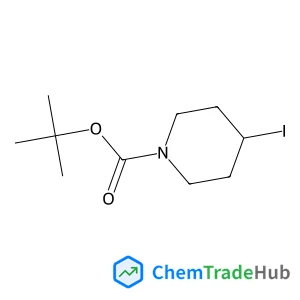
2-Methyl-2-propanyl 4-iodo-1-piperidinecarboxylate
CAS Number:
301673-14-3
Molecular Formula:
C10H18INO2
Recommended Suppliers






Disclaimer
This page provides academic journal information for reference and research purposes only. We are not affiliated with any journal publishers and do not handle publication submissions. For publication-related inquiries, please contact the respective journal publishers directly.
If you notice any inaccuracies in the information displayed, please contact us at support@chemtradehub.com. We will promptly review and address your concerns.