


Formation and decay of a compressed phase of 4,4′-biphenyldicarboxylic acid on Cu(001)
Literature Information
Publication Date
2013-02-07
DOI
10.1039/C3CP00049D
Impact Factor
3.676
Authors
Daniel Schwarz, Raoul van Gastel, Harold J. W. Zandvliet, Bene Poelsema
View Original
Abstract
The molecular arrangement of 4,4′-biphenyldicarboxylic acid (BDA) on Cu(001) has been studied at high coverage and relatively high temperature (∼400 K) using Low Energy Electron Microscopy, LEEM, and selected area diffraction, μLEED. Next to the previously reported c(8 × 8) structure, we also observe a compressed phase with a superstructure in matrix notation. All four equivalent (rotational and mirror) domains are equally populated. Both the c(8 × 8) and the compressed phase are confined to the first layer and the latter has a 14% higher density compared to the c(8 × 8) phase. Remarkably, this compressed phase is stable only during deposition and decays after interruption of the deposition. Apparently, the density of physisorbed admolecules on top of the c(8 × 8) layer has to be above a relevant threshold to allow the formation of the compressed phase.
Recommended Journals

Journal of Physics and Chemistry of Solids

Planta Medica

Journal of Medicinal Chemistry

Pure and Applied Chemistry

Journal of Heterocyclic Chemistry

Journal of Organometallic Chemistry

Proceedings of the National Academy of Sciences of the United States of America

Organic Preparations and Procedures International

Israel Journal of Chemistry

Science Progress
Related Literature
Direct monitoring of toxic compounds in air using a portable mass spectrometer
Christopher C. Mulligan, Dina R. Justes, Robert. J. Noll, Nathaniel L. Sanders, Brian C. Laughlin, R. Graham Cooks
2006-02-28
Paper
DOI: 10.1039/B517541K
Rapid detection of dengue virus in serum using magnetic separation and fluorescence detection
Won-Suk Chang, Hao Shang, Rushika M. Perera, Shee-mei Lok, Dagmar Sedlak, Richard J. Kuhn, Gil U Lee
2007-12-20
Paper
DOI: 10.1039/B710997K
Detection of carbohydrate-binding proteins by oligosaccharide-modified polypyrrole interfaces using electrochemical surface plasmon resonance
Chantal Gondran, Sébastien Fort, Serge Cosnier, Sabine Szunerits
2007-11-19
Paper
DOI: 10.1039/B714717A
Surface confined ionic liquid as a stationary phase for HPLC
Qian Wang, Gary A. Baker, Sheila N. Baker, Luis A. Colón
2006-07-21
Paper
DOI: 10.1039/B607337A
Microwave-accelerated metal-enhanced fluorescence: application to detection of genomic and exosporium anthrax DNA in <30 seconds
Kadir Aslan, Yongxia Zhang, Stephen Hibbs, Les Baillie, Michael J. R. Previte, Chris D. Geddes
2007-09-11
Paper
DOI: 10.1039/B707876E
Photoelectrochemical ruler: measurement at the micron scale
Nicole Fietkau, Javier del Campo, Roser Mas, Francesc Xavier Muñoz, Richard G. Compton
2007-08-28
Communication
DOI: 10.1039/B711828G
A novel electroreduction strategy for the determination of sulfite
Anita Isaac, Andrew J. Wain, Richard G. Compton, Callum Livingstone, James Davis
2005-09-01
Communication
DOI: 10.1039/B509721E
An all-solid-state reference electrode based on the layer-by-layer polymer coating
Nak-Hyun Kwon, Kyung-Sun Lee, Mi-Sook Won, Yoon-Bo Shim
2007-07-10
Paper
DOI: 10.1039/B706905G
NMR-based screening: a powerful tool in fragment-based drug discovery
Murray Coles
2006-05-05
Book Chapter
DOI: 10.1039/B709658P
Direct acoustic profiling of DNA hybridisation using HSV type 1 viral sequences
Yıldız Uludağ, Xin Li, Heather Coleman, Stacey Efstathiou, Matthew A. Cooper
2007-09-21
Paper
DOI: 10.1039/B711850C
You might also like
Compound Q&A
How should waste containing (6-Bromo-2-naphthyl)oxy](dimethyl)(2-methyl-2-propanyl)silane be handled?
Waste containing (6-Bromo-2-naphthyl)oxy](dimethyl)(2-methyl-2-propanyl)silane (...
100751-65-3[(6-Bromo-2-naphthyl...
Compound Q&A
How is 7-Fluoro-4-isoquinolinecarboxylic acid (CAS: 1841081-40-0) typically synthesized?
7-Fluoro-4-isoquinolinecarboxylic acid can be synthesized via a multi-step proce...
1841081-40-07-Fluoro-4-isoquinol...
Compound Q&A
What are the physical and chemical properties of 2,3,5,6-Tetrabromothieno[3,2-b]thiophene (CAS: 124638-53-5)?
2,3,5,6-Tetrabromothieno[3,2-b]thiophene is a crystalline compound with a high m...
124638-53-52,3,5,6-Tetrabromoth...
Compound Q&A
Is 1-[4-(Benzylamino)-7,8-dihydro-5H-pyrano[4,3-d]pyrimidin-2-yl]-2-methyl-1H-indole-4-carboxamide (CAS: 1542705-92-9) safe?
1-[4-(Benzylamino)-7,8-dihydro-5H-pyrano[4,3-d]pyrimidin-2-yl]-2-methyl-1H-indol...
1542705-92-91-[4-(Benzylamino)-7...
Compound Q&A
What is the market or research trend for imidazo[5,1-d]-1,2,3,5-tetrazine-8-carboxylic acid, 3,4-dihydro-3-methyl-4-oxo- (CAS: 113942-30-6)?
The market for imidazo[5,1-d]-1,2,3,5-tetrazine-8-carboxylic acid, 3,4-dihydro-3...
113942-30-6Imidazo[5,1-d]-1,2,3...
Compound Q&A
What is 3-(Triisopropylsilyl)propiolaldehyde (CAS: 163271-80-5)?
3-(Triisopropylsilyl)propiolaldehyde is a synthetic organic compound with the CA...
163271-80-53-(Triisopropylsilyl...
Compound Q&A
What regulatory guidelines apply to 6-Nitro-2H-1,4-benzoxazin-3(4H)-one (CAS: 81721-87-1)?
6-Nitro-2H-1,4-benzoxazin-3(4H)-one (CAS: 81721-87-1) is subject to various regu...
81721-87-16-Nitro-2H-1,4-benzo...
Compound Q&A
How should waste containing (3-Fluorophenyl)(4-{[(2-methyl-2-propanyl)oxy]carbonyl}-1-piperazinyl)acetic acid (CAS: 885272-91-3) be handled?
Waste containing (3-Fluorophenyl)(4-{[(2-methyl-2-propanyl)oxy]carbonyl}-1-piper...
885272-91-3(3-Fluorophenyl)(4-{...
Compound Q&A
What are the physical and chemical properties of N,N'-4,4'-Biphenyldiyldiisonicotinamide (CAS: 55119-40-9)?
N,N'-4,4'-Biphenyldiyldiisonicotinamide is a white crystalline solid with a mole...
55119-40-9N,N'-4,4'-Biphenyldi...
Compound Q&A
What industries use 6-Bromo-8-fluoro-2-quinazolinol (CAS: 1036756-15-6)?
6-Bromo-8-fluoro-2-quinazolinol is primarily used in the pharmaceutical industry...
1036756-15-66-Bromo-8-fluoro-2-q...
Source Journal
Physical Chemistry Chemical Physics

CiteScore:
5.5
Self-citation Rate:
10.3%
Articles per Year:
3036
Physical Chemistry Chemical Physics (PCCP) is an international journal co-owned by 19 physical chemistry and physics societies from around the world. This journal publishes original, cutting-edge research in physical chemistry, chemical physics and biophysical chemistry. To be suitable for publication in PCCP, articles must include significant innovation and/or insight into physical chemistry; this is the most important criterion that reviewers and Editors will judge against when evaluating submissions. The journal has a broad scope and welcomes contributions spanning experiment, theory, computation and data science. Topical coverage includes spectroscopy, dynamics, kinetics, statistical mechanics, thermodynamics, electrochemistry, catalysis, surface science, quantum mechanics, quantum computing and machine learning. Interdisciplinary research areas such as polymers and soft matter, materials, nanoscience, energy, surfaces/interfaces, and biophysical chemistry are welcomed if they demonstrate significant innovation and/or insight into physical chemistry. Joined experimental/theoretical studies are particularly appreciated when complementary and based on up-to-date approaches.
Recommended Compounds
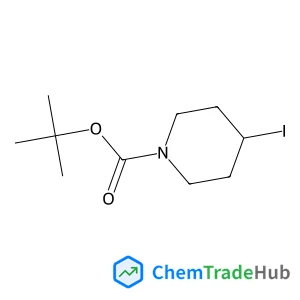
2-Methyl-2-propanyl 4-iodo-1-piperidinecarboxylate
CAS Number:
301673-14-3
Molecular Formula:
C10H18INO2
![10-(1-Azabicyclo[2.2.2]oct-3-ylmethyl)-10H-phenothiazine structure](https://static.chemtradehub.com/structs/292/29216-28-2-1d81.webp "10-(1-Azabicyclo[2.2.2]oct-3-ylmethyl)-10H-phenothiazine structure")
10-(1-Azabicyclo[2.2.2]oct-3-ylmethyl)-10H-phenothiazine
CAS Number:
29216-28-2
Molecular Formula:
C20H22N2S
Recommended Suppliers






Disclaimer
This page provides academic journal information for reference and research purposes only. We are not affiliated with any journal publishers and do not handle publication submissions. For publication-related inquiries, please contact the respective journal publishers directly.
If you notice any inaccuracies in the information displayed, please contact us at support@chemtradehub.com. We will promptly review and address your concerns.