












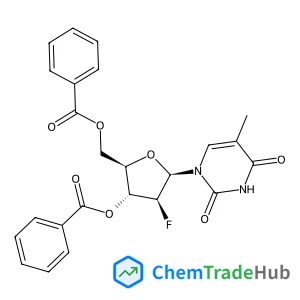
1-(3',5'-Di-O-benzoyl-2'-deoxy-2'-fluoro-b-D-arabinofuranosyl)thymine
CAS Number:
97614-47-6
Molecular Formula:
C24H21FN2O7
Zhen-Hua Qian, Hong Zheng, Bing-Yuan Su, Zhi Lan, Jin-Gou Xu
A novel rhodamine thiospirolactone chemosensor 1 was found to develop prominent absorbance and fluorescence enhancements in the presence of Hg2+ in aqueous solution and this was suggested to result from the thiospiro ring opening induced by Hg2+ binding.
Robert J. P. Corriu, Ahmad Mehdi, Catherine Reyé, Chloé Thieuleux
DOI: 10.1039/B303492P
F. Terrier, E. Le Guével, A. P. Chatrousse, G. Moutiers, E. Buncel
DOI: 10.1039/B212160N
DOI: 10.1039/B301371P
Dmitry G. Shchukin
DOI: 10.1039/B304259F
Yanhui Shi, Christopher Hall, James T. Ciszewski, Changsheng Cao, Aaron L. Odom
DOI: 10.1039/B212423H
Ashis K. Patra, Shanta Dhar, Munirathinam Nethaji, Akhil R. Chakravarty
DOI: 10.1039/B303442A
Hiroto Yoshida, Yasuhito Yamaryo, Joji Ohshita, Atsutaka Kunai
DOI: 10.1039/B303852A
Matthieu Fauré, Catherine Saccavini, Guy Lavigne
DOI: 10.1039/B303884J
Simon J. A. Pope, Alan M. Kenwright, Sarah L. Heath, Stephen Faulkner
DOI: 10.1039/B303012A
Stéphane Campidelli, Carine Eng, Isabel M. Saez, John W. Goodby, Robert Deschenaux
DOI: 10.1039/B303798N
(3.beta.)-3-Hydroxy-N,N-dimethyl-chol-5-en-24-amide (CAS: 79066-03-8) is primari...
5-(Aminomethyl)-2-methoxyphenol (CAS: 89702-89-6) is classified under GHS as a s...
Thieno[2,3-c]pyridin-7(6H)-one (CAS: 28981-13-7) is a heterocyclic organic compo...
1-[(6-Methoxy-3-pyridinyl)methyl]-4-piperidinamine dihydrochloride is generally ...
[(2E)-3-Phenyl-2-propen-1-yl]phosphonic acid (CAS: 146404-58-2) is regulated und...
6-Bromo-7-methoxyquinoline (CAS: 1620515-86-7) falls under the scope of the Glob...
This compound is primarily used in the pharmaceutical industry for the developme...
1-Ethyl-7-[2-methyl-6-(4H-1,2,4-triazol-3-yl)-3-pyridinyl]-3,5-dihydropyrazino[2...
Alternative reagents such as 2-[(dimethylamino)methyl]phenylboronic acid or rela...
3-(Piperidin-4-yloxy)pyridine (CAS: 310881-48-2) is an organic compound with the...

ChemComm publishes urgent research which is of outstanding significance and interest to experts in the field, while also appealing to the journal’s broad chemistry readership. Our communication format is ideally suited to short, urgent studies that are of such importance that they require accelerated publication. Our scope covers all topics in chemistry, and research at the interface of chemistry and other disciplines (such as materials science, nanoscience, physics, engineering and biology) where there is a significant novelty in the chemistry aspects. Major topic areas covered include: Analytical Chemistry Catalysis Chemical Biology and medicinal chemistry Computational Chemistry and Machine Learning Energy and sustainable chemistry Environmental Chemistry Green Chemistry Inorganic Chemistry Materials Chemistry Nanoscience Organic Chemistry Physical Chemistry Polymer Chemistry Supramolecular Chemistry
![N-[(6-Bromo-3-pyridinyl)methyl]ethanamine structure](https://static.chemtradehub.com/structs/120/120740-05-8-ca55.webp "N-[(6-Bromo-3-pyridinyl)methyl]ethanamine structure")
![N-[4-(Cyanoethynyl)phenyl]-16-oxo-4,7,10,13-tetraoxa-17-azahenicos-1-yn-21-amide structure](https://static.chemtradehub.com/structs/218/2183440-36-8-68cb.webp "N-[4-(Cyanoethynyl)phenyl]-16-oxo-4,7,10,13-tetraoxa-17-azahenicos-1-yn-21-amide structure")
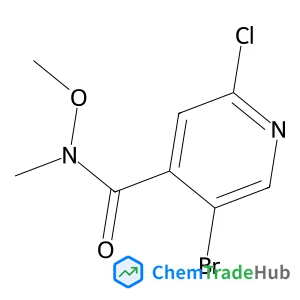
![4,4-Difluoro-2-methyl-1-{[(2-methyl-2-propanyl)oxy]carbonyl}-L-proline structure](https://static.chemtradehub.com/structs/119/1194032-23-9-f426.webp "4,4-Difluoro-2-methyl-1-{[(2-methyl-2-propanyl)oxy]carbonyl}-L-proline structure")




