


![Ethyl thieno[3,2-f]quinoline-2-carboxylate structure](https://static.chemtradehub.com/structs/299/29948-26-3-f62b.webp "Ethyl thieno[3,2-f]quinoline-2-carboxylate structure")
The development of an immobilized enzyme reactor containing glyceraldehyde-3-phosphate dehydrogenase from Trypanosoma cruzi: the effect of species' specific differences on the immobilization
Literature Information
Publication Date
2007-10-08
DOI
10.1039/B711145B
Impact Factor
4.616
Authors
Carmen Lúcia Cardoso, Marcela Cristina de Moraes, Rafael Victorio Carvalho Guido, Glaucius Oliva, Adriano Defini Andricopulo, Irving William Wainer, Quezia Bezerra Cass
View Original
Abstract
Glyceraldehyde-3-phosphate dehydrogenase (GAPDH) plays an important role in the life cycle of the Trypanosoma cruzi, and an immobilized enzyme reactor (IMER) has been developed for use in the on-line screening for GAPDH inhibitors. An IMER containing human GAPDH has been previously reported; however, these conditions produced a T. cruzi GAPDH-IMER with poor activity and stability. The factors affecting the stability of the human and T. cruzi GAPDHs in the immobilization process and the influence of pH and buffer type on the stability and activity of the IMERs have been investigated. The resulting T. cruzi GAPDH-IMER was coupled to an analytical octyl column, which was used to achieve chromatographic separation of NAD+ from NADH. The production of NADH stimulated by D-glyceraldehyde-3-phosphate was used to investigate the activity and kinetic parameters of the immobilized T. cruzi GAPDH. The Michaelis–Menten constant (Km) values determined for D-glyceraldehyde-3-phosphate and NAD+ were Km = 0.5 ± 0.05 mM and 0.648 ± 0.08 mM, respectively, which were consistent with the values obtained using the non-immobilized enzyme.
Recommended Journals

Journal of Natural Medicines

Chemistry Education Research and Practice

Russian Journal of Organic Chemistry

Current Opinion in Colloid & Interface Science

Chemical Communications

Organic Process Research & Development

Russian Chemical Bulletin

Crystallography Reports

Journal of Saudi Chemical Society

Acta Materialia
Related Literature
The transport properties of silicon and carbon nanotubes at the atomic scale: a first-principles study
Shizheng Wen, Likai Yan, Caixia Wu, Chunmei Zhang, Min Zhang
2016-07-21
Paper
DOI: 10.1039/C6CP03393H
Binary and ternary recombination of H2D+ and HD2+ ions with electrons at 80 K
Petr Dohnal, Ábel Kálosi, Radek Plašil, Štěpán Roučka, Artem Kovalenko, Serhiy Rednyk, Rainer Johnsen, Juraj Glosík
2016-08-03
Paper
DOI: 10.1039/C6CP04152C
Role of the deposition temperature on the self-assembly of the non-planar molecule benzene-1,3,5-triphosphonic acid (BTP) at the liquid–solid interface
Doan Chau Yen Nguyen, Lars Smykalla, Thi Ngoc Ha Nguyen, Michael Mehring, Michael Hietschold
2016-08-05
Paper
DOI: 10.1039/C6CP04764E
Hybridization and de-hybridization between the locally-excited (LE) state and the charge-transfer (CT) state: a combined experimental and theoretical study
Qiang Gu, Yuguang Ma
2016-05-25
Paper
DOI: 10.1039/C6CP02778D
Probing protein adsorption on a nanoparticle surface using second harmonic light scattering
A. Das, A. Chakrabarti, P. K. Das
2016-08-03
Paper
DOI: 10.1039/C6CP02196D
Effect of aromatic ring fluorination on CH⋯π interactions: microwave spectrum and structure of the 1,2-difluorobenzene⋯acetylene dimer
Anuradha G. Akmeemana, Justin M. Kang, Rachel E. Dorris, Rebecca D. Nelson, Ashley M. Anderton, Rebecca A. Peebles, Sean A. Peebles, Nathan A. Seifert, Brooks H. Pate
2016-08-17
Paper
DOI: 10.1039/C6CP04737H
Utilization of the Donnan potential induced by reverse salt flux in pressure retarded osmosis systems
Chul Ho Park, Sung Jo Kwak, Joo-Youn Nam, Moon Seok Jang, Jung-Hyun Lee
2016-08-15
Communication
DOI: 10.1039/C6CP03939A
Rotational dynamics of water molecules near biological surfaces with implications for nuclear quadrupole relaxation
Daniel Braun, Michael Schmollngruber, Othmar Steinhauser
2016-08-18
Paper
DOI: 10.1039/C6CP04000D
Lithium ion solvation by ethylene carbonates in lithium-ion battery electrolytes, revisited by density functional theory with the hybrid solvation model and free energy correction in solution
Wei Cui, Yves Lansac, Hochun Lee, Seung-Tae Hong
2016-07-29
Paper
DOI: 10.1039/C6CP01667G
You might also like
Compound Q&A
Is 2-(2-chloroacetamido)-3-phenylpropanoic acid (CAS: 7765-11-9) safe?
2-(2-Chloroacetamido)-3-phenylpropanoic acid (CAS: 7765-11-9) is generally consi...
7765-11-92-(2-chloroacetamido...
Compound Q&A
Is 2-(Benzyloxy)-5-bromobenzoic acid (CAS: 62176-31-2) safe?
2-(Benzyloxy)-5-bromobenzoic acid can be handled safely if appropriate precautio...
62176-31-22-(Benzyloxy)-5-brom...
Compound Q&A
What is (4-Methyl-1,2,5-oxadiazol-3-yl)methanamine hydrochloride (CAS: 1159825-48-5)?
(4-Methyl-1,2,5-oxadiazol-3-yl)methanamine hydrochloride is a chemical compound ...
1159825-48-5(4-Methyl-1,2,5-oxad...
Compound Q&A
What is 2-(5-Hexylthiophen-2-yl)-4,4,5,5-tetramethyl-1,3,2-dioxaborolane (CAS: 917985-54-7)?
2-(5-Hexylthiophen-2-yl)-4,4,5,5-tetramethyl-1,3,2-dioxaborolane (CAS: 917985-54...
917985-54-72-(5-Hexylthiophen-2...
Compound Q&A
Are there alternatives to 4-(8-Methyl-9H-1,3-dioxolo[4,5-h][2,3]benzodiazepin-5-yl)benzenamine (CAS: 102771-26-6) in synthesis?
While 4-(8-Methyl-9H-1,3-dioxolo[4,5-h][2,3]benzodiazepin-5-yl)benzenamine (CAS:...
102771-26-64-(8-Methyl-9H-1,3-d...
Compound Q&A
What is the market or research trend for tert-butyl 3-hydroxy-4,5,7,8-tetrahydro-2H-pyrazolo[3,4-d]azepine-6-carboxylate (CAS: 851376-80-2)?
The market for tert-butyl 3-hydroxy-4,5,7,8-tetrahydro-2H-pyrazolo[3,4-d]azepine...
851376-80-2tert-butyl 3-hydroxy...
Compound Q&A
How should waste containing 3,5-Diamino-1H-pyrazole-4-carbonitrile (CAS: 6844-58-2) be handled?
Waste containing 3,5-Diamino-1H-pyrazole-4-carbonitrile (CAS: 6844-58-2) should ...
6844-58-23,5-Diamino-1H-pyraz...
Compound Q&A
How is (6-Fluoro-3-pyridinyl)boronic acid (CAS: 351019-18-6) typically synthesized?
(6-Fluoro-3-pyridinyl)boronic acid can be synthesized through the reaction of 6-...
351019-18-6(6-Fluoro-3-pyridiny...
Compound Q&A
What industries use Dibenzyl carbonimidoylbiscarbamate (CAS: 10065-79-9)?
Dibenzyl carbonimidoylbiscarbamate (CAS: 10065-79-9) finds applications in vario...
10065-79-9Dibenzyl carbonimido...
Compound Q&A
What is the market or research trend for (beta,beta,2,3,4,5,6-~2~H_7_)Phenylalanine (CAS: 74228-83-4)?
The market for (beta,beta,2,3,4,5,6-~2~H_7_)Phenylalanine (CAS: 74228-83-4) is g...
74228-83-4(beta,beta,2,3,4,5,6...
Source Journal
Analyst

CiteScore:
7.8
Self-citation Rate:
5.6%
Articles per Year:
653
Analyst publishes analytical and bioanalytical research that reports premier fundamental discoveries and inventions, and the applications of those discoveries, unconfined by traditional discipline barriers.
Recommended Compounds
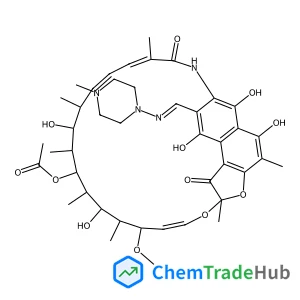
![(1S)-1,5-Anhydro-2-O-alpha-L-arabinopyranosyl-1-[5-hydroxy-7-({6-O-[3-(4-hydroxy-3-methoxyphenyl)propanoyl]-beta-D-glucopyranosyl}oxy)-2-(4-hydroxyphenyl)-4-oxo-4H-chromen-6-yl]-D-glucitol structure](https://static.chemtradehub.com/structs/225/2252345-81-4-bcff.webp "(1S)-1,5-Anhydro-2-O-alpha-L-arabinopyranosyl-1-[5-hydroxy-7-({6-O-[3-(4-hydroxy-3-methoxyphenyl)propanoyl]-beta-D-glucopyranosyl}oxy)-2-(4-hydroxyphenyl)-4-oxo-4H-chromen-6-yl]-D-glucitol structure")
Recommended Suppliers





Disclaimer
This page provides academic journal information for reference and research purposes only. We are not affiliated with any journal publishers and do not handle publication submissions. For publication-related inquiries, please contact the respective journal publishers directly.
If you notice any inaccuracies in the information displayed, please contact us at support@chemtradehub.com. We will promptly review and address your concerns.