












Cyclometallated iridium(iii) complexes with substituted 1,10-phenanthrolines: a new class of highly active organometallic second order NLO-phores with excellent transparency with respect to second harmonic emission
Literature Information
Publication Date
2007-08-02
DOI
10.1039/B708073E
Impact Factor
6.222
Authors
Claudia Dragonetti, Stefania Righetto, Renato Ugo, Adriana Valore, Simona Fantacci, Antonio Sgamellotti, Filippo De Angelis
View Original
Abstract
[Ir(ppy)2(5-R-1,10-phen)][PF6] (ppy = cyclometallated 2-phenylpyridine, phen = phenanthroline, R = H, Me, NMe2, NO2) and [Ir(ppy)2(4-R′,7-R′-1,10-phen)][PF6] (R′ = Me, Ph) complexes are characterized by one of the highest second order NLO response (measured by the EFISH technique) reported for a metal complex, mainly due (as suggested by a theoretical SOS-TDDFT investigation) to MLCT processes from the ppy–Ir based moiety acting as donor push system to π* orbitals of phen, acting as an acceptor pull system; the good transparency to the second harmonic emission renders these NLO-phores appealing as building blocks for molecular materials with second harmonic generation.
Related Literature
Intramolecular hydrogen tunneling in 2-chloromalonaldehyde trapped in solid para-hydrogen
Michèle Chevalier, Justinas Ceponkus, Claudine Crépin
2020-02-13
Paper
DOI: 10.1039/C9CP06866J
A molecular device providing a remarkable spin filtering effect due to the central molecular stretch caused by lateral zigzag graphene nanoribbon electrodes
Xiaoyue Liu, Jueming Yang, Xingwu Zhai, Hongxia Yan, Yanwen Zhang, Long Zhou
2020-02-28
Paper
DOI: 10.1039/D0CP00238K
Do defects in PAHs promote catalytic activity in space? Stone–Wales pyrene as a test case
Dario Campisi
2020-02-28
Paper
DOI: 10.1039/C9CP06523G
Rapid improvements in charge carrier mobility at ionic liquid/pentacene single crystal interfaces by self-cleaning
Yusuke Morino, Hisaya Hara, Ken-ichi Bando, Sakurako Ono, Akihito Imanishi, Yugo Okada, Hiroyuki Matsui, Takafumi Uemura, Jun Takeya
2020-02-24
Paper
DOI: 10.1039/D0CP00149J
Real-time degradation dynamics of hydrated per- and polyfluoroalkyl substances (PFASs) in the presence of excess electrons
Sharma S. R. K. C. Yamijala, Ravindra Shinde, Bryan M. Wong
2020-01-22
Communication
DOI: 10.1039/C9CP06797C
Shape controlled assembly of carboxylic acids: formation of a binary monolayer by intercalation into molecular nanotunnels
Rodrigo Ortiz de la Morena, Andika Asyuda, Hao Lu, Hannah Aitchison, Kelly Turner, Stephen M. Francis, Michael Zharnikov, Manfred Buck
2020-02-11
Paper
DOI: 10.1039/C9CP06724H
Weak-field ligands enable inert early transition metal oxides to convert methane to methanol: the case of ZrO
Benjamin A. Jackson, Evangelos Miliordos
2020-03-05
Paper
DOI: 10.1039/C9CP06050B
On the development of a gold-standard potential energy surface for the OH− + CH3I reaction
Domonkos A. Tasi, Tibor Győri, Gábor Czakó
2020-01-27
Communication
DOI: 10.1039/C9CP07007A
Theoretical study of the reaction mechanism and kinetics of the phenyl + propargyl association
Alexander N. Morozov, Alexander M. Mebel
2020-03-09
Paper
DOI: 10.1039/D0CP00306A
First principles study on hydrogen doping induced metal-to-insulator transition in rare earth nickelates RNiO3 (R = Pr, Nd, Sm, Eu, Gd, Tb, Dy, Yb)
Pilsun Yoo, Peilin Liao
2020-03-10
Paper
DOI: 10.1039/C9CP06522A
You might also like
Compound Q&A
How should waste containing 2-Ethyl-4-Methyl-1H-Imidazole-5-Carbaldehyde (CAS: 88634-80-4) be handled?
Waste containing 2-Ethyl-4-Methyl-1H-Imidazole-5-Carbaldehyde (CAS: 88634-80-4) ...
88634-80-42-Ethyl-4-Methyl-1H-...
Compound Q&A
What industries use Triethoxy(octyl)silane (CAS: 1385031-14-0)?
Triethoxy(octyl)silane (CAS: 1385031-14-0) is widely used in the pharmaceuticals...
1385031-14-0Triethoxy(octyl)sila...
Compound Q&A
Are there alternatives to 3-iodo-7-nitro-1H-indazole (CAS: 864724-64-1) in synthesis?
Several alternatives to 3-iodo-7-nitro-1H-indazole (CAS: 864724-64-1) exist in t...
864724-64-13-iodo-7-nitro-1H-in...
Compound Q&A
Are there alternatives to Benzene, bis[(trimethoxysilyl)ethyl] (CAS: 266317-71-9) in synthesis?
Yes, there are alternatives to Benzene, bis[(trimethoxysilyl)ethyl] (CAS: 266317...
266317-71-9Benzene, bis[(trimet...
Compound Q&A
Is Isothiazole-3-carbonitrile (CAS: 1452-17-1) safe?
Isothiazole-3-carbonitrile (CAS: 1452-17-1) is generally considered safe when us...
1452-17-1Isothiazole-3-carbon...
Compound Q&A
Is (3-Chlorophenyl)methanol (CAS: 873-63-2) safe?
(3-Chlorophenyl)methanol (CAS: 873-63-2) is considered low to moderately toxic. ...
873-63-2(3-Chlorophenyl)meth...
Compound Q&A
How is (2S,3S)-2-Hydroxy-3-({[(2-methyl-2-propanyl)oxy]carbonyl}amino)-3-(2-naphthyl)propanoic acid (CAS: 959583-98-3) typically synthesized?
(2S,3S)-2-Hydroxy-3-({[(2-methyl-2-propanyl)oxy]carbonyl}amino)-3-(2-naphthyl)pr...
959583-98-3(2S,3S)-2-Hydroxy-3-...
Compound Q&A
What precautions should be taken when handling Methyl 2-(bromomethyl)-5-methoxybenzoate (CAS: 788081-99-2)?
Proper handling of methyl 2-(bromomethyl)-5-methoxybenzoate requires the use of ...
788081-99-2Methyl 2-(bromomethy...
Compound Q&A
What is 6,8-Dibromoimidazo[1,2-a]pyridine-2-carboxylic acid (CAS: 904805-36-3)?
6,8-Dibromoimidazo[1,2-a]pyridine-2-carboxylic acid (CAS: 904805-36-3) is an aro...
904805-36-36,8-Dibromoimidazo[1...
Compound Q&A
Is 3-Amino-5-bromo-2-pyridinecarbonitrile (CAS: 573675-27-1) safe?
3-Amino-5-bromo-2-pyridinecarbonitrile is considered safe when handled under pro...
573675-27-13-Amino-5-bromo-2-py...
Source Journal
Chemical Communications

CiteScore:
8.6
Self-citation Rate:
4.7%
Articles per Year:
2458
ChemComm publishes urgent research which is of outstanding significance and interest to experts in the field, while also appealing to the journal’s broad chemistry readership. Our communication format is ideally suited to short, urgent studies that are of such importance that they require accelerated publication. Our scope covers all topics in chemistry, and research at the interface of chemistry and other disciplines (such as materials science, nanoscience, physics, engineering and biology) where there is a significant novelty in the chemistry aspects. Major topic areas covered include: Analytical Chemistry Catalysis Chemical Biology and medicinal chemistry Computational Chemistry and Machine Learning Energy and sustainable chemistry Environmental Chemistry Green Chemistry Inorganic Chemistry Materials Chemistry Nanoscience Organic Chemistry Physical Chemistry Polymer Chemistry Supramolecular Chemistry
Recommended Compounds
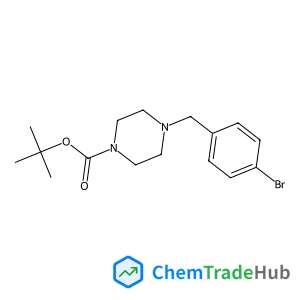
2-Methyl-2-propanyl 4-(4-bromobenzyl)-1-piperazinecarboxylate
CAS Number:
844891-10-7
Molecular Formula:
C16H23BrN2O2
Recommended Suppliers





Disclaimer
This page provides academic journal information for reference and research purposes only. We are not affiliated with any journal publishers and do not handle publication submissions. For publication-related inquiries, please contact the respective journal publishers directly.
If you notice any inaccuracies in the information displayed, please contact us at support@chemtradehub.com. We will promptly review and address your concerns.