












Directed evolution and axial chirality: optimization of the enantioselectivity of Pseudomonas aeruginosa lipase towards the kinetic resolution of a racemic allene
Literature Information
Publication Date
2007-02-21
DOI
10.1039/B700849J
Impact Factor
6.222
Authors
José Daniel Carballeira, Patrik Krumlinde, Marco Bocola, Andreas Vogel, Manfred T. Reetz, Jan-E. Bäckvall
View Original
Abstract
Directed evolution of Pseudomonas aeruginosa lipase by the use of combinatorial active site saturation test (CAST) criteria provided a highly enantioselective mutant (Leu162Phe) for kinetic resolution of an axially chiral allene, p-nitrophenyl 4-cyclohexyl-2-methylbuta-2,3-dienoate (E = 111); the high enantioselectivity of the Leu162Phe mutant was rationalized by π–π stacking.
Related Literature
Sensitive absorptive refocused scalar correlation NMR spectroscopy in solids
Daniel Lee, Jochem Struppe, Douglas W. Elliott, Leonard J. Mueller, Jeremy J. Titman
2009-03-02
Paper
DOI: 10.1039/B818867J
Computational identification of a metal organic framework for high selectivity membrane-based CO2/CH4 separations: Cu(hfipbb)(H2hfipbb)0.5
Taku Watanabe, Seda Keskin, Sankar Nair, David S. Sholl
2009-10-29
Communication
DOI: 10.1039/B918254N
Transport pathways for mobile ions in disordered solids from the analysis of energy-scaled bond-valence mismatch landscapes
Stefan Adams, R. Prasada Rao
2009-03-18
Paper
DOI: 10.1039/B901753D
Facilitated search of proteins on DNA: correlations are important
Rahul K. Das, Anatoly B. Kolomeisky
2010-02-05
Paper
DOI: 10.1039/B921303A
Re-dissolution and de-compaction of DNA–cationic surfactant complexes using non-ionic surfactants
Conrad P. Corbyn, Paul D. I. Fletcher, Rabia Gemici, Rita S. Dias, Maria G. Miguel
2009-11-06
Paper
DOI: 10.1039/B916116C
Molecular dynamics simulation of nanoconfined glycerol
R. Busselez, R. Lefort, Q. Ji, F. Affouard, D. Morineau
2009-11-05
Paper
DOI: 10.1039/B911859D
Enhancing the fluorescence of tyr-59 in ubiquitin by blocking proton transfer
Hana Gerbelová, Tiago Q. Faria, Maria Manuel Sampaio, Rainer Rudolph, António L. Maçanita, Helena Santos
2009-03-03
Paper
DOI: 10.1039/B819365G
Nanoporous oxidic solids: the confluence of heterogeneous and homogeneous catalysis
John Meurig Thomas, Juan Carlos Hernandez-Garrido, Robert Raja, Robert G. Bell
2009-03-14
Perspective
DOI: 10.1039/B819249A
Hydrogen adsorption on Pd-containing Au(111) bimetallic surfaces
Sudha Venkatachalam, Timo Jacob
2009-03-06
Paper
DOI: 10.1039/B900250B
You might also like
Compound Q&A
What precautions should be taken when handling 2-Chloro-1,2-bis(4-methylphenyl)ethanone (CAS: 71193-32-3)?
When handling 2-Chloro-1,2-bis(4-methylphenyl)ethanone (CAS: 71193-32-3), it is ...
71193-32-32-Chloro-1,2-bis(4-m...
Compound Q&A
What industries use 4-Ethoxy-3-(5-methyl-4-oxo-7-propyl-1,4-dihydroimidazo[5,1-f][1,2,4]triazin-2-yl)benzenesulfonyl chloride (CAS: 224789-26-8)?
4-Ethoxy-3-(5-methyl-4-oxo-7-propyl-1,4-dihydroimidazo[5,1-f][1,2,4]triazin-2-yl...
224789-26-84-Ethoxy-3-(5-methyl...
Compound Q&A
How should Methyl 3-Oxo-4-Androsten-17-Carboxylate (CAS: 2681-55-2) be stored?
Methyl 3-Oxo-4-Androsten-17-Carboxylate (CAS: 2681-55-2) should be stored in a c...
2681-55-2Methyl 3-Oxo-4-Andro...
Compound Q&A
What are the main uses of (R)-3-Amino-4-(3-hexylphenylamino)-4-oxobutylphosphonic acid (CAS: 909725-61-7)?
(R)-3-Amino-4-(3-hexylphenylamino)-4-oxobutylphosphonic acid is primarily used i...
909725-61-7(R)-3-Amino-4-(3-hex...
Compound Q&A
What regulatory guidelines apply to 2-Methyl-2-propanyl 3-amino-3-carbamoyl-1-azetidinecarboxylate (CAS: 1254120-14-3)?
2-Methyl-2-propanyl 3-amino-3-carbamoyl-1-azetidinecarboxylate (CAS: 1254120-14-...
1254120-14-32-Methyl-2-propanyl ...
Compound Q&A
Are there alternatives to (E)-4-(tert-Butoxy)-4-oxobut-2-enoic acid (CAS: 135355-96-3) in synthesis?
There are alternative reagents that can be used in synthesis instead of (E)-4-(t...
135355-96-3(E)-4-(tert-Butoxy)-...
Compound Q&A
What are the physical and chemical properties of [2-(3-Chlorophenyl)-1,3-thiazol-4-yl]methanol (CAS: 121202-20-8)?
[2-(3-Chlorophenyl)-1,3-thiazol-4-yl]methanol (CAS: 121202-20-8) is a crystallin...
121202-20-8[2-(3-Chlorophenyl)-...
Compound Q&A
What is the market or research trend for Methyl (2S)-[(4S)-2,2-dimethyl-1,3-dioxolan-4-yl]{[(4-methylphenyl)sulfonyl]oxy}acetate (CAS: 166249-17-8)?
The market and research trends for Methyl (2S)-[(4S)-2,2-dimethyl-1,3-dioxolan-4...
166249-17-8Methyl (2S)-[(4S)-2,...
Compound Q&A
What is the market or research trend for 1-Bromo-2-isocyanatoethane (CAS: 42865-19-0)?
The market for 1-Bromo-2-isocyanatoethane (CAS: 42865-19-0) is driven by its use...
42865-19-01-Bromo-2-isocyanato...
Compound Q&A
What are the main uses of 4-Nitro-D-phenylalanine hydrochloride (CAS: 147065-06-3)?
4-Nitro-D-phenylalanine hydrochloride (CAS: 147065-06-3) is primarily used in re...
147065-06-34-Nitro-D-phenylalan...
Source Journal
Chemical Communications

CiteScore:
8.6
Self-citation Rate:
4.7%
Articles per Year:
2458
ChemComm publishes urgent research which is of outstanding significance and interest to experts in the field, while also appealing to the journal’s broad chemistry readership. Our communication format is ideally suited to short, urgent studies that are of such importance that they require accelerated publication. Our scope covers all topics in chemistry, and research at the interface of chemistry and other disciplines (such as materials science, nanoscience, physics, engineering and biology) where there is a significant novelty in the chemistry aspects. Major topic areas covered include: Analytical Chemistry Catalysis Chemical Biology and medicinal chemistry Computational Chemistry and Machine Learning Energy and sustainable chemistry Environmental Chemistry Green Chemistry Inorganic Chemistry Materials Chemistry Nanoscience Organic Chemistry Physical Chemistry Polymer Chemistry Supramolecular Chemistry
Recommended Compounds
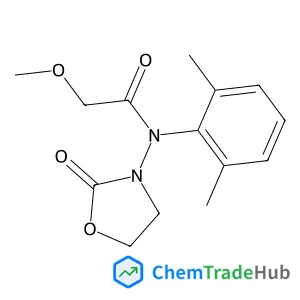
N-(2,6-Dimethylphenyl)-2-methoxy-N-(2-oxo-1,3-oxazolidin-3-yl)acetamide
CAS Number:
77732-09-3
Molecular Formula:
C14H18N2O4
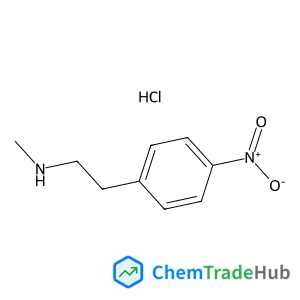
N-Methyl-2-(4-nitrophenyl)ethanamine hydrochloride (1:1)
CAS Number:
166943-39-1
Molecular Formula:
C9H13ClN2O2
Recommended Suppliers



Disclaimer
This page provides academic journal information for reference and research purposes only. We are not affiliated with any journal publishers and do not handle publication submissions. For publication-related inquiries, please contact the respective journal publishers directly.
If you notice any inaccuracies in the information displayed, please contact us at support@chemtradehub.com. We will promptly review and address your concerns.