


Hydrogen adsorption on Pd-containing Au(111) bimetallic surfaces
Literature Information
Publication Date
2009-03-06
DOI
10.1039/B900250B
Impact Factor
3.676
Authors
Sudha Venkatachalam, Timo Jacob
View Original
Abstract
Configurations of different Pd-containing Au(111) bimetallic surfaces with Pd substituents varying from one to three atoms have been studied using density functional theory. The stability of the so-formed Pd monomers, dimers or trimers in the surface and subsurface layers of a Au(111)-(3 × 3) unit cell and their influence on the adsorption of hydrogen have been investigated. We find that before hydrogen adsorption the surface prefers to form Pd monomers over dimers or trimers located in subsurface positions, which is in agreement with experimental observations. However, adsorption of atomic hydrogen reverses this trend, leading to a stabilization of Pd trimers over dimers or monomers all located in the surface layer. Also, the binding energies of two or three hydrogen atoms on clean Au(111) and selected PdAu(111) ensembles have been determined. While pure Au(111) is not able to promote hydrogen splitting, after substitution of surface atoms with Pd the adsorption energy becomes sufficiently high for this activation.
Recommended Journals

Acta Metallurgica Sinica-English Letters

Main Group Chemistry

Colloid Journal

Critical Reviews in Solid State and Materials Sciences

Journal of the Indian Institute of Science

Herald of the Russian Academy of Sciences

Bioorganic & Medicinal Chemistry

Cellulose

Medicinal Chemistry Research

Chinese Journal of Chemistry
Related Literature
Mimicking the brain functions of learning, forgetting and explicit/implicit memories with SrTiO3-based memristive devices
Xue-Bing Yin, Rui Yang, Kan-Hao Xue, Zheng-Hua Tan, Xiao-Dong Zhang, Xiang-Shui Miao, Xin Guo
2016-10-31
Paper
DOI: 10.1039/C6CP06049H
A computational study on the superionic behaviour of ThO2
P. S. Ghosh, A. Arya, G. K. Dey, N. Kuganathan, R. W. Grimes
2016-10-24
Paper
DOI: 10.1039/C6CP05794B
Ab initio thermodynamic study of the SnO2(110) surface in an O2 and NO environment: a fundamental understanding of the gas sensing mechanism for NO and NO2
Song-Nam Hong, Yun-Hyok Kye, Chol-Jun Yu, Un-Gi Jong, Gum-Chol Ri, Chang-Song Choe, Kwang-Hui Kim, Ju-Myong Han
2016-10-12
Paper
DOI: 10.1039/C6CP05433A
Solvation dynamics of an ionic probe in choline chloride-based deep eutectic solvents
Y. Cui, K. D. Fulfer, J. Ma, T. K. Weldeghiorghis, D. G. Kuroda
2016-11-01
Paper
DOI: 10.1039/C6CP06318G
Charge transfer process at the Ag/MPH/TiO2 interface by SERS: alignment of the Fermi level
Xiaolei Zhang, Huimin Sui, Xiaolei Wang, Hongyang Su, Weina Cheng, Xu Wang, Bing Zhao
2016-10-13
Paper
DOI: 10.1039/C6CP04370D
Microscopic investigations of site and functional selectivity of triazole for CO2 capture and catalytic applications
Reda Boulmène, Muthuramalingam Prakash, Majdi Hochlaf
2016-10-07
Paper
DOI: 10.1039/C6CP04650A
Conformational features of the Aβ42 peptide monomer and its interaction with the surrounding solvent
Prabir Khatua, Jaya C. Jose, Neelanjana Sengupta, Sanjoy Bandyopadhyay
2016-10-12
Paper
DOI: 10.1039/C6CP04925G
A stochastic study of electron transfer kinetics in nano-particulate photocatalysis: a comparison of the quasi-equilibrium approximation with a random walking model
Baoshun Liu, Xiujian Zhao, Jiaguo Yu, Akira Fujishima
2016-11-15
Paper
DOI: 10.1039/C6CP06320A
You might also like
Compound Q&A
What are the main uses of (3.beta.)-3-Hydroxy-N,N-dimethyl-chol-5-en-24-amide (CAS: 79066-03-8)?
(3.beta.)-3-Hydroxy-N,N-dimethyl-chol-5-en-24-amide (CAS: 79066-03-8) is primari...
79066-03-8(3.beta.)-3-Hydroxy-...
Compound Q&A
What regulatory guidelines apply to 5-(aminomethyl)-2-methoxyphenol (CAS: 89702-89-6)?
5-(Aminomethyl)-2-methoxyphenol (CAS: 89702-89-6) is classified under GHS as a s...
89702-89-65-(aminomethyl)-2-me...
Compound Q&A
What is Thieno[2,3-c]pyridin-7(6H)-one (CAS: 28981-13-7)?
Thieno[2,3-c]pyridin-7(6H)-one (CAS: 28981-13-7) is a heterocyclic organic compo...
28981-13-7Thieno[2,3-c]pyridin...
Compound Q&A
Is 1-[(6-Methoxy-3-pyridinyl)methyl]-4-piperidinamine dihydrochloride (CAS: 1185311-28-7) safe?
1-[(6-Methoxy-3-pyridinyl)methyl]-4-piperidinamine dihydrochloride is generally ...
1185311-28-71-[(6-Methoxy-3-pyri...
Compound Q&A
What regulatory guidelines apply to [(2E)-3-Phenyl-2-propen-1-yl]phosphonic acid (CAS: 146404-58-2)?
[(2E)-3-Phenyl-2-propen-1-yl]phosphonic acid (CAS: 146404-58-2) is regulated und...
146404-58-2[(2E)-3-Phenyl-2-pro...
Compound Q&A
What regulatory guidelines apply to 6-Bromo-7-methoxyquinoline (CAS: 1620515-86-7)?
6-Bromo-7-methoxyquinoline (CAS: 1620515-86-7) falls under the scope of the Glob...
1620515-86-76-Bromo-7-methoxyqui...
Compound Q&A
What industries use (2R)-1-(1-Benzofuran-2-yl)-N-propyl-2-pentanamine (CAS: 260550-89-8)?
This compound is primarily used in the pharmaceutical industry for the developme...
260550-89-8(2R)-1-(1-Benzofuran...
Compound Q&A
What are the main uses of 1-Ethyl-7-[2-methyl-6-(4H-1,2,4-triazol-3-yl)-3-pyridinyl]-3,5-dihydropyrazino[2,3-b]pyrazin-2(1H)-one (CAS: 1228013-15-7)?
1-Ethyl-7-[2-methyl-6-(4H-1,2,4-triazol-3-yl)-3-pyridinyl]-3,5-dihydropyrazino[2...
1228013-15-71-Ethyl-7-[2-methyl-...
Compound Q&A
Are there alternatives to {5-(Acryloylamino)-2-[(dimethylamino)methyl]phenyl}boronic acid (CAS: 1217500-78-1) in synthesis?
Alternative reagents such as 2-[(dimethylamino)methyl]phenylboronic acid or rela...
1217500-78-1{5-(Acryloylamino)-2...
Compound Q&A
What is 3-(Piperidin-4-yloxy)pyridine (CAS: 310881-48-2)?
3-(Piperidin-4-yloxy)pyridine (CAS: 310881-48-2) is an organic compound with the...
310881-48-23-(Piperidin-4-yloxy...
Source Journal
Physical Chemistry Chemical Physics

CiteScore:
5.5
Self-citation Rate:
10.3%
Articles per Year:
3036
Physical Chemistry Chemical Physics (PCCP) is an international journal co-owned by 19 physical chemistry and physics societies from around the world. This journal publishes original, cutting-edge research in physical chemistry, chemical physics and biophysical chemistry. To be suitable for publication in PCCP, articles must include significant innovation and/or insight into physical chemistry; this is the most important criterion that reviewers and Editors will judge against when evaluating submissions. The journal has a broad scope and welcomes contributions spanning experiment, theory, computation and data science. Topical coverage includes spectroscopy, dynamics, kinetics, statistical mechanics, thermodynamics, electrochemistry, catalysis, surface science, quantum mechanics, quantum computing and machine learning. Interdisciplinary research areas such as polymers and soft matter, materials, nanoscience, energy, surfaces/interfaces, and biophysical chemistry are welcomed if they demonstrate significant innovation and/or insight into physical chemistry. Joined experimental/theoretical studies are particularly appreciated when complementary and based on up-to-date approaches.
Recommended Compounds
![2-Hydroxy-4-[({[(4-methylphenyl)sulfonyl]oxy}acetyl)amino]benzoic acid structure](https://static.chemtradehub.com/structs/501/501919-59-1-579f.webp "2-Hydroxy-4-[({[(4-methylphenyl)sulfonyl]oxy}acetyl)amino]benzoic acid structure")
2-Hydroxy-4-[({[(4-methylphenyl)sulfonyl]oxy}acetyl)amino]benzoic acid
CAS Number:
501919-59-1
Molecular Formula:
C16H15NO7S
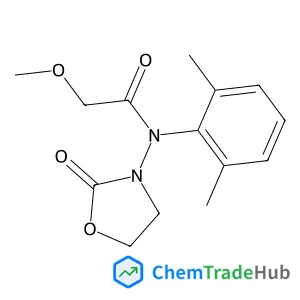
N-(2,6-Dimethylphenyl)-2-methoxy-N-(2-oxo-1,3-oxazolidin-3-yl)acetamide
CAS Number:
77732-09-3
Molecular Formula:
C14H18N2O4
Recommended Suppliers






Disclaimer
This page provides academic journal information for reference and research purposes only. We are not affiliated with any journal publishers and do not handle publication submissions. For publication-related inquiries, please contact the respective journal publishers directly.
If you notice any inaccuracies in the information displayed, please contact us at support@chemtradehub.com. We will promptly review and address your concerns.