


Ultrasensitive detection and molecular imaging with magnetic nanoparticles
Literature Information
Publication Date
2007-09-10
DOI
10.1039/B700091J
Impact Factor
4.616
Authors
Jian Yang, Jonathan Gunn, Shivang R. Dave, Miqin Zhang, Y. Andrew Wang, Xiaohu Gao
View Original
Abstract
Recent advances in nanotechnology have produced a variety of nanoparticles ranging from semiconductor quantum dots (QDs), magnetic nanoparticles (MNPs), metallic nanoparticles, to polymeric nanoparticles. Their unique electronic, magnetic, and optical properties have enabled a broad spectrum of biomedical applications such as ultrasensitive detection, medical imaging, and specific therapeutics. MNPs made from iron oxide, in particular, have attracted extensive interest and have already been used in clinical studies owing to their capability of deep-tissue imaging, non-immunogenesis, and low toxicity. In this Research Highlight article, we attempt to highlight the recent breakthroughs in MNP synthesis based on a non-hydrolytic approach, nanoparticle (NP) surface engineering, their unique structural and magnetic properties, and current applications in ultrasensitive detection and imaging with a special focus on innovative bioassays. We will also discuss our perspectives on future research directions.
Recommended Journals

Acta Materialia

Organic Process Research & Development

Current Opinion in Solid State & Materials Science

Russian Journal of Applied Chemistry

Current Opinion in Colloid & Interface Science

Russian Journal of Organic Chemistry

Russian Chemical Bulletin

Nature Medicine

Journal of Natural Medicines

Drug Discovery Today
Related Literature
Physicochemical design and analysis of self-propelled objects that are characteristically sensitive to environments
Satoshi Nakata, Hiroyuki Kitahata, Takeshi Hasegawa
2015-03-24
Perspective
DOI: 10.1039/C5CP00541H
Radical-induced, proton-transfer-driven fragmentations in [b5 − H]˙+ ions derived from pentaalanyl tryptophan
Declan Williams, Junfang Zhao, Stefanie Mädler, Yating Wang, Irine S. Saminathan, Alan C. Hopkinson
2015-03-10
Paper
DOI: 10.1039/C5CP00178A
Formation of 5- and 6-methyl-1H-indene (C10H10) via the reactions of the para-tolyl radical (C6H4CH3) with allene (H2CCCH2) and methylacetylene (HCCCH3) under single collision conditions
Tao Yang, Dorian S. N. Parker, Beni B. Dangi, Ralf I. Kaiser, Alexander M. Mebel
2015-03-03
Paper
DOI: 10.1039/C4CP04288C
Enhancing electrochemical performance by control of transport properties in buffer layers – solid oxide fuel/electrolyser cells
Devaraj Ramasamy, Narendar Nasani, Ana D. Brandão, Domingo Pérez Coll, Duncan P. Fagg
2015-04-02
Paper
DOI: 10.1039/C5CP00778J
Optical properties of irradiated imidazolium based room temperature ionic liquids: new microscopic insights into the radiation induced mutations
Apurav Guleria, Ajay K Singh, Soumyakanti Adhikari
2015-03-25
Paper
DOI: 10.1039/C4CP06070A
A fluorescent receptor for halide recognition: clues for the design of anion chemosensors
Andrea Bencini, Claudia Giorgi, Vito Lippolis, Pier Remigio Salvi
2015-03-16
Paper
DOI: 10.1039/C5CP00131E
3-Methylpiperidinium ionic liquids
Tayeb Belhocine, Stewart A. Forsyth, H. Q. Nimal Gunaratne, Mark Nieuwenhuyzen, Peter Nockemann, Alberto V. Puga, Kenneth R. Seddon, Geetha Srinivasan, Keith Whiston
2015-01-28
Paper
DOI: 10.1039/C4CP05936K
Infrared spectroscopy of N2 adsorption on size selected cobalt cluster cations in isolation
2015-03-18
Communication
DOI: 10.1039/C5CP00047E
How ABA block polymers activate cytochrome c in toluene: molecular dynamics simulation and experimental observation
Gong Chen, Xian Kong, Jingying Zhu, Diannan Lu, Zheng Liu
2015-03-12
Paper
DOI: 10.1039/C5CP00418G
Comment on “How to interpret Onsager cross terms in mixed ionic electronic conductors” by I. Riess, Phys. Chem. Chem. Phys., 2014, 16, 22513
Han-Ill Yoo, Manfred Martin, Juergen Janek
2015-03-04
Comment
DOI: 10.1039/C4CP05737F
You might also like
Compound Q&A
Is 2-(2-chloroacetamido)-3-phenylpropanoic acid (CAS: 7765-11-9) safe?
2-(2-Chloroacetamido)-3-phenylpropanoic acid (CAS: 7765-11-9) is generally consi...
7765-11-92-(2-chloroacetamido...
Compound Q&A
Is 2-(Benzyloxy)-5-bromobenzoic acid (CAS: 62176-31-2) safe?
2-(Benzyloxy)-5-bromobenzoic acid can be handled safely if appropriate precautio...
62176-31-22-(Benzyloxy)-5-brom...
Compound Q&A
What is (4-Methyl-1,2,5-oxadiazol-3-yl)methanamine hydrochloride (CAS: 1159825-48-5)?
(4-Methyl-1,2,5-oxadiazol-3-yl)methanamine hydrochloride is a chemical compound ...
1159825-48-5(4-Methyl-1,2,5-oxad...
Compound Q&A
What is 2-(5-Hexylthiophen-2-yl)-4,4,5,5-tetramethyl-1,3,2-dioxaborolane (CAS: 917985-54-7)?
2-(5-Hexylthiophen-2-yl)-4,4,5,5-tetramethyl-1,3,2-dioxaborolane (CAS: 917985-54...
917985-54-72-(5-Hexylthiophen-2...
Compound Q&A
Are there alternatives to 4-(8-Methyl-9H-1,3-dioxolo[4,5-h][2,3]benzodiazepin-5-yl)benzenamine (CAS: 102771-26-6) in synthesis?
While 4-(8-Methyl-9H-1,3-dioxolo[4,5-h][2,3]benzodiazepin-5-yl)benzenamine (CAS:...
102771-26-64-(8-Methyl-9H-1,3-d...
Compound Q&A
What is the market or research trend for tert-butyl 3-hydroxy-4,5,7,8-tetrahydro-2H-pyrazolo[3,4-d]azepine-6-carboxylate (CAS: 851376-80-2)?
The market for tert-butyl 3-hydroxy-4,5,7,8-tetrahydro-2H-pyrazolo[3,4-d]azepine...
851376-80-2tert-butyl 3-hydroxy...
Compound Q&A
How should waste containing 3,5-Diamino-1H-pyrazole-4-carbonitrile (CAS: 6844-58-2) be handled?
Waste containing 3,5-Diamino-1H-pyrazole-4-carbonitrile (CAS: 6844-58-2) should ...
6844-58-23,5-Diamino-1H-pyraz...
Compound Q&A
How is (6-Fluoro-3-pyridinyl)boronic acid (CAS: 351019-18-6) typically synthesized?
(6-Fluoro-3-pyridinyl)boronic acid can be synthesized through the reaction of 6-...
351019-18-6(6-Fluoro-3-pyridiny...
Compound Q&A
What industries use Dibenzyl carbonimidoylbiscarbamate (CAS: 10065-79-9)?
Dibenzyl carbonimidoylbiscarbamate (CAS: 10065-79-9) finds applications in vario...
10065-79-9Dibenzyl carbonimido...
Compound Q&A
What is the market or research trend for (beta,beta,2,3,4,5,6-~2~H_7_)Phenylalanine (CAS: 74228-83-4)?
The market for (beta,beta,2,3,4,5,6-~2~H_7_)Phenylalanine (CAS: 74228-83-4) is g...
74228-83-4(beta,beta,2,3,4,5,6...
Source Journal
Analyst

CiteScore:
7.8
Self-citation Rate:
5.6%
Articles per Year:
653
Analyst publishes analytical and bioanalytical research that reports premier fundamental discoveries and inventions, and the applications of those discoveries, unconfined by traditional discipline barriers.
Recommended Compounds
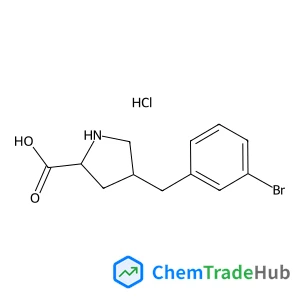
(2S,4R)-4-(3-Bromobenzyl)pyrrolidine-2-carboxylic acid hydrochloride
CAS Number:
1049734-10-2
Molecular Formula:
C12H15BrClNO2
![(1R)-N-((1R)-1-Phenylethyl)-1-[4-(tert-butyldimethylsilyloxymethyl)cyclohexyl]ethan-1-amine structure](https://static.chemtradehub.com/structs/672/672314-45-3-47ef.webp "(1R)-N-((1R)-1-Phenylethyl)-1-[4-(tert-butyldimethylsilyloxymethyl)cyclohexyl]ethan-1-amine structure")
(1R)-N-((1R)-1-Phenylethyl)-1-[4-(tert-butyldimethylsilyloxymethyl)cyclohexyl]ethan-1-amine
CAS Number:
672314-45-3
Molecular Formula:
C23H41NOSi
Recommended Suppliers






Disclaimer
This page provides academic journal information for reference and research purposes only. We are not affiliated with any journal publishers and do not handle publication submissions. For publication-related inquiries, please contact the respective journal publishers directly.
If you notice any inaccuracies in the information displayed, please contact us at support@chemtradehub.com. We will promptly review and address your concerns.