












Single-crystal to single-crystal phase transitions of bis(N-phenylisonicotinamide)silver(i) nitrate reveal cooperativity properties in porous molecular materials
Literature Information
Publication Date
2007-01-30
DOI
10.1039/B616502H
Impact Factor
6.222
Authors
Partha S. Mukherjee, Nazario Lopez, Atta M. Arif, Francisco Cervantes-Lee, Juan C. Noveron
View Original
Abstract
Two single-crystal to single-crystal phase transitions in trans-[Ag(NPI)2](NO3)·2CH3OH (1a), (NPI = N-phenylisonicotinamide) were characterized with X-ray crystallography; the first transition is reversible and arises from a desolvation transition induced by vacuum and generated 1b; the second transition was induced by heat at 140 °C and generated 1c.
Related Literature
Low-coverage adsorption properties of the metal–organic framework MIL-47 studied by pulse chromatography and Monte Carlo simulations
Vincent Finsy, Sofia Calero, Elena García-Pérez, Patrick J. Merkling, Gill Vedts, Dirk E. De Vos, Gino V. Baron, Joeri F. M. Denayer
2009-03-02
Paper
DOI: 10.1039/B822247A
Anomalous length and voltage dependence of single molecule conductance
Wolfgang Haiss, Santiago Martin, Lisa E. Scullion, Laurent Bouffier, Simon J. Higgins, Richard J. Nichols
2009-10-02
Paper
DOI: 10.1039/B910194B
Water structuring and collagen adsorption at hydrophilic and hydrophobic silicon surfaces
Daniel J. Cole, Mike C. Payne
2009-10-20
Communication
DOI: 10.1039/B816125A
Dynamics of multi-channel dissociation of tetrahydrofuran photoexcited at 193 nm: distributions of kinetic energy, angular anisotropies and branching ratios
2010-01-27
Paper
DOI: 10.1039/B921219A
Novel percolation phenomena and mechanism of strengthening elastomers by nanofillers
Zhenhua Wang, Sizhu Wu, Wenchuan Wang
2010-02-09
Paper
DOI: 10.1039/B919789C
Spectroscopic characterization of Fe-doped synthetic chrysotile by EPR, DRS and magnetic susceptibility measurements
Elena Borghi, Manlio Occhiuzzi, Elisabetta Foresti, Isidoro Giorgio Lesci, Norberto Roveri
2009-11-09
Paper
DOI: 10.1039/B915182F
Polymer–microporous host interactions probed by photoluminescence spectroscopy
Carmen Tiseanu, Vasile Ion Parvulescu, Bogdan Cojocaru, Victor A. Lorenz-Fonfria, Michael Kumke, Andre Gessner, Ion Enculescu
2010-02-03
Paper
DOI: 10.1039/B922591A
An electrochemical study of lithium insertion into Cr5−yTiySe8 (y = 1, 2, 3, 4, 4.5) beyond the intercalation limit
Joseph Wontcheu, Wolfgang Bensch
2009-03-12
Paper
DOI: 10.1039/B822397A
Physical chemistry of solids—the science behind materials engineering
2009-03-31
Editorial
DOI: 10.1039/B905911N
An experimental confirmation of the products of the reaction between CN radicals and NH3
Mark A. Blitz, Paul W. Seakins, Ian W. M. Smith
2009-10-20
Communication
DOI: 10.1039/B917734E
You might also like
Compound Q&A
What precautions should be taken when handling 2-Chloro-1,2-bis(4-methylphenyl)ethanone (CAS: 71193-32-3)?
When handling 2-Chloro-1,2-bis(4-methylphenyl)ethanone (CAS: 71193-32-3), it is ...
71193-32-32-Chloro-1,2-bis(4-m...
Compound Q&A
What industries use 4-Ethoxy-3-(5-methyl-4-oxo-7-propyl-1,4-dihydroimidazo[5,1-f][1,2,4]triazin-2-yl)benzenesulfonyl chloride (CAS: 224789-26-8)?
4-Ethoxy-3-(5-methyl-4-oxo-7-propyl-1,4-dihydroimidazo[5,1-f][1,2,4]triazin-2-yl...
224789-26-84-Ethoxy-3-(5-methyl...
Compound Q&A
How should Methyl 3-Oxo-4-Androsten-17-Carboxylate (CAS: 2681-55-2) be stored?
Methyl 3-Oxo-4-Androsten-17-Carboxylate (CAS: 2681-55-2) should be stored in a c...
2681-55-2Methyl 3-Oxo-4-Andro...
Compound Q&A
What are the main uses of (R)-3-Amino-4-(3-hexylphenylamino)-4-oxobutylphosphonic acid (CAS: 909725-61-7)?
(R)-3-Amino-4-(3-hexylphenylamino)-4-oxobutylphosphonic acid is primarily used i...
909725-61-7(R)-3-Amino-4-(3-hex...
Compound Q&A
What regulatory guidelines apply to 2-Methyl-2-propanyl 3-amino-3-carbamoyl-1-azetidinecarboxylate (CAS: 1254120-14-3)?
2-Methyl-2-propanyl 3-amino-3-carbamoyl-1-azetidinecarboxylate (CAS: 1254120-14-...
1254120-14-32-Methyl-2-propanyl ...
Compound Q&A
Are there alternatives to (E)-4-(tert-Butoxy)-4-oxobut-2-enoic acid (CAS: 135355-96-3) in synthesis?
There are alternative reagents that can be used in synthesis instead of (E)-4-(t...
135355-96-3(E)-4-(tert-Butoxy)-...
Compound Q&A
What are the physical and chemical properties of [2-(3-Chlorophenyl)-1,3-thiazol-4-yl]methanol (CAS: 121202-20-8)?
[2-(3-Chlorophenyl)-1,3-thiazol-4-yl]methanol (CAS: 121202-20-8) is a crystallin...
121202-20-8[2-(3-Chlorophenyl)-...
Compound Q&A
What is the market or research trend for Methyl (2S)-[(4S)-2,2-dimethyl-1,3-dioxolan-4-yl]{[(4-methylphenyl)sulfonyl]oxy}acetate (CAS: 166249-17-8)?
The market and research trends for Methyl (2S)-[(4S)-2,2-dimethyl-1,3-dioxolan-4...
166249-17-8Methyl (2S)-[(4S)-2,...
Compound Q&A
What is the market or research trend for 1-Bromo-2-isocyanatoethane (CAS: 42865-19-0)?
The market for 1-Bromo-2-isocyanatoethane (CAS: 42865-19-0) is driven by its use...
42865-19-01-Bromo-2-isocyanato...
Compound Q&A
What are the main uses of 4-Nitro-D-phenylalanine hydrochloride (CAS: 147065-06-3)?
4-Nitro-D-phenylalanine hydrochloride (CAS: 147065-06-3) is primarily used in re...
147065-06-34-Nitro-D-phenylalan...
Source Journal
Chemical Communications

CiteScore:
8.6
Self-citation Rate:
4.7%
Articles per Year:
2458
ChemComm publishes urgent research which is of outstanding significance and interest to experts in the field, while also appealing to the journal’s broad chemistry readership. Our communication format is ideally suited to short, urgent studies that are of such importance that they require accelerated publication. Our scope covers all topics in chemistry, and research at the interface of chemistry and other disciplines (such as materials science, nanoscience, physics, engineering and biology) where there is a significant novelty in the chemistry aspects. Major topic areas covered include: Analytical Chemistry Catalysis Chemical Biology and medicinal chemistry Computational Chemistry and Machine Learning Energy and sustainable chemistry Environmental Chemistry Green Chemistry Inorganic Chemistry Materials Chemistry Nanoscience Organic Chemistry Physical Chemistry Polymer Chemistry Supramolecular Chemistry
Recommended Compounds
![4-[2-(Trichlorosilyl)ethyl]benzenesulfonyl chloride structure](https://static.chemtradehub.com/structs/797/79793-00-3-de16.webp "4-[2-(Trichlorosilyl)ethyl]benzenesulfonyl chloride structure")
4-[2-(Trichlorosilyl)ethyl]benzenesulfonyl chloride
CAS Number:
79793-00-3
Molecular Formula:
C8H8Cl4O2SSi
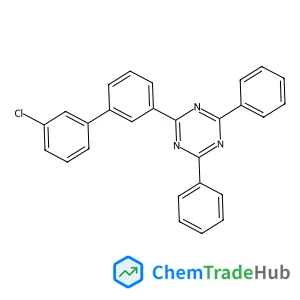
2-(3'-Chlorobiphenyl-3-yl)-4,6-diphenyl-1,3,5-triazine
CAS Number:
1443049-83-9
Molecular Formula:
C27H18ClN3
Recommended Suppliers




Disclaimer
This page provides academic journal information for reference and research purposes only. We are not affiliated with any journal publishers and do not handle publication submissions. For publication-related inquiries, please contact the respective journal publishers directly.
If you notice any inaccuracies in the information displayed, please contact us at support@chemtradehub.com. We will promptly review and address your concerns.