


Oxidative properties of FeO2+: electronic structure and solvation effects‡
Literature Information
Publication Date
2006-11-28
DOI
10.1039/B613182D
Impact Factor
3.676
Authors
Manuel J. Louwerse, Evert Jan Baerends
View Original
Abstract
An electronic structure analysis is provided of the action of solvated FeO2+, [FeO(H2O)5]2+, as a hydroxylation catalyst. It is emphasized that the oxo end of FeO2+ does not form hydrogen bonds (as electron donor and H-bond acceptor) with H-bond donors nor with aliphatic C–H bonds, but it activates C–H bonds as an electron acceptor. It is extremely electrophilic, to the extent that it can activate even such poor electron donors as aliphatic C–H bonds, the C–H bond orbital acting as electron donor in a charge transfer type of interaction. Lower lying O–H bonding orbitals are less easily activated. The primary electron accepting orbital in a water environment is the 3σ*α orbital, an antibonding combination of Fe-3dz2 and O-2pz, which is very low-lying relative to the π*α compared with, for example, the σ* orbital in O2 relative to its π*. This is ascribed to relatively small Fe-3dz2 with O-2pz overlap, due to the nodal structure of the 3dz2.The H-abstraction barrier is very low in the gas phase, but it is considerably enhanced in water solvent. This is shown to be due to strong screening effects of the dielectric medium, leading to relative destabilization of the levels of the charged [FeO(H2O)5]2+ species compared to those of the neutral substrate molecules, making it a less effective electron acceptor. The solvent directly affects the orbital interactions responsible for the catalytic reaction.
Recommended Journals

Current Opinion in Colloid & Interface Science

Acta Materialia

Saudi Pharmaceutical Journal

Crystallography Reports

Journal of Saudi Chemical Society

Journal of Peptide Science

Current Opinion in Solid State & Materials Science

Chemistry Education Research and Practice

New Journal of Chemistry

Journal of Natural Medicines
Related Literature
Synthesis and optoelectronic properties of benzodithiophene-based conjugated polymers with hydrogen bonding nucleobase side chain functionality
Sina Sabury, Tyler J. Adams, Margaret Kocherga, Michael G. Walter
2020-08-11
Paper
DOI: 10.1039/D0PY00972E
Synthesis and sequencing of informational poly(amino phosphodiester)s
Ian Roszak, Laurence Oswald, Abdelaziz Al Ouahabi, Eline Laurent, Olivier Felix, Isaure Carvin-Sergent, Laurence Charles, Jean-François Lutz
2021-09-13
Communication
DOI: 10.1039/D1PY01052B
High-performance polyamides with engineered disorder
Julien Cretenoud, Sandor Balog, Véronique Michaud, Jean-Marc Chenal, Olivier Lame, Christopher J. G. Plummer, Holger Frauenrath
2021-10-15
Paper
DOI: 10.1039/D1PY01225H
Direct fluorination as a one-step ATRP initiator immobilization for convenient surface grafting of phenyl ring-containing substrates
Taijun He, Zhenyu Xing, Yixing Wang, Difeng Wu, Yang Liu, Xiangyang Liu
2020-07-31
Paper
DOI: 10.1039/D0PY00860E
BODIPY bearing alkylthienyl side chains: a new building block to design conjugated polymers with near infrared absorption for organic photovoltaics
Chuandong Dou
2020-08-05
Paper
DOI: 10.1039/D0PY00868K
General approach to prepare polymers bearing pendant isocyanate groups
Rodrigo Navarro, Carolina García, Juan Rodríguez-Hernández, Carlos Elvira, Angel Marcos-Fernández, Alberto Gallardo, Helmut Reinecke
2020-07-28
Communication
DOI: 10.1039/D0PY00989J
Sustainable synthesis of CO2-derived polycarbonates from d-xylose
David K. Tran, Ahmed Z. Rashad, Donald J. Darensbourg
2021-09-10
Communication
DOI: 10.1039/D1PY00784J
Post-polymerization modification of polybenzoxazines with boronic acids supported by B–N interactions
Yuki Tsukamoto, Jumpei Kida, Daisuke Aoki, Hideyuki Otsuka
2021-09-01
Communication
DOI: 10.1039/D1PY00657F
Structure–property relations of amphiphilic poly(furfuryl glycidyl ether)-block-poly(ethylene glycol) macromonomers at the air–water interface
Alexander Holm, Alexander Southan, Curtis W. Frank
2020-07-30
Paper
DOI: 10.1039/D0PY00697A
You might also like
Compound Q&A
What is the market or research trend for N-(4-Methoxybenzyl)-2-pyridinamine (CAS: 52818-63-0)?
N-(4-Methoxybenzyl)-2-pyridinamine (CAS: 52818-63-0) is increasingly being used ...
52818-63-0N-(4-Methoxybenzyl)-...
Compound Q&A
What precautions should be taken when handling Ethyl 4-(2-chlorophenyl)-1,3-thiazole-2-carboxylate (CAS: 1050507-06-6)?
When handling Ethyl 4-(2-chlorophenyl)-1,3-thiazole-2-carboxylate, appropriate p...
1050507-06-6Ethyl 4-(2-chlorophe...
Compound Q&A
What regulatory guidelines apply to diethyldiselane (CAS: 628-39-7)?
Diethyldiselane (CAS: 628-39-7) is classified under the Globally Harmonized Syst...
628-39-7Diethyldiselane
Compound Q&A
What is the market or research trend for oxocopper (CAS: 12053-18-8)?
The market for oxocopper (CAS: 12053-18-8) is primarily driven by its use in cat...
12053-18-8oxocopper; oxo-(oxoc...
Compound Q&A
What is the market or research trend for 5-{[(2-Methyl-2-propanyl)oxy]carbonyl}-5-azaspiro[2.4]heptane-7-carboxylic acid?
The market for 5-{[(2-Methyl-2-propanyl)oxy]carbonyl}-5-azaspiro[2.4]heptane-7-c...
1268519-54-55-{[(2-Methyl-2-prop...
Compound Q&A
What is 2-(1-Pyrrolidinyl)-4-pyridinamine (CAS: 35981-63-6)?
2-(1-Pyrrolidinyl)-4-pyridinamine is a chemical compound with the CAS number 359...
35981-63-62-(1-Pyrrolidinyl)-4...
Compound Q&A
What are the physical and chemical properties of 2-(3-Pyridinyl)-1-azabicyclo[2.2.2]octane (CAS: 91556-75-1)?
2-(3-Pyridinyl)-1-azabicyclo[2.2.2]octane (CAS: 91556-75-1) is a crystalline sol...
91556-75-12-(3-Pyridinyl)-1-az...
Compound Q&A
How is (S)-Alpha-allyl-proline hydrochloride (CAS: 129704-91-2) typically synthesized?
(S)-Alpha-allyl-proline hydrochloride is usually synthesized via a Wittig reacti...
129704-91-2(S)-Alpha-allyl-prol...
Compound Q&A
What is 3-Methyl-1,2-oxazole-5-carboxylic acid (CAS: 4857-42-5)?
3-Methyl-1,2-oxazole-5-carboxylic acid (CAS: 4857-42-5) is an organic compound w...
4857-42-53-Methyl-1,2-oxazole...
Compound Q&A
How is Lys-SMCC-DM1 (CAS: 1281816-04-3) typically synthesized?
Lys-SMCC-DM1 is synthesized via a multi-step process involving the coupling of S...
1281816-04-3Lys-SMCC-DM1
Source Journal
Physical Chemistry Chemical Physics

CiteScore:
5.5
Self-citation Rate:
10.3%
Articles per Year:
3036
Physical Chemistry Chemical Physics (PCCP) is an international journal co-owned by 19 physical chemistry and physics societies from around the world. This journal publishes original, cutting-edge research in physical chemistry, chemical physics and biophysical chemistry. To be suitable for publication in PCCP, articles must include significant innovation and/or insight into physical chemistry; this is the most important criterion that reviewers and Editors will judge against when evaluating submissions. The journal has a broad scope and welcomes contributions spanning experiment, theory, computation and data science. Topical coverage includes spectroscopy, dynamics, kinetics, statistical mechanics, thermodynamics, electrochemistry, catalysis, surface science, quantum mechanics, quantum computing and machine learning. Interdisciplinary research areas such as polymers and soft matter, materials, nanoscience, energy, surfaces/interfaces, and biophysical chemistry are welcomed if they demonstrate significant innovation and/or insight into physical chemistry. Joined experimental/theoretical studies are particularly appreciated when complementary and based on up-to-date approaches.
Recommended Compounds
![5'-Fluoro-[2,3'-biindolinylidene]-2',3-dione structure](https://static.chemtradehub.com/structs/251/251903-00-1-9cb1.webp "5'-Fluoro-[2,3'-biindolinylidene]-2',3-dione structure")
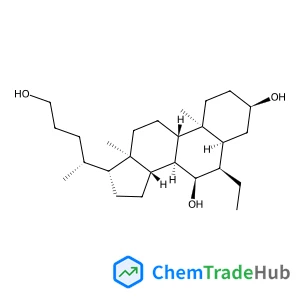
(3alpha,5beta,6alpha,7alpha)-6-Ethylcholane-3,7,24-triol
CAS Number:
1537866-49-1
Molecular Formula:
C26H46O3
Recommended Suppliers






Disclaimer
This page provides academic journal information for reference and research purposes only. We are not affiliated with any journal publishers and do not handle publication submissions. For publication-related inquiries, please contact the respective journal publishers directly.
If you notice any inaccuracies in the information displayed, please contact us at support@chemtradehub.com. We will promptly review and address your concerns.