












![9,9'-Spirobi[fluoren]-2-amine structure](https://static.chemtradehub.com/structs/118/118951-68-1-0d14.webp "9,9'-Spirobi[fluoren]-2-amine structure")
Re-examining the electronic structure of fluorescent tetra-silver clusters in zeolites
Literature Information
Publication Date
2021-01-13
DOI
10.1039/D0CP05105E
Impact Factor
3.676
Authors
View Original
Abstract
In the present study, we have examined the electronic structures related to the fluorescence properties of small Ag42+ complexes encapsulated in zeolites. We find that interaction between Ag42+ and coordinated water molecules, which was previously proposed to be the origin of fluorescence, may not be a sufficient condition by itself. Refinement of the previously used all-silicon-cage model to include framework Al atoms leads to an asymmetric environment, and this alters the electronic structure in favor of fluorescence. We have further examined the substitution of the H2O ligands by NH3, H2S, PH3, CO and CS. Among these systems, Ag42+ binds most strongly to NH3 but the energetics for the H2S and PH3 complexes is also reasonable. The energy of the fluorescent light is related to the energy of the lowest-energy triplet state, and these energies for the H2O, NH3, H2S and PH3 systems span the range of ∼2–3 eV, i.e., roughly the visible range. Thus, the use of different ligands appears to be an attractive means for tailoring the luminescence properties.
Related Literature
Controlling energy and charge transfer in linear chlorophyll dimers
Richard F. Kelley, Michael J. Tauber, Thea M. Wilson, Michael R. Wasielewski
2007-08-14
Communication
DOI: 10.1039/B708318A
N-Methylimidazole significantly improves lipase-catalysed acylation of ribavirin
Bo-Kai Liu, Qi Wu, Jian-Ming Xu, Xian-Fu Lin
2006-10-27
Communication
DOI: 10.1039/B611454G
Reversible photochromism of a ferrocenylazobenzene monolayer controllable by a single green light source
Kosuke Namiki, Aiko Sakamoto, Masaki Murata, Shoko Kume, Hiroshi Nishihara
2007-10-16
Communication
DOI: 10.1039/B713107K
Crystallization-driven constitutional changes of dynamic polymers in response to neat/solution conditions
Cheuk-Fai Chow, Jean-Marie Lehn
2007-10-04
Communication
DOI: 10.1039/B713413D
Sensitive detection of protein by an aptamer-based label-free fluorescing molecular switch
Shaojun Dong
2006-11-22
Communication
DOI: 10.1039/B612080F
Immunoasssay based on the antibody-conjugated PAMAM-dendrimer–gold quantum dot complex
Robert C. Triulzi, Miodrag Micic, Silvia Giordani, Michael Serry, Wen-An Chiou, Roger M. Leblanc
2006-11-21
Communication
DOI: 10.1039/B611278A
Intramolecular Stetter cyclisation of Morita–Baylis–Hillman adducts: a versatile approach towards bicycloenediones
Pierre Wasnaire, Thierry de Merode, István E. Markó
2007-08-31
Communication
DOI: 10.1039/B710492H
Supramolecular single-walled carbon nanotubes (SWCNTs) network polymer made by hybrids of SWCNTs and water-soluble calix[8]arenes
Tomoki Ogoshi, Tada-aki Yamagishi, Yoshiaki Nakamoto
2007-09-13
Communication
DOI: 10.1039/B711800G
Selective binding of cucurbit[7]uril and β-cyclodextrin with a redox-active molecular triad Ru(bpy)3–MV2+–naphthol
Dapeng Zou, Samir Andersson, Rong Zhang, Shiguo Sun, Björn Åkermark, Licheng Sun
2007-10-23
Communication
DOI: 10.1039/B712980G
You might also like
Compound Q&A
How is Ethyl 4-chlorothieno[2,3-b]pyridine-5-carboxylate (CAS: 59713-58-5) typically synthesized?
Ethyl 4-chlorothieno[2,3-b]pyridine-5-carboxylate (CAS: 59713-58-5) can be synth...
59713-58-5Ethyl 4-chlorothieno...
Compound Q&A
What regulatory guidelines apply to 5-Methyl-1H-indole-3-carbaldehyde (CAS: 52562-50-2)?
5-Methyl-1H-indole-3-carbaldehyde (CAS: 52562-50-2) is subject to various regula...
52562-50-25-Methyl-1H-indole-3...
Compound Q&A
What are the physical and chemical properties of (1,3-Dimethyl-2,4-dioxo-1,2,3,4-tetrahydro-5-pyrimidinyl)boronic acid (CAS: 223418-73-3)?
(1,3-Dimethyl-2,4-dioxo-1,2,3,4-tetrahydro-5-pyrimidinyl)boronic acid is a white...
223418-73-3(1,3-Dimethyl-2,4-di...
Compound Q&A
How should waste containing Sulfocostunolide A (CAS: 1016983-51-9) be handled?
Waste containing Sulfocostunolide A (CAS: 1016983-51-9) should be handled with c...
1016983-51-9Sulfocostunolide A
Compound Q&A
What precautions should be taken when handling Murraxocin (CAS: 88478-44-8)?
When handling Murraxocin (CAS: 88478-44-8), ensure proper personal protective eq...
88478-44-8Murraxocin
Compound Q&A
What are the physical and chemical properties of Formvar (CAS: 63148-64-1)?
Formvar (CAS: 63148-64-1) is an alkyd resin characterized by a high molecular we...
63148-64-1Formvar(R)
Compound Q&A
Is (S)-4-benzyl-2-((benzyloxy)methyl)morpholine (CAS: 205242-66-6) safe?
(S)-4-benzyl-2-((benzyloxy)methyl)morpholine is generally safe when handled with...
205242-66-6(S)-4-benzyl-2-((ben...
Compound Q&A
What industries use Methyl 1-(5-bromo-2-pyrimidinyl)cyclopropanecarboxylate (CAS: 1447607-69-3)?
Methyl 1-(5-bromo-2-pyrimidinyl)cyclopropanecarboxylate (CAS: 1447607-69-3) is p...
1447607-69-3Methyl 1-(5-bromo-2-...
Compound Q&A
Is 2-Methyl-1-phenyl-1-propanamine hydrochloride (CAS: 24290-47-9) safe?
2-Methyl-1-phenyl-1-propanamine hydrochloride (CAS: 24290-47-9) is generally con...
24290-47-92-Methyl-1-phenyl-1-...
Compound Q&A
How is 3-(4-Bromophenyl)-2-methylpropanoic acid (CAS: 66735-01-1) typically synthesized?
3-(4-Bromophenyl)-2-methylpropanoic acid is synthesized through a multi-step pro...
66735-01-13-(4-Bromophenyl)-2-...
Source Journal
Physical Chemistry Chemical Physics

CiteScore:
5.5
Self-citation Rate:
10.3%
Articles per Year:
3036
Physical Chemistry Chemical Physics (PCCP) is an international journal co-owned by 19 physical chemistry and physics societies from around the world. This journal publishes original, cutting-edge research in physical chemistry, chemical physics and biophysical chemistry. To be suitable for publication in PCCP, articles must include significant innovation and/or insight into physical chemistry; this is the most important criterion that reviewers and Editors will judge against when evaluating submissions. The journal has a broad scope and welcomes contributions spanning experiment, theory, computation and data science. Topical coverage includes spectroscopy, dynamics, kinetics, statistical mechanics, thermodynamics, electrochemistry, catalysis, surface science, quantum mechanics, quantum computing and machine learning. Interdisciplinary research areas such as polymers and soft matter, materials, nanoscience, energy, surfaces/interfaces, and biophysical chemistry are welcomed if they demonstrate significant innovation and/or insight into physical chemistry. Joined experimental/theoretical studies are particularly appreciated when complementary and based on up-to-date approaches.
Recommended Compounds
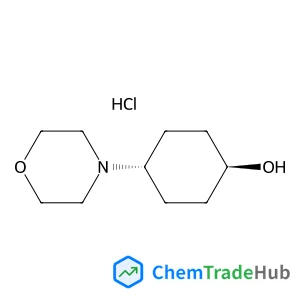
trans-4-(4-Morpholinyl)cyclohexanol hydrochloride (1:1)
CAS Number:
1588441-09-1
Molecular Formula:
C10H20ClNO2
![2-Methyl-2-propanyl 1,6-diazaspiro[3.4]octane-6-carboxylate structure](https://static.chemtradehub.com/structs/115/1158749-79-1-81ee.webp "2-Methyl-2-propanyl 1,6-diazaspiro[3.4]octane-6-carboxylate structure")
2-Methyl-2-propanyl 1,6-diazaspiro[3.4]octane-6-carboxylate
CAS Number:
1158749-79-1
Molecular Formula:
C11H20N2O2

Recommended Suppliers





Disclaimer
This page provides academic journal information for reference and research purposes only. We are not affiliated with any journal publishers and do not handle publication submissions. For publication-related inquiries, please contact the respective journal publishers directly.
If you notice any inaccuracies in the information displayed, please contact us at support@chemtradehub.com. We will promptly review and address your concerns.