












Back cover
Literature Information
Publication Date
DOI
10.1039/B609175J
Impact Factor
3.676
Authors
View Original
Abstract
The first page of this article is displayed as the abstract.
Recommended Journals
Related Literature
On the enthalpic contribution to the redox energetics of SrFeO3−δ
Camilla Haavik, Tooru Atake, Svein Stølen
2002-02-08
Paper
DOI: 10.1039/B109683D
Controlled pattern formation in the CDIMA reaction with a moving boundary of illumination
Mads Kærn, Razvan Satnoianu, Alberto P. Muñuzuri, Michael Menzinger
2002-03-13
Paper
DOI: 10.1039/B109387H
Mass-selected infrared photodissociation spectroscopy of V4O10+
K. R. Asmis, M. Brümmer, C. Kaposta, G. Santambrogio, G. von Helden, K. Rademann, L. Wöste
2002-02-27
Communication
DOI: 10.1039/B111056J
Near-diffusion-controlled reactions of muonium in sub- and supercritical water
Khashayar Ghandi, Brenda Addison-Jones, Jean-Claude Brodovitch, Iain McKenzie, Paul W. Percival, Joachim Schüth
2002-01-16
Paper
DOI: 10.1039/B108656A
Degradation of naphthalenesulfonic acids by oxidation with ozone in aqueous phase
J. Rivera-Utrilla, M. Sánchez-Polo, C. A. Zaror
2002-02-21
Paper
DOI: 10.1039/B108194B
Pairing of the nucleobase guanine studied by IR–UV double-resonance spectroscopy and ab initio calculations
Christoph Janzen, Petra Imhof, Karl Kleinermanns, Mattanjah S. de Vries
2002-01-29
Paper
DOI: 10.1039/B110360C
Phase equilibria of hydrogel systems
Andreas Hüther, Bernd Schäfer, Xiaoping Xu, Gerd Maurer
2002-02-14
Paper
DOI: 10.1039/B108496H
Elementary reactions of the antioxidant action of trans-stilbene derivatives: resveratrol, pinosylvin and 4-hydroxystilbene
Sandra Stojanović, Ortwin Brede
2002-01-29
Paper
DOI: 10.1039/B109063C
Isothermal vapor–liquid equilibria of binary systems of carbon dioxide and 1-butyne, compared to other binary CO2 + C4Hn systems in terms of global parameters
M. Bardas, N. Dahmen, T. Kraska, K.-D. Wagner, L. Yelash
2002-02-15
Paper
DOI: 10.1039/B109059C
Conductometric and electrooptic relaxation spectrometry of lipid vesicle electroporation at high fields
T. Griese, S. Kakorin, E. Neumann
2002-02-20
Paper
DOI: 10.1039/B108193B
You might also like
Compound Q&A
What regulatory guidelines apply to 6-Bromo-2-methylimidazo[1,2-a]pyrimidine (CAS: 1111638-05-1)?
6-Bromo-2-methylimidazo[1,2-a]pyrimidine (CAS: 1111638-05-1) falls under various...
1111638-05-16-Bromo-2-methylimid...
Compound Q&A
Are there alternatives to 1-Pyrrolidineethanol, β-methyl-α-phenyl-, (αS,βR) (CAS: 123620-80-4) in synthesis?
While there are no direct alternatives, similar compounds like 1-Pyrrolidineetha...
123620-80-41-Pyrrolidineethanol...
Compound Q&A
Is 4-Methyl-2,6-bis(2-methyl-2-propanyl)phenyl methylcarbamate (CAS: 1918-11-2) safe?
4-Methyl-2,6-bis(2-methyl-2-propanyl)phenyl methylcarbamate (CAS: 1918-11-2) is ...
1918-11-24-Methyl-2,6-bis(2-m...
Compound Q&A
How should 2-(3-Bromo-4-fluorophenyl)-1,3-dioxolane (CAS: 77771-04-1) be stored?
2-(3-Bromo-4-fluorophenyl)-1,3-dioxolane (CAS: 77771-04-1) should be stored in a...
77771-04-12-(3-Bromo-4-fluorop...
Compound Q&A
What are the physical and chemical properties of 4,5,6,7-Tetrahydro-1H-indazole hydrochloride (CAS: 18161-11-0)?
4,5,6,7-Tetrahydro-1H-indazole hydrochloride is a white crystalline solid with a...
18161-11-04,5,6,7-Tetrahydro-1...
Compound Q&A
What is (2R)-1-Methoxy-3-phenyl-2-propanamine (CAS: 59919-07-2)?
(2R)-1-Methoxy-3-phenyl-2-propanamine is a chiral organic compound with the CAS ...
59919-07-2(2R)-1-Methoxy-3-phe...
Compound Q&A
What industries use Ethyl 1-(1-phenylethyl)-1H-imidazole-5-carboxylate (CAS: 56649-47-9)?
Ethyl 1-(1-phenylethyl)-1H-imidazole-5-carboxylate is used in various industries...
56649-47-9Ethyl 1-(1-phenyleth...
Compound Q&A
What regulatory guidelines apply to 4-[(1E,3S)-1-(4-Hydroxyphenyl)-1,4-pentadien-3-yl]phenol (CAS: 17676-24-3)?
4-[(1E,3S)-1-(4-Hydroxyphenyl)-1,4-pentadien-3-yl]phenol (CAS: 17676-24-3) falls...
17676-24-34-[(1E,3S)-1-(4-Hydr...
Compound Q&A
What industries use (S)-3-Amino-5-phenylpentanoic acid hydrochloride (CAS: 331846-97-0)?
(S)-3-Amino-5-phenylpentanoic acid hydrochloride is primarily used in the pharma...
331846-97-0(S)-3-Amino-5-phenyl...
Compound Q&A
How is 7-methoxy-1-benzothiophene-2-carboxylic acid (CAS: 88791-07-5) typically synthesized?
7-Methoxy-1-benzothiophene-2-carboxylic acid is typically synthesized by reactin...
88791-07-57-methoxy-1-benzothi...
Source Journal
Physical Chemistry Chemical Physics

CiteScore:
5.5
Self-citation Rate:
10.3%
Articles per Year:
3036
Physical Chemistry Chemical Physics (PCCP) is an international journal co-owned by 19 physical chemistry and physics societies from around the world. This journal publishes original, cutting-edge research in physical chemistry, chemical physics and biophysical chemistry. To be suitable for publication in PCCP, articles must include significant innovation and/or insight into physical chemistry; this is the most important criterion that reviewers and Editors will judge against when evaluating submissions. The journal has a broad scope and welcomes contributions spanning experiment, theory, computation and data science. Topical coverage includes spectroscopy, dynamics, kinetics, statistical mechanics, thermodynamics, electrochemistry, catalysis, surface science, quantum mechanics, quantum computing and machine learning. Interdisciplinary research areas such as polymers and soft matter, materials, nanoscience, energy, surfaces/interfaces, and biophysical chemistry are welcomed if they demonstrate significant innovation and/or insight into physical chemistry. Joined experimental/theoretical studies are particularly appreciated when complementary and based on up-to-date approaches.
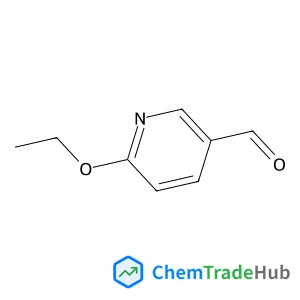
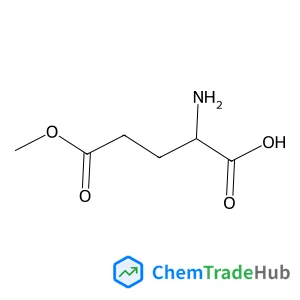
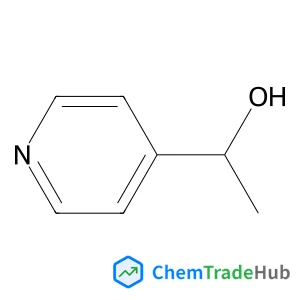
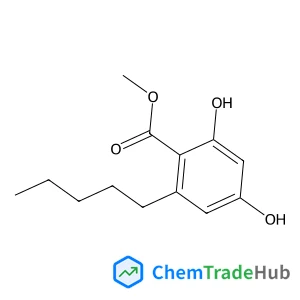
Recommended Compounds

Recommended Suppliers





Disclaimer
This page provides academic journal information for reference and research purposes only. We are not affiliated with any journal publishers and do not handle publication submissions. For publication-related inquiries, please contact the respective journal publishers directly.
If you notice any inaccuracies in the information displayed, please contact us at support@chemtradehub.com. We will promptly review and address your concerns.