


Phase equilibria of hydrogel systems
Literature Information
Publication Date
2002-02-14
DOI
10.1039/B108496H
Impact Factor
3.676
Authors
Andreas Hüther, Bernd Schäfer, Xiaoping Xu, Gerd Maurer
View Original
Abstract
Hydrogels are crosslinked polymers consisting of hydrophilic repeating units. Hydrogels are able to absorb/desorb large amounts of water and hydrophilic solutes, i.e. they swell/shrink in aqueous solutions. The volume change accompanied by that swelling can be continuous as well as discontinuous, i.e. phase transitions can be observed. This contribution aims to describe and discuss examples of the phase equilibrium behavior of hydrogel systems. Therefore, some typical examples of the swelling/shrinking of some simple synthetic hydrogels in water and in aqueous solutions are presented, the phase equilibrium conditions and a method for correlating/predicting such phase equilibria are discussed.
Recommended Journals

Drug Discovery Today

Russian Journal of Coordination Chemistry

Russian Chemical Bulletin

Russian Journal of Bioorganic Chemistry

Russian Journal of Applied Chemistry

Journal of Saudi Chemical Society

Nature Medicine

Organic Process Research & Development

Journal of Natural Medicines

Russian Journal of Organic Chemistry
Related Literature
A molecular electron density theory study of the enhanced reactivity of aza aromatic compounds participating in Diels–Alder reactions
Luis R. Domingo, Patricia Pérez
2019-12-09
Paper
DOI: 10.1039/C9OB02467K
Toward the total synthesis of grayanane diterpene mollanol A by a Prins [3 + 2] strategy
Jianzhuang Miao, Yi-Xuan Zheng, Shi-Chao Lu, Shi-Peng Zhang, Ya-Ling Gong, Shu Xu
2020-02-15
Communication
DOI: 10.1039/D0OB00160K
CuBr2-catalyzed diastereoselective allylation: total synthesis of decytospolides A and B and their C6-epimers
Birakishore Padhi, G. Sudhakar Reddy, N. Arjunreddy Mallampudi, Utkal Mani Choudhury, Debendra K. Mohapatra
2020-03-09
Paper
DOI: 10.1039/C9OB02689D
β-Selective xylulofuranosylation via a conformationally-restricted glycosyl donor
Bo-Shun Huang, Todd L. Lowary
2020-02-28
Paper
DOI: 10.1039/D0OB00260G
Dearomatization of 3-cyanoindoles by (3 + 2) cycloaddition: from batch to flow chemistry
Maxime Manneveau, Saori Tanii, Fanny Gens, Julien Legros
2020-04-20
Communication
DOI: 10.1039/D0OB00582G
Free-base porphyrins with localized NH protons. Can substituents alone stabilize the elusive cis tautomer?
Kolle E. Thomas, Christine M. Beavers, Abhik Ghosh
2020-03-26
Paper
DOI: 10.1039/D0OB00452A
Metal-free synthesis of imino-disaccharides and calix-iminosugars by photoinduced radical thiol–ene coupling (TEC)
Renaud Zelli, Pascal Dumy, Alberto Marra
2020-02-21
Communication
DOI: 10.1039/D0OB00198H
You might also like
Compound Q&A
What regulatory guidelines apply to 6-Bromo-2-methylimidazo[1,2-a]pyrimidine (CAS: 1111638-05-1)?
6-Bromo-2-methylimidazo[1,2-a]pyrimidine (CAS: 1111638-05-1) falls under various...
1111638-05-16-Bromo-2-methylimid...
Compound Q&A
Are there alternatives to 1-Pyrrolidineethanol, β-methyl-α-phenyl-, (αS,βR) (CAS: 123620-80-4) in synthesis?
While there are no direct alternatives, similar compounds like 1-Pyrrolidineetha...
123620-80-41-Pyrrolidineethanol...
Compound Q&A
Is 4-Methyl-2,6-bis(2-methyl-2-propanyl)phenyl methylcarbamate (CAS: 1918-11-2) safe?
4-Methyl-2,6-bis(2-methyl-2-propanyl)phenyl methylcarbamate (CAS: 1918-11-2) is ...
1918-11-24-Methyl-2,6-bis(2-m...
Compound Q&A
How should 2-(3-Bromo-4-fluorophenyl)-1,3-dioxolane (CAS: 77771-04-1) be stored?
2-(3-Bromo-4-fluorophenyl)-1,3-dioxolane (CAS: 77771-04-1) should be stored in a...
77771-04-12-(3-Bromo-4-fluorop...
Compound Q&A
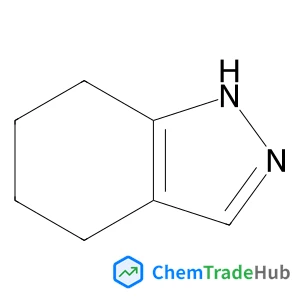
What are the physical and chemical properties of 4,5,6,7-Tetrahydro-1H-indazole hydrochloride (CAS: 18161-11-0)?
4,5,6,7-Tetrahydro-1H-indazole hydrochloride is a white crystalline solid with a...
18161-11-04,5,6,7-Tetrahydro-1...
Compound Q&A
What is (2R)-1-Methoxy-3-phenyl-2-propanamine (CAS: 59919-07-2)?
(2R)-1-Methoxy-3-phenyl-2-propanamine is a chiral organic compound with the CAS ...
59919-07-2(2R)-1-Methoxy-3-phe...
Compound Q&A
What industries use Ethyl 1-(1-phenylethyl)-1H-imidazole-5-carboxylate (CAS: 56649-47-9)?
Ethyl 1-(1-phenylethyl)-1H-imidazole-5-carboxylate is used in various industries...
56649-47-9Ethyl 1-(1-phenyleth...
Compound Q&A
What regulatory guidelines apply to 4-[(1E,3S)-1-(4-Hydroxyphenyl)-1,4-pentadien-3-yl]phenol (CAS: 17676-24-3)?
4-[(1E,3S)-1-(4-Hydroxyphenyl)-1,4-pentadien-3-yl]phenol (CAS: 17676-24-3) falls...
17676-24-34-[(1E,3S)-1-(4-Hydr...
Compound Q&A
What industries use (S)-3-Amino-5-phenylpentanoic acid hydrochloride (CAS: 331846-97-0)?
(S)-3-Amino-5-phenylpentanoic acid hydrochloride is primarily used in the pharma...
331846-97-0(S)-3-Amino-5-phenyl...
Compound Q&A
How is 7-methoxy-1-benzothiophene-2-carboxylic acid (CAS: 88791-07-5) typically synthesized?
7-Methoxy-1-benzothiophene-2-carboxylic acid is typically synthesized by reactin...
88791-07-57-methoxy-1-benzothi...
Source Journal
Physical Chemistry Chemical Physics

CiteScore:
5.5
Self-citation Rate:
10.3%
Articles per Year:
3036
Physical Chemistry Chemical Physics (PCCP) is an international journal co-owned by 19 physical chemistry and physics societies from around the world. This journal publishes original, cutting-edge research in physical chemistry, chemical physics and biophysical chemistry. To be suitable for publication in PCCP, articles must include significant innovation and/or insight into physical chemistry; this is the most important criterion that reviewers and Editors will judge against when evaluating submissions. The journal has a broad scope and welcomes contributions spanning experiment, theory, computation and data science. Topical coverage includes spectroscopy, dynamics, kinetics, statistical mechanics, thermodynamics, electrochemistry, catalysis, surface science, quantum mechanics, quantum computing and machine learning. Interdisciplinary research areas such as polymers and soft matter, materials, nanoscience, energy, surfaces/interfaces, and biophysical chemistry are welcomed if they demonstrate significant innovation and/or insight into physical chemistry. Joined experimental/theoretical studies are particularly appreciated when complementary and based on up-to-date approaches.
Recommended Compounds
Recommended Suppliers



Disclaimer
This page provides academic journal information for reference and research purposes only. We are not affiliated with any journal publishers and do not handle publication submissions. For publication-related inquiries, please contact the respective journal publishers directly.
If you notice any inaccuracies in the information displayed, please contact us at support@chemtradehub.com. We will promptly review and address your concerns.