












methanone structure](https://static.chemtradehub.com/structs/814/81449-01-6-786d.webp "[4-(Hydroxymethyl)phenyl](phenyl)methanone structure")
Photo-deposition and film formation of benzenethiol monolayer protected clusters in halogenated media
Literature Information
Publication Date
2006-09-06
DOI
10.1039/B605262B
Impact Factor
6.222
Authors
Michael Busby
View Original
Abstract
2.1 nm benzenethiol monolayer protected gold clusters undergo solvent dependant photoinduced deposition with potential applications in the field of nanoparticle film formation.
Related Literature
Preparation and structure of 2-iodoxybenzoate esters: soluble and stable periodinane oxidizing reagents
Viktor V. Zhdankin, Dmitry N. Litvinov, Alexey Y. Koposov, Thanh Luu, Michael J. Ferguson, Robert McDonald, Rik R. Tykwinski
2003-11-18
Communication
DOI: 10.1039/B312961F
Carbon nanotube conducting arrays by consecutive amidation reactions
Dae-Hwan Jung, Young Koan Ko, Seung Joo Seo, Hee-Tae Jung
2004-02-05
Communication
DOI: 10.1039/B315348G
The first general method for α-trifluoromethylation of carboxylic acids using BrF3
Aviv Hagooly, Shlomo Rozen
2004-02-09
Communication
DOI: 10.1039/B315705A
Rational design of porous titanophosphates
Christian Serre, Francis Taulelle, Gérard Ferey
2003-08-28
Feature Article
DOI: 10.1039/B304703B
Zinc metalloporphyrin-functionalised nanoparticle anion sensors
Paul D. Beer, David P. Cormode, Jason J. Davis
2004-01-20
Communication
DOI: 10.1039/B313658B
Peroxides in ordered nanoporous silicas: clean alternatives to transition metal oxidants for the removal of toxic gases
Michael J. Hudson, Dominic B. Jackson, Jessica L. Ward, Matt J. Chinn
2003-11-07
Communication
DOI: 10.1039/B310872D
Synthesis of new thermotropic liquid crystalline polyurethanes containing biphenyl mesogens using a novel AB-type self-polycondensation
T. Ranganathan, C. Ramesh, Anil Kumar
2003-11-24
Communication
DOI: 10.1039/B312826A
Terminally functionalized polyisobutylene oligomers as soluble supports in catalysis
David E. Bergbreiter, Jun Li
2003-11-27
Communication
DOI: 10.1039/B312368E
Encapsulation of paramagnetic 3d1-vanadium(iv) in an antiferromagnetically coupled dodecanuclear copper(ii) cage
Arindam Mukherjee, Munirathinam Nethaji, Akhil R. Chakravarty
2003-11-04
Communication
DOI: 10.1039/B310521K
First total synthesis of murisolin
Naoyoshi Maezaki, Hiroaki Tominaga, Naoto Kojima, Minori Yanai, Daisuke Urabe, Tetsuaki Tanaka
2004-01-19
Communication
DOI: 10.1039/B312362F
You might also like
Compound Q&A
How should waste containing 2-Ethyl-4-Methyl-1H-Imidazole-5-Carbaldehyde (CAS: 88634-80-4) be handled?
Waste containing 2-Ethyl-4-Methyl-1H-Imidazole-5-Carbaldehyde (CAS: 88634-80-4) ...
88634-80-42-Ethyl-4-Methyl-1H-...
Compound Q&A
What industries use Triethoxy(octyl)silane (CAS: 1385031-14-0)?
Triethoxy(octyl)silane (CAS: 1385031-14-0) is widely used in the pharmaceuticals...
1385031-14-0Triethoxy(octyl)sila...
Compound Q&A
Are there alternatives to 3-iodo-7-nitro-1H-indazole (CAS: 864724-64-1) in synthesis?
Several alternatives to 3-iodo-7-nitro-1H-indazole (CAS: 864724-64-1) exist in t...
864724-64-13-iodo-7-nitro-1H-in...
Compound Q&A
Are there alternatives to Benzene, bis[(trimethoxysilyl)ethyl] (CAS: 266317-71-9) in synthesis?
Yes, there are alternatives to Benzene, bis[(trimethoxysilyl)ethyl] (CAS: 266317...
266317-71-9Benzene, bis[(trimet...
Compound Q&A
Is Isothiazole-3-carbonitrile (CAS: 1452-17-1) safe?
Isothiazole-3-carbonitrile (CAS: 1452-17-1) is generally considered safe when us...
1452-17-1Isothiazole-3-carbon...
Compound Q&A
Is (3-Chlorophenyl)methanol (CAS: 873-63-2) safe?
(3-Chlorophenyl)methanol (CAS: 873-63-2) is considered low to moderately toxic. ...
873-63-2(3-Chlorophenyl)meth...
Compound Q&A
How is (2S,3S)-2-Hydroxy-3-({[(2-methyl-2-propanyl)oxy]carbonyl}amino)-3-(2-naphthyl)propanoic acid (CAS: 959583-98-3) typically synthesized?
(2S,3S)-2-Hydroxy-3-({[(2-methyl-2-propanyl)oxy]carbonyl}amino)-3-(2-naphthyl)pr...
959583-98-3(2S,3S)-2-Hydroxy-3-...
Compound Q&A
What precautions should be taken when handling Methyl 2-(bromomethyl)-5-methoxybenzoate (CAS: 788081-99-2)?
Proper handling of methyl 2-(bromomethyl)-5-methoxybenzoate requires the use of ...
788081-99-2Methyl 2-(bromomethy...
Compound Q&A
What is 6,8-Dibromoimidazo[1,2-a]pyridine-2-carboxylic acid (CAS: 904805-36-3)?
6,8-Dibromoimidazo[1,2-a]pyridine-2-carboxylic acid (CAS: 904805-36-3) is an aro...
904805-36-36,8-Dibromoimidazo[1...
Compound Q&A
Is 3-Amino-5-bromo-2-pyridinecarbonitrile (CAS: 573675-27-1) safe?
3-Amino-5-bromo-2-pyridinecarbonitrile is considered safe when handled under pro...
573675-27-13-Amino-5-bromo-2-py...
Source Journal
Chemical Communications

CiteScore:
8.6
Self-citation Rate:
4.7%
Articles per Year:
2458
ChemComm publishes urgent research which is of outstanding significance and interest to experts in the field, while also appealing to the journal’s broad chemistry readership. Our communication format is ideally suited to short, urgent studies that are of such importance that they require accelerated publication. Our scope covers all topics in chemistry, and research at the interface of chemistry and other disciplines (such as materials science, nanoscience, physics, engineering and biology) where there is a significant novelty in the chemistry aspects. Major topic areas covered include: Analytical Chemistry Catalysis Chemical Biology and medicinal chemistry Computational Chemistry and Machine Learning Energy and sustainable chemistry Environmental Chemistry Green Chemistry Inorganic Chemistry Materials Chemistry Nanoscience Organic Chemistry Physical Chemistry Polymer Chemistry Supramolecular Chemistry
Recommended Compounds
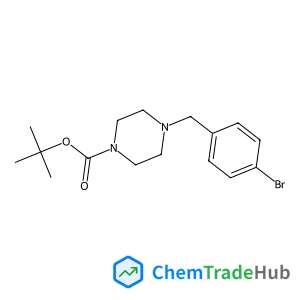
2-Methyl-2-propanyl 4-(4-bromobenzyl)-1-piperazinecarboxylate
CAS Number:
844891-10-7
Molecular Formula:
C16H23BrN2O2
Recommended Suppliers





Disclaimer
This page provides academic journal information for reference and research purposes only. We are not affiliated with any journal publishers and do not handle publication submissions. For publication-related inquiries, please contact the respective journal publishers directly.
If you notice any inaccuracies in the information displayed, please contact us at support@chemtradehub.com. We will promptly review and address your concerns.