













Photoelectrochemical characterisation and optimisation of electrodeposited ZnO thin films sensitised by porphyrins and phthalocyanines
Literature Information
Publication Date
2006-07-19
DOI
10.1039/B604352F
Impact Factor
3.676
Authors
E. Michaelis, D. Wöhrle, T. Yoshida, H. Minoura
View Original
Abstract
Hybrid thin films of crystalline ZnO modified by 5,10,15,20-tetrakis(4-sulfonatophenyl)porphyrinato zinc (TSTPPZn) and 2,9,16,23-tetrasulfophthalocyaninatozinc(II) (TSPcZn) were prepared by electrochemical deposition from aqueous zinc salt solutions. A “one-step” process with the sensitisers adsorbed during ZnO deposition represented the most simple approach. ZnO was also grown independently in the presence of Eosin Y as a structure-directing agent, which was then removed and the sensitisers were chemisorbed from solutions (“readsorption” method). The photoelectrochemical characteristics of the electrodes were studied by photocurrent spectra and by time-resolved photocurrent measurements in an acetonitrile-based solution containing I3−/I− as the redox electrolyte. In films with both sensitisers present, both sensitisers worked in parallel providing panchromatic sensitisation. Recombination of electrons injected into the conduction band of ZnO with remaining holes in the HOMO of the sensitisers was indicated for the one-step films, but was considerably suppressed for the films prepared by the readsorption method. Films prepared by the readsorption method showed a significantly increased efficiency by an increased surface area and suppressed recombination.
Related Literature
Mechanical characterization of base analogue modified nucleic acids by force spectroscopy
Xavier Viader-Godoy, Yii-Lih Lin, Felix Ritort, Fredrik Westerlund, L. Marcus Wilhelmsson
2021-06-22
Communication
DOI: 10.1039/D1CP01985F
Distinct molecular dynamics dividing liquid-like and gas-like supercritical hydrogens
Shutaro Yamaoka, Kim Hyeon-Deuk
2021-09-09
Paper
DOI: 10.1039/D1CP02650J
Molecular modelling of compounds used for corrosion inhibition studies: a review
Eno E. Ebenso, Chandrabhan Verma, Lukman O. Olasunkanmi, Ekemini D. Akpan, Dakeshwar Kumar Verma, Hassane Lgaz, Lei Guo, Savas Kaya, M. A. Quraishi
2021-05-27
Perspective
DOI: 10.1039/D1CP00244A
The room-temperature, ambient-pressure conversion of CO2 into value-added pharmaceutical products quinazoline-2,4(1H,3H)-diones
Guan Wang, Tingting Zheng, Chunshan Zuo, Xihong Zhang, Phoebe Fyffe, Xiaobo Chen
2021-09-04
Paper
DOI: 10.1039/D1CP03747A
Controlling the self-assembly of human calcitonin: a theoretical approach using molecular dynamics simulations
Srijita Paul, Sandip Paul
2021-06-09
Paper
DOI: 10.1039/D1CP00825K
Strong bases behave as weak bases in nanoscale chemical environments: implication in humidity-swing CO2 air capture
Yingying Han, Liangliang Zhu, Yutong Yao, Xiaoyang Shi, Yayun Zhang, Hang Xiao, Xi Chen
2021-06-10
Paper
DOI: 10.1039/D1CP01121A
Double layer capacitances analysed with impedance spectroscopy and cyclic voltammetry: validity and limits of the constant phase element parameterization
Maximilian Schalenbach, Yassin Emre Durmus, Hermann Tempel, Hans Kungl, Rüdiger-A. Eichel
2021-09-07
Paper
DOI: 10.1039/D1CP03381F
Curled cation structures accelerate the dynamics of ionic liquids
Daniel Rauber, Frederik Philippi, Björn Kuttich, Julian Becker, Tom Welton, Rolf Hempelmann
2021-09-06
Paper
DOI: 10.1039/D1CP02889H
Anion⋯anion (MX3−)2 dimers (M = Zn, Cd, Hg; X = Cl, Br, I) in different environments
Rafał Wysokiński, Wiktor Zierkiewicz, Mariusz Michalczyk, Steve Scheiner
2021-06-16
Paper
DOI: 10.1039/D1CP01502H
You might also like
Compound Q&A
What regulatory guidelines apply to 6-Bromo-2-methylimidazo[1,2-a]pyrimidine (CAS: 1111638-05-1)?
6-Bromo-2-methylimidazo[1,2-a]pyrimidine (CAS: 1111638-05-1) falls under various...
1111638-05-16-Bromo-2-methylimid...
Compound Q&A
Are there alternatives to 1-Pyrrolidineethanol, β-methyl-α-phenyl-, (αS,βR) (CAS: 123620-80-4) in synthesis?
While there are no direct alternatives, similar compounds like 1-Pyrrolidineetha...
123620-80-41-Pyrrolidineethanol...
Compound Q&A
Is 4-Methyl-2,6-bis(2-methyl-2-propanyl)phenyl methylcarbamate (CAS: 1918-11-2) safe?
4-Methyl-2,6-bis(2-methyl-2-propanyl)phenyl methylcarbamate (CAS: 1918-11-2) is ...
1918-11-24-Methyl-2,6-bis(2-m...
Compound Q&A
How should 2-(3-Bromo-4-fluorophenyl)-1,3-dioxolane (CAS: 77771-04-1) be stored?
2-(3-Bromo-4-fluorophenyl)-1,3-dioxolane (CAS: 77771-04-1) should be stored in a...
77771-04-12-(3-Bromo-4-fluorop...
Compound Q&A
What are the physical and chemical properties of 4,5,6,7-Tetrahydro-1H-indazole hydrochloride (CAS: 18161-11-0)?
4,5,6,7-Tetrahydro-1H-indazole hydrochloride is a white crystalline solid with a...
18161-11-04,5,6,7-Tetrahydro-1...
Compound Q&A
What is (2R)-1-Methoxy-3-phenyl-2-propanamine (CAS: 59919-07-2)?
(2R)-1-Methoxy-3-phenyl-2-propanamine is a chiral organic compound with the CAS ...
59919-07-2(2R)-1-Methoxy-3-phe...
Compound Q&A
What industries use Ethyl 1-(1-phenylethyl)-1H-imidazole-5-carboxylate (CAS: 56649-47-9)?
Ethyl 1-(1-phenylethyl)-1H-imidazole-5-carboxylate is used in various industries...
56649-47-9Ethyl 1-(1-phenyleth...
Compound Q&A
What regulatory guidelines apply to 4-[(1E,3S)-1-(4-Hydroxyphenyl)-1,4-pentadien-3-yl]phenol (CAS: 17676-24-3)?
4-[(1E,3S)-1-(4-Hydroxyphenyl)-1,4-pentadien-3-yl]phenol (CAS: 17676-24-3) falls...
17676-24-34-[(1E,3S)-1-(4-Hydr...
Compound Q&A
What industries use (S)-3-Amino-5-phenylpentanoic acid hydrochloride (CAS: 331846-97-0)?
(S)-3-Amino-5-phenylpentanoic acid hydrochloride is primarily used in the pharma...
331846-97-0(S)-3-Amino-5-phenyl...
Compound Q&A
How is 7-methoxy-1-benzothiophene-2-carboxylic acid (CAS: 88791-07-5) typically synthesized?
7-Methoxy-1-benzothiophene-2-carboxylic acid is typically synthesized by reactin...
88791-07-57-methoxy-1-benzothi...
Source Journal
Physical Chemistry Chemical Physics

CiteScore:
5.5
Self-citation Rate:
10.3%
Articles per Year:
3036
Physical Chemistry Chemical Physics (PCCP) is an international journal co-owned by 19 physical chemistry and physics societies from around the world. This journal publishes original, cutting-edge research in physical chemistry, chemical physics and biophysical chemistry. To be suitable for publication in PCCP, articles must include significant innovation and/or insight into physical chemistry; this is the most important criterion that reviewers and Editors will judge against when evaluating submissions. The journal has a broad scope and welcomes contributions spanning experiment, theory, computation and data science. Topical coverage includes spectroscopy, dynamics, kinetics, statistical mechanics, thermodynamics, electrochemistry, catalysis, surface science, quantum mechanics, quantum computing and machine learning. Interdisciplinary research areas such as polymers and soft matter, materials, nanoscience, energy, surfaces/interfaces, and biophysical chemistry are welcomed if they demonstrate significant innovation and/or insight into physical chemistry. Joined experimental/theoretical studies are particularly appreciated when complementary and based on up-to-date approaches.
Recommended Compounds

![9H-Fluoren-9-ylmethyl {15-[(2,5-dioxo-1-pyrrolidinyl)oxy]-15-oxo-3,6,9,12-tetraoxapentadec-1-yl}carbamate structure](https://static.chemtradehub.com/structs/131/1314378-14-7-4316.webp "9H-Fluoren-9-ylmethyl {15-[(2,5-dioxo-1-pyrrolidinyl)oxy]-15-oxo-3,6,9,12-tetraoxapentadec-1-yl}carbamate structure")
9H-Fluoren-9-ylmethyl {15-[(2,5-dioxo-1-pyrrolidinyl)oxy]-15-oxo-3,6,9,12-tetraoxapentadec-1-yl}carbamate
CAS Number:
1314378-14-7
Molecular Formula:
C30H36N2O10

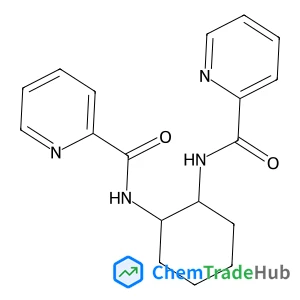
N,N'-(1R,2R)-1,2-Cyclohexanediyldi(2-pyridinecarboxamide)
CAS Number:
218290-24-5
Molecular Formula:
C18H20N4O2
Recommended Suppliers





Disclaimer
This page provides academic journal information for reference and research purposes only. We are not affiliated with any journal publishers and do not handle publication submissions. For publication-related inquiries, please contact the respective journal publishers directly.
If you notice any inaccuracies in the information displayed, please contact us at support@chemtradehub.com. We will promptly review and address your concerns.