













Facile and regioselective mono- or diesterification of glycerol derivatives over recyclable phosphazene organocatalyst
Literature Information
Publication Date
2006-06-22
DOI
10.1039/B603091B
Impact Factor
10.182
Authors
Ghizlane Kharchafi, François Jérôme, Jean-Paul Douliez, Joël Barrault
View Original
Abstract
P1 phosphazene is a strong non-ionic base able to catalyze the esterification of various glycerol derivatives with fatty methyl esters at room temperature – properties responsible for the selectivity observed in this study. Indeed, when the reaction was conducted at room temperature in an organic solvent, and especially in acetonitrile, we showed that the different fatty glycerides produced could be trapped during the catalytic process as a pure product by simple precipitation. Using these experimental conditions, it was therefore possible to perfectly and selectively control the successive esterification steps of various glycerol derivatives and the regioselectivity of this reaction, affording a very competitive alternative to the enzymatic pathway. Moreover, the precipitation of the reaction products during the catalytic process affords a very facile purification work up, and allows the recycling of both the organic solvent and the organocatalyst, therefore limiting the environmental impact of the presented process.
Related Literature
Mechanical degradation of graphene by epoxidation: insights from first-principles calculations
Liang Han, Jie Lian, Sheng Liu, Zhongfang Chen, Nikhil Koratkar, Suvranu De
2015-06-24
Paper
DOI: 10.1039/C5CP02986D
Mechanism and microstructures in Ga2O3 pseudomartensitic solid phase transition
Sheng-Cai Zhu, Shu-Hui Guan, Zhi-Pan Liu
2016-06-20
Paper
DOI: 10.1039/C6CP03673B
The catalytic effect of water, water dimers and water trimers on H2S + 3O2 formation by the HO2 + HS reaction under tropospheric conditions
Tianlei Zhang, Chen Yang, Xukai Feng, Jiaxin Kang, Liang Song, Yousong Lu, Zhiyin Wang, Qiong Xu, Wenliang Wang, Zhuqing Wang
2016-05-19
Paper
DOI: 10.1039/C6CP00654J
Enhanced photoelectrochemical performance of quantum dot-sensitized TiO2 nanotube arrays with Al2O3 overcoating by atomic layer deposition
Min Zeng, Xiange Peng, Jianjun Liao, Guizhen Wang, Yanfang Li, Jianbao Li, Yong Qin, Joshua Wilson, Aimin Song
2016-04-15
Paper
DOI: 10.1039/C6CP01299J
Influence of relative humidity on heterogeneous kinetics of NO2 on kaolin and hematite
Yongchun Liu, Chong Han, Jinzhu Ma, Xiaolei Bao, Hong He
2015-06-12
Paper
DOI: 10.1039/C5CP02223A
Ammonia mobility in chabazite: insight into the diffusion component of the NH3-SCR process
Iain Hitchcock, Misbah Sarwar, Ian P. Silverwood, Sheena Hindocha, Andrew P. E. York
2016-06-01
Paper
DOI: 10.1039/C6CP01160H
Nanoparticles in ionic liquids: interactions and organization
Zhiqi He, Paschalis Alexandridis
2015-06-29
Perspective
DOI: 10.1039/C5CP01620G
Ultrafast and slow charge recombination dynamics of diketopyrrolopyrrole–NiO dye sensitized solar cells
Lei Zhang, Ludovic Favereau, Yoann Farré, Edgar Mijangos, Yann Pellegrin, Errol Blart, Fabrice Odobel, Leif Hammarström
2016-06-10
Paper
DOI: 10.1039/C6CP01762B
Enhanced photocatalytic activity of a self-stabilized synthetic flavin anchored on a TiO2 surface
Manjula Pandiri, Mohammad S. Hossain, Frank W. Foss, Jr., Krishnan Rajeshwar, Yaron Paz
2016-06-13
Paper
DOI: 10.1039/C6CP02060G
Defect induced tunable near infrared emission of Er–CeO2 by heterovalent co-dopants
Mihaela Florea, Daniel Avram, Bogdan Cojocaru, Ion Tiseanu, Vasile Parvulescu, Carmen Tiseanu
2016-06-03
Paper
DOI: 10.1039/C6CP02754G
You might also like
Compound Q&A
What regulatory guidelines apply to 4-Amino-3-bromophenol (CAS: 74440-80-5)?
4-Amino-3-bromophenol (CAS: 74440-80-5) falls under the classification of a haza...
74440-80-54-Amino-3-bromopheno...
Compound Q&A
How should (17beta)-3-Oxoestr-4-en-17-yl acetate (CAS: 1425-10-1) be stored?
(17beta)-3-Oxoestr-4-en-17-yl acetate should be stored in a cool, dry place away...
1425-10-1(17beta)-3-Oxoestr-4...
Compound Q&A
What are the physical and chemical properties of 2-[(2,2-Diethoxyethyl)disulfanyl]-1,1-diethoxyethane (CAS: 76505-71-0)?
2-[(2,2-Diethoxyethyl)disulfanyl]-1,1-diethoxyethane (CAS: 76505-71-0) is a colo...
76505-71-02-[(2,2-Diethoxyethy...
Compound Q&A
What is the market or research trend for 1-(β-D-ribofuranosyl)-1H-imidazo[4,5-c]pyridin-4-amine?
The market and research for 1-(β-D-ribofuranosyl)-1H-imidazo[4,5-c]pyridin-4-ami...
6736-58-91-(beta-D-Ribofurano...
Compound Q&A
How should waste containing Conjugated Estrogen (CAS: 12126-59-9) be handled?
Waste containing Conjugated Estrogen (CAS: 12126-59-9) should be collected and d...
12126-59-9Conjugated Estrogen
Compound Q&A
What is the market or research trend for Bis(2,2,2-trifluoroethyl) (methoxycarbonylmethyl)phosphonate?
The market for Bis(2,2,2-trifluoroethyl) (methoxycarbonylmethyl)phosphonate (CAS...
88738-78-7Bis(2,2,2-trifluoroe...
Compound Q&A
Are there alternatives to 3,4'-Di-O-methylellagic acid (CAS: 57499-59-9) in synthesis?
There are several alternatives to 3,4'-Di-O-methylellagic acid (CAS: 57499-59-9)...
57499-59-93,4'-Di-O-methylella...
Compound Q&A
What regulatory guidelines apply to 2-Chloro-N,N-dimethylpyridin-4-amine (CAS: 59047-70-0)?
2-Chloro-N,N-dimethylpyridin-4-amine (CAS: 59047-70-0) is regulated under the Gl...
59047-70-02-Chloro-N,N-dimethy...
Compound Q&A
What is cerium(3+);oxygen(2-);vanadium(5+) (CAS: 13597-19-8)?
Cerium(3+);oxygen(2-);vanadium(5+) (CAS: 13597-19-8) is a complex inorganic comp...
13597-19-8cerium(3+);oxygen(2-...
Compound Q&A
Is 7-Chloro-1-iodoisoquinoline (CAS: 1203579-27-4) safe?
7-Chloro-1-iodoisoquinoline (CAS: 1203579-27-4) is generally considered safe whe...
1203579-27-47-Chloro-1-iodoisoqu...
Source Journal
Green Chemistry

CiteScore:
16.1
Self-citation Rate:
7.5%
Articles per Year:
944
Green Chemistry provides a unique forum for the publication of innovative research on the development of alternative green and sustainable technologies. The scope of Green Chemistry is based on, but not limited to, the definition proposed by Anastas and Warner (Green Chemistry: Theory and Practice, P T Anastas and J C Warner, Oxford University Press, Oxford, 1998). Green chemistry is the utilisation of a set of principles that reduces or eliminates the use or generation of hazardous substances in the design, manufacture and application of chemical products. Green Chemistry is at the frontiers of this continuously-evolving interdisciplinary science and publishes research that attempts to reduce the environmental impact of the chemical enterprise by developing a technology base that is inherently non-toxic to living things and the environment. Submissions on all aspects of research relating to the endeavour are welcome. The journal publishes original and significant cutting-edge research that is likely to be of wide general appeal. To be published, work must present a significant advance in green chemistry. Papers must contain a comparison with existing methods and demonstrate advantages over those methods before publication can be considered. For more information please see this Editorial. Coverage includes the following, but is not limited to: Design (e.g. biomimicry, design for degradation/recycling/reduced toxicity…) Reagents & Feedstocks (e.g. renewables, CO2, solvents, auxiliary agents, waste utilization…) Synthesis (e.g. organic, inorganic, synthetic biology…) Catalysis (e.g. homogeneous, heterogeneous, enzyme, whole cell…) Process (e.g. process design, intensification, separations, recycling, efficiency…) Energy (e.g. renewable energy, fuels, photovoltaics, fuel cells, energy storage, energy carriers…) Applications (e.g. electronics, dyes, consumer products, coatings, pharmaceuticals, preservatives, building materials, chemicals for industry/agriculture/mining…) Impact (e.g. safety, metrics, LCA, sustainability, (eco)toxicology…) Green chemistry is, by definition, a continuously-evolving frontier. Therefore, the inclusion of a particular material or technology does not, of itself, guarantee that a paper is suitable for the journal. To be suitable, the novel advance should have the potential for reduced environmental impact relative to the state of the art. Green Chemistry does not normally deal with research associated with 'end-of-pipe' or remediation issues.
Recommended Compounds
![N-[(1R,2R)-2-Amino-1,2-diphenylethyl]-1,1,1-trifluoromethanesulfonamide structure](https://static.chemtradehub.com/structs/852/852212-89-6-5ef9.webp "N-[(1R,2R)-2-Amino-1,2-diphenylethyl]-1,1,1-trifluoromethanesulfonamide structure")
N-[(1R,2R)-2-Amino-1,2-diphenylethyl]-1,1,1-trifluoromethanesulfonamide
CAS Number:
852212-89-6
Molecular Formula:
C15H15F3N2O2S
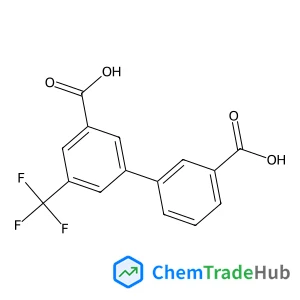
3-(3-Carboxyphenyl)-5-(trifluoromethyl)benzoic acid
CAS Number:
1261930-96-4
Molecular Formula:
C15H9F3O4
Recommended Suppliers




Disclaimer
This page provides academic journal information for reference and research purposes only. We are not affiliated with any journal publishers and do not handle publication submissions. For publication-related inquiries, please contact the respective journal publishers directly.
If you notice any inaccuracies in the information displayed, please contact us at support@chemtradehub.com. We will promptly review and address your concerns.