


Synthesis and disruption of a tetrametallic zinc hydrazide
Literature Information
Publication Date
2006-01-03
DOI
10.1039/B516431A
Impact Factor
6.222
Authors
Carl Redshaw, Mark R. J. Elsegood
View Original
Abstract
Treatment of 1,1′-dimethylhydrazine, Me2NNH2 with excess diethylzinc affords a novel tetrametallic Zn4N8 cage complex, which on further reaction with tBuLi forms a lithium-bridged chain of Zn4N7 cages.
Recommended Journals

Atomization and Sprays

Colloid Journal

Journal of Asian Natural Products Research

Acta Metallurgica Sinica-English Letters

Biocatalysis and Biotransformation

Journal of the Indian Institute of Science

Polycyclic Aromatic Compounds

Main Group Chemistry

Critical Reviews in Solid State and Materials Sciences

Cellulose
Related Literature
Reducing the spin–spin interaction of stable carbon radicals
Sharon Ruthstein
2013-03-14
Communication
DOI: 10.1039/C3CP50533B
Combined experimental and theoretical investigation of the hemi-squaraine/TiO2 interface for dye sensitized solar cells
Giancarlo Cicero, Bruno Camino, Stefano Bianco, Anna Maria Ferrari, Barbara Ballarin, Claudia Barolo
2013-03-18
Paper
DOI: 10.1039/C3CP50559F
In situ fluorescence and electrochemical monitoring of a photosynthetic microbial fuel cell
Alister E. Inglesby, Kamran Yunus, Adrian C. Fisher
2013-04-02
Paper
DOI: 10.1039/C3CP51076J
Ultrahigh-efficiency photocatalysts based on mesoporous Pt–WO3 nanohybrids
Zhuang Liu, Hao Zhang, Jinghong Li, Junhong Chen
2013-04-02
Communication
DOI: 10.1039/C3CP50647A
Changed reactivity of the 1-bromo-4-nitrobenzene radical anion in a room temperature ionic liquid
Sven Ernst, Kristopher R. Ward, Sarah E. Norman, Christopher Hardacre, Richard G. Compton
2013-03-15
Paper
DOI: 10.1039/C3CP51004B
Staying hydrated: the molecular journey of gaseous sulfur dioxide to a water surface
Eric S. Shamay, Nicholas A. Valley, Frederick G. Moore, Geraldine L. Richmond
2013-03-18
Paper
DOI: 10.1039/C3CP50609F
Complementary mechanistic properties of Fe- and Mn-doped aluminophosphates in the catalytic aerobic oxidation of hydrocarbons
Luis Gómez-Hortigüela, Furio Corà, C. Richard A. Catlow
2013-03-14
Paper
DOI: 10.1039/C3CP51079D
Thermal oxidation of Ni films for p-type thin-film transistors
Jie Jiang, Xinghui Wang, Qing Zhang, Jingqi Li, X. X. Zhang
2013-03-15
Paper
DOI: 10.1039/C3CP50197C
High permeability and salt rejection reverse osmosis by a zeolite nano-membrane
Yilun Liu
2013-02-12
Paper
DOI: 10.1039/C3CP43854F
You might also like
Compound Q&A
What precautions should be taken when handling 4-(2-Furylmethyl)thiomorpholine 1,1-dioxide (CAS: 79206-94-3)?
When handling 4-(2-Furylmethyl)thiomorpholine 1,1-dioxide (CAS: 79206-94-3), it ...
79206-94-34-(2-Furylmethyl)thi...
Compound Q&A
What precautions should be taken when handling 4-Chloro-N-[2-(4-morpholinyl)ethyl]benzamide (CAS: 71320-77-9)?
When handling 4-Chloro-N-[2-(4-morpholinyl)ethyl]benzamide (CAS: 71320-77-9), it...
71320-77-94-Chloro-N-[2-(4-mor...
Compound Q&A
How should waste containing 2-[2-(2-Methoxyethoxy)ethoxy]ethyl 4-methylbenzenesulfonate (CAS: 62921-74-8) be handled?
Waste containing this compound (CAS: 62921-74-8) should be handled according to ...
62921-74-82-[2-(2-Methoxyethox...
Compound Q&A
How should waste containing (S)-Methyl 2-amino-3-cyclohexylpropanoate be handled?
Waste containing (S)-Methyl 2-amino-3-cyclohexylpropanoate should be collected i...
40056-18-6(S)-Methyl 2-amino-3...
Compound Q&A
How is 5-({4-[(2S,4R)-4-Hydroxy-2-methyltetrahydro-2H-pyran-4-yl]-2-thienyl}sulfanyl)-1-methyl-1,3-dihydro-2H-indol-2-one (CAS: 166882-70-8) typically synthesized?
This compound can be synthesized using a multi-step process involving the conjug...
166882-70-85-({4-[(2S,4R)-4-Hyd...
Compound Q&A
Are there alternatives to (2E)-3-(3,4-Dichlorophenyl)acrylic acid (CAS: 7312-27-8) in synthesis?
There are several alternatives to (2E)-3-(3,4-Dichlorophenyl)acrylic acid in syn...
7312-27-8(2E)-3-(3,4-Dichloro...
Compound Q&A
How should Ethyl 6-(2-nitrophenyl)imidazo[2,1-b][1,3]thiazole-3-carboxylate (CAS: 925437-84-9) be stored?
Ethyl 6-(2-nitrophenyl)imidazo[2,1-b][1,3]thiazole-3-carboxylate (CAS: 925437-84...
925437-84-9Ethyl 6-(2-nitrophen...
Compound Q&A
How should waste containing 2-(1,3-Thiazol-2-yl)ethanamine (CAS: 18453-07-1) be handled?
Waste containing 2-(1,3-Thiazol-2-yl)ethanamine (CAS: 18453-07-1) should be coll...
18453-07-12-(1,3-Thiazol-2-yl)...
Compound Q&A
How is Methyl 5-iodo-2-methylbenzoate (CAS: 103440-54-6) typically synthesized?
Methyl 5-iodo-2-methylbenzoate can be synthesized through the iodination of meth...
103440-54-6Methyl 5-iodo-2-meth...
Compound Q&A
How is 5-Chloro[1,2,4]triazolo[1,5-a]pyridine (CAS: 1427399-34-5) typically synthesized?
5-Chloro[1,2,4]triazolo[1,5-a]pyridine is commonly synthesized via the condensat...
1427399-34-55-Chloro[1,2,4]triaz...
Source Journal
Chemical Communications

CiteScore:
8.6
Self-citation Rate:
4.7%
Articles per Year:
2458
ChemComm publishes urgent research which is of outstanding significance and interest to experts in the field, while also appealing to the journal’s broad chemistry readership. Our communication format is ideally suited to short, urgent studies that are of such importance that they require accelerated publication. Our scope covers all topics in chemistry, and research at the interface of chemistry and other disciplines (such as materials science, nanoscience, physics, engineering and biology) where there is a significant novelty in the chemistry aspects. Major topic areas covered include: Analytical Chemistry Catalysis Chemical Biology and medicinal chemistry Computational Chemistry and Machine Learning Energy and sustainable chemistry Environmental Chemistry Green Chemistry Inorganic Chemistry Materials Chemistry Nanoscience Organic Chemistry Physical Chemistry Polymer Chemistry Supramolecular Chemistry
Recommended Compounds
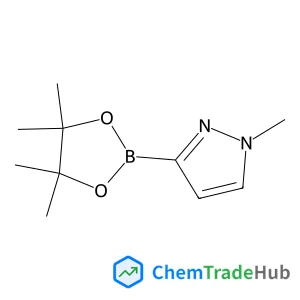
1-Methyl-3-(4,4,5,5-tetramethyl-1,3,2-dioxaborolan-2-yl)-1H-pyrazole
CAS Number:
1020174-04-2
Molecular Formula:
C10H17BN2O2

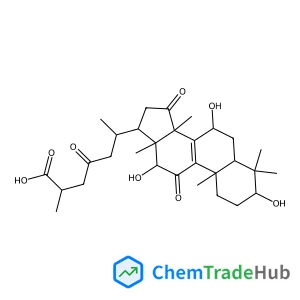
(3beta,7beta,12beta)-3,7,12-Trihydroxy-11,15,23-trioxolanost-8-en-26-oic acid
CAS Number:
98665-22-6
Molecular Formula:
C30H44O8
Recommended Suppliers






Disclaimer
This page provides academic journal information for reference and research purposes only. We are not affiliated with any journal publishers and do not handle publication submissions. For publication-related inquiries, please contact the respective journal publishers directly.
If you notice any inaccuracies in the information displayed, please contact us at support@chemtradehub.com. We will promptly review and address your concerns.