


Two-dimensional diamine-linked covalent organic frameworks for CO2/N2 capture and separation: theoretical modeling and simulations
Literature Information
Publication Date
2020-10-28
DOI
10.1039/D0CP04258G
Impact Factor
3.676
Authors
Noelia Faginas-Lago, Andrea Lombardi
View Original
Abstract
Two-dimensional covalent organic frameworks (2D-COFs) with diamine-based linkers have been designed and investigated for CO2/N2 gaseous mixture adsorption and separation via a systematic theoretical study by combining density functional theory (DFT) calculations and force field-based molecular dynamics (MD) simulations. We explored the adsorption sites and adsorption energies of CO2/N2 on 2D-COFs. The gas uptake capacity, adsorption isotherms, permeability, and selectivity were simulated based on an improved formulation of force fields for mixture separation in post-combustion conditions. This theoretical approach provided atomistic understanding and quantitative description of intermolecular interactions governing the physisorption dynamics of the considered systems. The results suggest that 2D-COFs investigated in this study are competitive with other 2D materials for carbon capture and separation and can be considered as alternative molecular sieving materials offering efficient and rapid separation and adsorption of different molecules.
Recommended Journals

Atomization and Sprays

Journal of Asian Natural Products Research

Polycyclic Aromatic Compounds

Acta Metallurgica Sinica-English Letters

Colloid Journal

Biocatalysis and Biotransformation

Journal of Chemical Sciences

Critical Reviews in Solid State and Materials Sciences

Heteroatom Chemistry

Topics in Catalysis
Related Literature
Investigations of the waterclusters of the protected amino acid Ac-Phe-OMe by applying IR/UV double resonance spectroscopy: microsolvation of the backbone
Holger Fricke, Kirsten Schwing, Andreas Gerlach, Claus Unterberg, Markus Gerhards
2010-03-10
Paper
DOI: 10.1039/C000424C
Designing meso- and macropore architectures in hybrid organic–inorganic membranes by combining surfactant and breath figure templating (BFT)
Ozlem Sel, Christel Laberty-Robert, Thierry Azais, Clément Sanchez
2009-03-27
Paper
DOI: 10.1039/B821506E
Structural investigation of Au(111)/butylthiolate adsorption phases
A. Chaudhuri, D. C. Jackson, T. J. Lerotholi, Robert G. Jones, T.-L. Lee, B. Detlefs, D. P. Woodruff
2010-02-23
Paper
DOI: 10.1039/B921281G
Why Turing mechanism is an obstacle to stationary periodic patterns in bounded reaction-diffusion media with advection
Arik Yochelis, Moshe Sheintuch
2010-03-17
Communication
DOI: 10.1039/B921918H
Self-assembled monolayers of polar molecules on Au(111) surfaces: distributing the dipoles
David A. Egger, Ferdinand Rissner, Gerold M. Rangger, Oliver T. Hofmann, Lukas Wittwer, Georg Heimel, Egbert Zojer
2010-02-25
Communication
DOI: 10.1039/B924238B
In situ characterization of a cold and short pulsed molecular beam by femtosecond ion imaging
Daniel Irimia, Rob Kortekaas, Maurice H. M. Janssen
2009-03-14
Paper
DOI: 10.1039/B822960K
You might also like
Compound Q&A
How should waste containing 2-Ethyl-4-Methyl-1H-Imidazole-5-Carbaldehyde (CAS: 88634-80-4) be handled?
Waste containing 2-Ethyl-4-Methyl-1H-Imidazole-5-Carbaldehyde (CAS: 88634-80-4) ...
88634-80-42-Ethyl-4-Methyl-1H-...
Compound Q&A
What industries use Triethoxy(octyl)silane (CAS: 1385031-14-0)?
Triethoxy(octyl)silane (CAS: 1385031-14-0) is widely used in the pharmaceuticals...
1385031-14-0Triethoxy(octyl)sila...
Compound Q&A
Are there alternatives to 3-iodo-7-nitro-1H-indazole (CAS: 864724-64-1) in synthesis?
Several alternatives to 3-iodo-7-nitro-1H-indazole (CAS: 864724-64-1) exist in t...
864724-64-13-iodo-7-nitro-1H-in...
Compound Q&A
Are there alternatives to Benzene, bis[(trimethoxysilyl)ethyl] (CAS: 266317-71-9) in synthesis?
Yes, there are alternatives to Benzene, bis[(trimethoxysilyl)ethyl] (CAS: 266317...
266317-71-9Benzene, bis[(trimet...
Compound Q&A
Is Isothiazole-3-carbonitrile (CAS: 1452-17-1) safe?
Isothiazole-3-carbonitrile (CAS: 1452-17-1) is generally considered safe when us...
1452-17-1Isothiazole-3-carbon...
Compound Q&A
Is (3-Chlorophenyl)methanol (CAS: 873-63-2) safe?
(3-Chlorophenyl)methanol (CAS: 873-63-2) is considered low to moderately toxic. ...
873-63-2(3-Chlorophenyl)meth...
Compound Q&A
How is (2S,3S)-2-Hydroxy-3-({[(2-methyl-2-propanyl)oxy]carbonyl}amino)-3-(2-naphthyl)propanoic acid (CAS: 959583-98-3) typically synthesized?
(2S,3S)-2-Hydroxy-3-({[(2-methyl-2-propanyl)oxy]carbonyl}amino)-3-(2-naphthyl)pr...
959583-98-3(2S,3S)-2-Hydroxy-3-...
Compound Q&A
What precautions should be taken when handling Methyl 2-(bromomethyl)-5-methoxybenzoate (CAS: 788081-99-2)?
Proper handling of methyl 2-(bromomethyl)-5-methoxybenzoate requires the use of ...
788081-99-2Methyl 2-(bromomethy...
Compound Q&A
What is 6,8-Dibromoimidazo[1,2-a]pyridine-2-carboxylic acid (CAS: 904805-36-3)?
6,8-Dibromoimidazo[1,2-a]pyridine-2-carboxylic acid (CAS: 904805-36-3) is an aro...
904805-36-36,8-Dibromoimidazo[1...
Compound Q&A
Is 3-Amino-5-bromo-2-pyridinecarbonitrile (CAS: 573675-27-1) safe?
3-Amino-5-bromo-2-pyridinecarbonitrile is considered safe when handled under pro...
573675-27-13-Amino-5-bromo-2-py...
Source Journal
Physical Chemistry Chemical Physics

CiteScore:
5.5
Self-citation Rate:
10.3%
Articles per Year:
3036
Physical Chemistry Chemical Physics (PCCP) is an international journal co-owned by 19 physical chemistry and physics societies from around the world. This journal publishes original, cutting-edge research in physical chemistry, chemical physics and biophysical chemistry. To be suitable for publication in PCCP, articles must include significant innovation and/or insight into physical chemistry; this is the most important criterion that reviewers and Editors will judge against when evaluating submissions. The journal has a broad scope and welcomes contributions spanning experiment, theory, computation and data science. Topical coverage includes spectroscopy, dynamics, kinetics, statistical mechanics, thermodynamics, electrochemistry, catalysis, surface science, quantum mechanics, quantum computing and machine learning. Interdisciplinary research areas such as polymers and soft matter, materials, nanoscience, energy, surfaces/interfaces, and biophysical chemistry are welcomed if they demonstrate significant innovation and/or insight into physical chemistry. Joined experimental/theoretical studies are particularly appreciated when complementary and based on up-to-date approaches.
Recommended Compounds
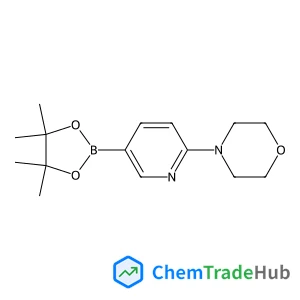
4-(5-(4,4,5,5-tetramethyl-1,3,2-dioxaborolan-2-yl)pyridin-2-yl)morpholine
CAS Number:
485799-04-0
Molecular Formula:
C15H23BN2O3
Recommended Suppliers








Disclaimer
This page provides academic journal information for reference and research purposes only. We are not affiliated with any journal publishers and do not handle publication submissions. For publication-related inquiries, please contact the respective journal publishers directly.
If you notice any inaccuracies in the information displayed, please contact us at support@chemtradehub.com. We will promptly review and address your concerns.