












Controlling dynamic stereoisomerism in transition-metal folded baskets
Literature Information
Publication Date
2011-01-28
DOI
10.1039/C0SC00592D
Impact Factor
9.825
Authors
Sandra Stojanović, Daniel A. Turner, Christopher M. Hadad, Jovica D. Badjić
View Original
Abstract
We synthesized chiral molecular baskets (R3/S3)-1, containing three pyridine rings at the rim of a bowl-shaped platform. Each pyridine was tethered to the platform via a CH(CH)3 stereogenic center. In line with prior studies, we found that chiral basket (R3)-1 would coordinate to Ag(I) cation forming a Ag(I)–(R3)-1 complex (ΔG° = −5.9 kcal mol−1 at 298.0 K). Furthermore, we used spectroscopic methods (1H NMR, UV-Vis and CD) to establish that the CH(CH)3 stereogenic center with R configuration in Ag(I)–(R3)-1 would direct the twisting of the pyridine rings at the rim in a clockwise orientation (P configuration). UV-Vis and CD spectra of Ag(I)–(R3)-1(P) were also computed (TD-DFT; BHLYP/SV(P),TZVP), showing good agreement with the experimental data. Controlling dynamic stereoisomerism in basket-like systems is important and the results of this study will be useful for examining the relationship between chiral recognition and reactivity in gated and confined environments.
Related Literature
Organic salts utilising the hexamethylguanidinium cation: the influence of the anion on the structural, physical and thermal properties
Ruhamah Yunis, Anthony F. Hollenkamp, Craig Forsyth, Cara M. Doherty, Danah Al-Masri, Jennifer M. Pringle
2019-05-29
Paper
DOI: 10.1039/C9CP01740B
Nanoscale PDA disassembly in ionic liquids: structure–property relationships underpinning redox tuning
Marianna Ambrico, Paola Manini, Paolo F. Ambrico, Teresa Ligonzo, Giuseppe Casamassima, Paola Franchi, Luca Valgimigli, Andrea Mezzetta, Cinzia Chiappe, Marco d'Ischia
2019-05-09
Paper
DOI: 10.1039/C9CP01545K
Inelastic scattering dynamics of ortho and para hydronium ions, o-H3O+ and p-H3O+, with He at low temperature
Houda El Hanini, Faouzi Najar, Manel Naouai, Nejm-Eddine Jaidane
2019-05-07
Paper
DOI: 10.1039/C9CP01889A
The performance of adsorption, dissociation and diffusion mechanism of hydrogen on the Ti-doped ZrCo(110) surface
Qingqing Wang, Xianggang Kong, Huilei Han, Ge Sang, Guanghui Zhang, Tao Gao
2019-05-15
Paper
DOI: 10.1039/C9CP02491C
X-ray radiation-induced amorphization of metal–organic frameworks
Remo N. Widmer, Giulio I. Lampronti, Nicola Casati, Stefan Farsang, Thomas D. Bennett, Simon A. T. Redfern
2019-05-29
Paper
DOI: 10.1039/C9CP01463B
Diverging surface reactions at TiO2- or ZnO-based photoanodes in dye-sensitized solar cells
Raffael Ruess, Sabina Scarabino, Andreas Ringleb, Kazuteru Nonomura, Nick Vlachopoulos, Anders Hagfeldt, Gunther Wittstock, Derck Schlettwein
2019-05-27
Paper
DOI: 10.1039/C9CP01215J
Hydrophobic confinement modulates thermal stability and assists knotting in the folding of tangled proteins
João Especial, Antonio Rey
2019-05-16
Paper
DOI: 10.1039/C9CP01701A
Non-adiabatic molecular dynamics investigation of the size dependence of the electronic relaxation in polyacenes
Evgeny Posenitskiy, Mathias Rapacioli, Bruno Lepetit, Didier Lemoine, Fernand Spiegelman
2019-05-17
Paper
DOI: 10.1039/C9CP00603F
Polarizable embedding for simulating redox potentials of biomolecules
Ruslan N. Tazhigulov, Pradeep Kumar Gurunathan, Yongbin Kim, Lyudmila V. Slipchenko, Ksenia B. Bravaya
2019-04-15
Paper
DOI: 10.1039/C9CP01533G
You might also like
Compound Q&A
What are the main uses of 1H-Indazole-6-carbonitrile (CAS: 141290-59-7)?
1H-Indazole-6-carbonitrile finds applications in pharmaceuticals, where it serve...
141290-59-71H-Indazole-6-carbon...
Compound Q&A
How should waste containing Dioctyl (2E)-2-butenedioate (CAS: 2997-85-5) be handled?
Waste containing Dioctyl (2E)-2-butenedioate (CAS: 2997-85-5) should be collecte...
2997-85-5Dioctyl (2E)-2-buten...
Compound Q&A
What industries use Sodium [(1,2-benzoxazol-3-ylmethyl)sulfonyl]azanide (CAS: 68291-98-5)?
Sodium [(1,2-benzoxazol-3-ylmethyl)sulfonyl]azanide is primarily used in pharmac...
68291-98-5Sodium [(1,2-benzoxa...
Compound Q&A
Are there alternatives to Dimethyl 4-(4,4,5,5-tetramethyl-1,3,2-dioxaborolan-2-yl)-2,6-pyridinedicarboxylate (CAS: 741709-66-0) in synthesis?
Dimethyl 4-(4,4,5,5-tetramethyl-1,3,2-dioxaborolan-2-yl)-2,6-pyridinedicarboxyla...
741709-66-0Dimethyl 4-(4,4,5,5-...
Compound Q&A
How should waste containing 2-Fluoro-6-hydrazinopyridine (CAS: 80714-39-2) be handled?
Waste containing 2-Fluoro-6-hydrazinopyridine (CAS: 80714-39-2) should be manage...
80714-39-22-Fluoro-6-hydrazino...
Compound Q&A
What is 6-Formyl-2-pyridinecarboxylic acid (CAS: 499214-11-8)?
6-Formyl-2-pyridinecarboxylic acid is an organic compound with the molecular for...
499214-11-86-Formyl-2-pyridinec...
Compound Q&A
What is the market or research trend for 3-(3,4-dimethoxyphenyl)-2,5-dimethyl-N-(2-morpholin-4-ylethyl)pyrazolo[1,5-a]pyrimidin-7-amine (CAS: 900874-91-1)?
Research trends for this compound indicate a focus on its potential applications...
900874-91-13-(3,4-dimethoxyphen...
Compound Q&A
How is 9H-Tribenzo[b,d,f]azepine (CAS: 29875-73-8) typically synthesized?
9H-Tribenzo[b,d,f]azepine is typically synthesized via a multi-step process invo...
29875-73-89H-Tribenzo[b,d,f]az...
Compound Q&A
How is 1-Cyclopropyl-7-ethoxy-6-fluoro-8-methoxy-4-oxo-1,4-dihydro-3-quinolinecarboxylic acid (CAS: 1797982-51-4) typically synthesized?
1-Cyclopropyl-7-ethoxy-6-fluoro-8-methoxy-4-oxo-1,4-dihydro-3-quinolinecarboxyli...
1797982-51-41-Cyclopropyl-7-etho...
Compound Q&A
How should waste containing Methyl 3-oxo-1,2,3,4-tetrahydro-6-quinoxalinecarboxylate (CAS: 671820-52-3) be handled?
Waste containing Methyl 3-oxo-1,2,3,4-tetrahydro-6-quinoxalinecarboxylate (CAS: ...
671820-52-3Methyl 3-oxo-1,2,3,4...
Source Journal
Chemical Science

CiteScore:
14.4
Self-citation Rate:
3.9%
Articles per Year:
1413
Our journal has a wide-ranging scope which covers the full breadth of the chemical sciences. The research we publish contains the sorts of novel ideas, challenging questions and progressive thinking that bring undiscovered breakthroughs within reach. Your paper could focus on a single area, or cross many. It could be beyond the accepted bounds of the chemical sciences. It might address an immediate challenge, contribute to a future breakthrough or be wholly conceptual. We’re a team from every field of the chemical sciences, and know from experience that breakthroughs that drive the solutions to global challenges can come from anywhere, at any time. You could even start an entirely new area of research. Too bold? Too progressive? No such thing
Recommended Compounds

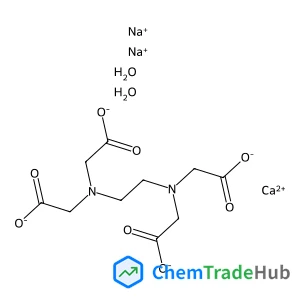
EthylenediaminetetraaceticacidcalciumDisodiumsalthydrate
CAS Number:
23411-34-9
Molecular Formula:
C10H16CaN2Na2O10
Recommended Suppliers





Disclaimer
This page provides academic journal information for reference and research purposes only. We are not affiliated with any journal publishers and do not handle publication submissions. For publication-related inquiries, please contact the respective journal publishers directly.
If you notice any inaccuracies in the information displayed, please contact us at support@chemtradehub.com. We will promptly review and address your concerns.