


Boron-doped diamond microdisc arrays: electrochemical characterisation and their use as a substrate for the production of microelectrode arrays of diverse metals (Ag, Au, Cu) via electrodeposition
Literature Information
Publication Date
2005-08-01
DOI
10.1039/B506956D
Impact Factor
4.616
Authors
Andrew O. Simm, Craig E. Banks, Sarah Ward-Jones, Trevor J. Davies, Nathan S. Lawrence, Timothy G. J. Jones, Li Jiang, Richard G. Compton
View Original
Abstract
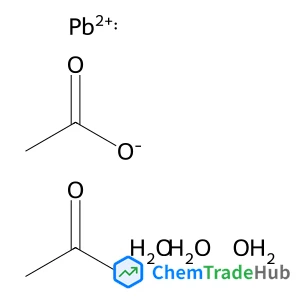
A novel boron-doped diamond (BDD) microelectrode array is characterised with electrochemical and atomic force microscopic techniques. The array consists of 40 micron-diameter sized BDD discs which are separated by 250 microns from their nearest neighbour in a hexagonal arrangement. The conducting discs can be electroplated to produce arrays of copper, silver or gold for analytical purposes in addition to operating as an array of BDD-microelectrodes. Proof-of-concept is shown for four separate examples; a gold plated array for arsenic detection, a copper plated array for nitrate analysis, a silver plated array for hydrogen peroxide monitoring and last, cathodic stripping voltammetry for lead at the bare BDD-array.
Recommended Journals

Critical Reviews in Solid State and Materials Sciences

Electroanalysis

Bioorganic & Medicinal Chemistry Letters

Main Group Chemistry

Journal of Chemical Sciences

Journal of Asian Natural Products Research

Chinese Journal of Chemistry

Polycyclic Aromatic Compounds

Colloid Journal

Herald of the Russian Academy of Sciences
Related Literature
Interfacial defects induced electronic property transformation at perovskite SrVO3/SrTiO3 and LaCrO3/SrTiO3 heterointerfaces
Junjie Li, Deqiang Yin, Qiang Li, Rong Sun, Sumei Huang, Fanzhi Meng
2017-02-01
Communication
DOI: 10.1039/C6CP07691B
Tracking areal lithium densities from neutron activation – quantitative Li determination in self-organized TiO2 nanotube anode materials for Li-ion batteries
E. Portenkirchner, G. Neri, J. Lichtinger, J. Brumbarov, R. Gernhäuser, J. Kunze-Liebhäuser
2017-03-02
Paper
DOI: 10.1039/C7CP00180K
Theoretical studies on FGFR isoform selectivity of FGFR1/FGFR4 inhibitors by molecular dynamics simulations and free energy calculations
Weitao Fu, Lingfeng Chen, Zhe Wang, Chao Wu, Qinqin Xia, Zhiguo Liu, Jianmin Zhou, Guang Liang, Yuepiao Cai
2017-01-04
Paper
DOI: 10.1039/C6CP07964D
Controlling the termination and photochemical reactivity of the SrTiO3(110) surface
Yisi Zhu, Paul A. Salvador, Gregory S. Rohrer
2017-02-24
Paper
DOI: 10.1039/C6CP08608J
Metal ion mediated electron transfer at dye–semiconductor interfaces
Jamie C. Wang, Kyle Violette, Omotola O. Ogunsolu
2017-01-04
Communication
DOI: 10.1039/C6CP07939C
A DFT+U investigation of hydrogen adsorption on the LaFeO3(010) surface
Isaac W. Boateng, Richard Tia, Evans Adei, Nelson Y. Dzade
2017-02-17
Paper
DOI: 10.1039/C6CP08698E
Periodicity of band gaps of chiral α-graphyne nanotubes
Baotao Kang, Daeheum Cho, Jin Yong Lee
2017-02-20
Paper
DOI: 10.1039/C7CP00137A
Interpretation of Tolman electronic parameters in the light of natural orbitals for chemical valence
G. Attilio Ardizzoia, Stefano Brenna
2017-01-25
Paper
DOI: 10.1039/C6CP07793E
Selective-releasing-affected lubricant mechanism of a self-assembled MoS2/Mo–S–C nanoperiod multilayer film sliding in diverse atmospheres
J. Xu, T. F. He, L. Q. Chai, L. Qiao, X. Q. Zhang, P. Wang, W. M. Liu
2016-12-20
Paper
DOI: 10.1039/C6CP08356K
Simultaneous covalent and noncovalent carbon nanotube/Ag3PO4 hybrids: new insights into the origin of enhanced visible light photocatalytic performance
Wei-Qing Huang, Zhong Xie, Wangyu Hu, Ping Peng, Gui-Fang Huang
2017-02-17
Paper
DOI: 10.1039/C6CP08853H
You might also like
Compound Q&A
What are the main uses of 1H-Indazole-6-carbonitrile (CAS: 141290-59-7)?
1H-Indazole-6-carbonitrile finds applications in pharmaceuticals, where it serve...
141290-59-71H-Indazole-6-carbon...
Compound Q&A
How should waste containing Dioctyl (2E)-2-butenedioate (CAS: 2997-85-5) be handled?
Waste containing Dioctyl (2E)-2-butenedioate (CAS: 2997-85-5) should be collecte...
2997-85-5Dioctyl (2E)-2-buten...
Compound Q&A
What industries use Sodium [(1,2-benzoxazol-3-ylmethyl)sulfonyl]azanide (CAS: 68291-98-5)?
Sodium [(1,2-benzoxazol-3-ylmethyl)sulfonyl]azanide is primarily used in pharmac...
68291-98-5Sodium [(1,2-benzoxa...
Compound Q&A
Are there alternatives to Dimethyl 4-(4,4,5,5-tetramethyl-1,3,2-dioxaborolan-2-yl)-2,6-pyridinedicarboxylate (CAS: 741709-66-0) in synthesis?
Dimethyl 4-(4,4,5,5-tetramethyl-1,3,2-dioxaborolan-2-yl)-2,6-pyridinedicarboxyla...
741709-66-0Dimethyl 4-(4,4,5,5-...
Compound Q&A
How should waste containing 2-Fluoro-6-hydrazinopyridine (CAS: 80714-39-2) be handled?
Waste containing 2-Fluoro-6-hydrazinopyridine (CAS: 80714-39-2) should be manage...
80714-39-22-Fluoro-6-hydrazino...
Compound Q&A
What is 6-Formyl-2-pyridinecarboxylic acid (CAS: 499214-11-8)?
6-Formyl-2-pyridinecarboxylic acid is an organic compound with the molecular for...
499214-11-86-Formyl-2-pyridinec...
Compound Q&A
What is the market or research trend for 3-(3,4-dimethoxyphenyl)-2,5-dimethyl-N-(2-morpholin-4-ylethyl)pyrazolo[1,5-a]pyrimidin-7-amine (CAS: 900874-91-1)?
Research trends for this compound indicate a focus on its potential applications...
900874-91-13-(3,4-dimethoxyphen...
Compound Q&A
How is 9H-Tribenzo[b,d,f]azepine (CAS: 29875-73-8) typically synthesized?
9H-Tribenzo[b,d,f]azepine is typically synthesized via a multi-step process invo...
29875-73-89H-Tribenzo[b,d,f]az...
Compound Q&A
How is 1-Cyclopropyl-7-ethoxy-6-fluoro-8-methoxy-4-oxo-1,4-dihydro-3-quinolinecarboxylic acid (CAS: 1797982-51-4) typically synthesized?
1-Cyclopropyl-7-ethoxy-6-fluoro-8-methoxy-4-oxo-1,4-dihydro-3-quinolinecarboxyli...
1797982-51-41-Cyclopropyl-7-etho...
Compound Q&A
How should waste containing Methyl 3-oxo-1,2,3,4-tetrahydro-6-quinoxalinecarboxylate (CAS: 671820-52-3) be handled?
Waste containing Methyl 3-oxo-1,2,3,4-tetrahydro-6-quinoxalinecarboxylate (CAS: ...
671820-52-3Methyl 3-oxo-1,2,3,4...
Source Journal
Analyst

CiteScore:
7.8
Self-citation Rate:
5.6%
Articles per Year:
653
Analyst publishes analytical and bioanalytical research that reports premier fundamental discoveries and inventions, and the applications of those discoveries, unconfined by traditional discipline barriers.
Recommended Compounds
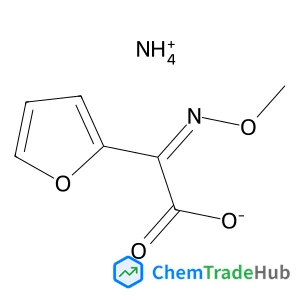
Ammonium (Z)-2-(furan-2-yl)-2-(methoxyimino)acetate
CAS Number:
97148-39-5
Molecular Formula:
C7H10N2O4
Recommended Suppliers




Disclaimer
This page provides academic journal information for reference and research purposes only. We are not affiliated with any journal publishers and do not handle publication submissions. For publication-related inquiries, please contact the respective journal publishers directly.
If you notice any inaccuracies in the information displayed, please contact us at support@chemtradehub.com. We will promptly review and address your concerns.