


Periodicity of band gaps of chiral α-graphyne nanotubes
Literature Information
Publication Date
2017-02-20
DOI
10.1039/C7CP00137A
Impact Factor
3.676
Authors
Baotao Kang, Daeheum Cho, Jin Yong Lee
View Original
Abstract
Electronic structures of zigzag (n,0), armchair (n,n), and chiral (n,m) α-graphyne nanotubes (αGNTs) with n = 2–7 were investigated using density functional tight binding calculations. Oscillatory behavior of the band gaps with a period of every (n − m) = 3 was found for each tube. According to the periodicity, αGNTs could be classified into three families, and their band gaps were in the increasing order of (n − m) = 3a < 3a + 1 < 3a + 2. Among the three families, αGNTs with (n − m) = 3a became effectively semimetallic when the tube size was larger than approximately 2 nm, while the other families remained semiconducting.
Recommended Journals

Acta Metallurgica Sinica-English Letters

Cellulose

Bioorganic & Medicinal Chemistry Letters

Atomization and Sprays

Medicinal Chemistry Research

Bioorganic & Medicinal Chemistry

Journal of the Indian Institute of Science

Heteroatom Chemistry

Colloid Journal

Critical Reviews in Solid State and Materials Sciences
Related Literature
A platinum-catalyzed annulation reaction leading to medium-sized rings
Dirk Hildebrandt, Wiebke Hüggenberg, Matthias Kanthak, Tobias Plöger, Iris M. Müller, Gerald Dyker
2006-04-25
Communication
DOI: 10.1039/B602498J
Bond length and bond multiplicity: σ-bond prevents short π-bonds
R. Bruce King, Henry F. Schaefer III
2006-04-18
Communication
DOI: 10.1039/B602116F
Lithium ion conduction in an organoborate zwitterion–LiTFSI mixture
Asako Narita, Wataru Shibayama, Kenji Sakamoto, Tomonobu Mizumo, Noriyoshi Matsumi, Hiroyuki Ohno
2006-03-21
Communication
DOI: 10.1039/B517019B
Two novel non-viral gene delivery vectors: low molecular weight polyethylenimine cross-linked by (2-hydroxypropyl)-β-cyclodextrin or (2-hydroxypropyl)-γ-cyclodextrin
Hongliang Huang, Guping Tang, Qingqing Wang, Da Li, Fenping Shen, Jun Zhou, Hai Yu
2006-03-22
Communication
DOI: 10.1039/B601130F
Platinum–acetylide polymer based solar cells: involvement of the triplet state for energy conversion
Fengqi Guo, Young-Gi Kim, John R. Reynolds, Kirk S. Schanze
2006-03-21
Communication
DOI: 10.1039/B516086C
Non-catalytic and template-free growth of aligned CdS nanowires exhibiting high field emission current densities
Yi-Feng Lin, Yung-Jung Hsu, Shih-Yuan Lu, Sheng-Chin Kung
2006-05-02
Communication
DOI: 10.1039/B604309G
Carbohydrate triazoles and isoxazoles as inhibitors of galectins-1 and -3
Denis Giguère, Ramesh Patnam, Marc-André Bellefleur, Christian St-Pierre, Sachiko Sato, René Roy
2006-03-16
Communication
DOI: 10.1039/B517529A
DNA microarraying on compact disc surfaces. Application to the analysis of single nucleotide polymorphisms in Plum pox virus
Sergi Morais, Raquel Marco-Molés, Rosa Puchades, Ángel Maquieira
2006-05-02
Communication
DOI: 10.1039/B600049E
Quinoidal oligoquinoline: a novel quinodimethane exhibiting high electroluminescence efficiency and p-channel field effect charge transport
Christopher J. Tonzola, Jessica M. Hancock, Amit Babel, Samson A. Jenekhe
2005-09-21
Communication
DOI: 10.1039/B509322H
You might also like
Compound Q&A
What are the main uses of 1H-Indazole-6-carbonitrile (CAS: 141290-59-7)?
1H-Indazole-6-carbonitrile finds applications in pharmaceuticals, where it serve...
141290-59-71H-Indazole-6-carbon...
Compound Q&A
How should waste containing Dioctyl (2E)-2-butenedioate (CAS: 2997-85-5) be handled?
Waste containing Dioctyl (2E)-2-butenedioate (CAS: 2997-85-5) should be collecte...
2997-85-5Dioctyl (2E)-2-buten...
Compound Q&A
What industries use Sodium [(1,2-benzoxazol-3-ylmethyl)sulfonyl]azanide (CAS: 68291-98-5)?
Sodium [(1,2-benzoxazol-3-ylmethyl)sulfonyl]azanide is primarily used in pharmac...
68291-98-5Sodium [(1,2-benzoxa...
Compound Q&A
Are there alternatives to Dimethyl 4-(4,4,5,5-tetramethyl-1,3,2-dioxaborolan-2-yl)-2,6-pyridinedicarboxylate (CAS: 741709-66-0) in synthesis?
Dimethyl 4-(4,4,5,5-tetramethyl-1,3,2-dioxaborolan-2-yl)-2,6-pyridinedicarboxyla...
741709-66-0Dimethyl 4-(4,4,5,5-...
Compound Q&A
How should waste containing 2-Fluoro-6-hydrazinopyridine (CAS: 80714-39-2) be handled?
Waste containing 2-Fluoro-6-hydrazinopyridine (CAS: 80714-39-2) should be manage...
80714-39-22-Fluoro-6-hydrazino...
Compound Q&A
What is 6-Formyl-2-pyridinecarboxylic acid (CAS: 499214-11-8)?
6-Formyl-2-pyridinecarboxylic acid is an organic compound with the molecular for...
499214-11-86-Formyl-2-pyridinec...
Compound Q&A
What is the market or research trend for 3-(3,4-dimethoxyphenyl)-2,5-dimethyl-N-(2-morpholin-4-ylethyl)pyrazolo[1,5-a]pyrimidin-7-amine (CAS: 900874-91-1)?
Research trends for this compound indicate a focus on its potential applications...
900874-91-13-(3,4-dimethoxyphen...
Compound Q&A
How is 9H-Tribenzo[b,d,f]azepine (CAS: 29875-73-8) typically synthesized?
9H-Tribenzo[b,d,f]azepine is typically synthesized via a multi-step process invo...
29875-73-89H-Tribenzo[b,d,f]az...
Compound Q&A
How is 1-Cyclopropyl-7-ethoxy-6-fluoro-8-methoxy-4-oxo-1,4-dihydro-3-quinolinecarboxylic acid (CAS: 1797982-51-4) typically synthesized?
1-Cyclopropyl-7-ethoxy-6-fluoro-8-methoxy-4-oxo-1,4-dihydro-3-quinolinecarboxyli...
1797982-51-41-Cyclopropyl-7-etho...
Compound Q&A
How should waste containing Methyl 3-oxo-1,2,3,4-tetrahydro-6-quinoxalinecarboxylate (CAS: 671820-52-3) be handled?
Waste containing Methyl 3-oxo-1,2,3,4-tetrahydro-6-quinoxalinecarboxylate (CAS: ...
671820-52-3Methyl 3-oxo-1,2,3,4...
Source Journal
Physical Chemistry Chemical Physics

CiteScore:
5.5
Self-citation Rate:
10.3%
Articles per Year:
3036
Physical Chemistry Chemical Physics (PCCP) is an international journal co-owned by 19 physical chemistry and physics societies from around the world. This journal publishes original, cutting-edge research in physical chemistry, chemical physics and biophysical chemistry. To be suitable for publication in PCCP, articles must include significant innovation and/or insight into physical chemistry; this is the most important criterion that reviewers and Editors will judge against when evaluating submissions. The journal has a broad scope and welcomes contributions spanning experiment, theory, computation and data science. Topical coverage includes spectroscopy, dynamics, kinetics, statistical mechanics, thermodynamics, electrochemistry, catalysis, surface science, quantum mechanics, quantum computing and machine learning. Interdisciplinary research areas such as polymers and soft matter, materials, nanoscience, energy, surfaces/interfaces, and biophysical chemistry are welcomed if they demonstrate significant innovation and/or insight into physical chemistry. Joined experimental/theoretical studies are particularly appreciated when complementary and based on up-to-date approaches.
Recommended Compounds

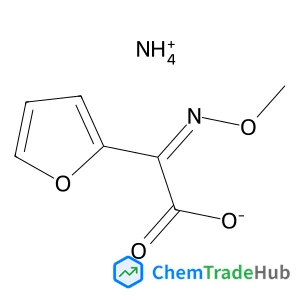
Ammonium (Z)-2-(furan-2-yl)-2-(methoxyimino)acetate
CAS Number:
97148-39-5
Molecular Formula:
C7H10N2O4
Recommended Suppliers






Disclaimer
This page provides academic journal information for reference and research purposes only. We are not affiliated with any journal publishers and do not handle publication submissions. For publication-related inquiries, please contact the respective journal publishers directly.
If you notice any inaccuracies in the information displayed, please contact us at support@chemtradehub.com. We will promptly review and address your concerns.