












High order forces and nonlocal operators in a Kohn–Sham Hamiltonian
Literature Information
Publication Date
2015-06-24
DOI
10.1039/C5CP02561C
Impact Factor
3.676
Authors
N. Scott Bobbitt, Grady Schofield, Charles Lena, James R. Chelikowsky
View Original
Abstract
Real space pseudopotentials have a number of advantages in solving for the electronic structure of materials. These advantages include ease of implementation, implementation on highly parallel systems, and great flexibility for describing partially periodic systems. One limitation of this approach, shared by other electronic structure methods, is the slow convergence of interatomic forces when compared to total energies. For real space methods, this requires a fine grid to converge a solution of the Kohn–Sham problem, which is accompanied by concurrent increase in memory and additional matrix-vector multiplications. Here we introduce a method to expedite the computation of interatomic forces by employing a high order integration technique. We demonstrate the usefulness of this technique by calculating accurate bond lengths and vibrational frequencies for molecules and nanocrystals without using fine real space grids.
Related Literature
A rapid identification of hit molecules for target proteins via physico-chemical descriptors
Goutam Mukherjee
2013-04-11
Paper
DOI: 10.1039/C3CP44697B
SFG analysis of surface bound proteins: a route towards structure determination
Tobias Weidner
2013-05-21
Perspective
DOI: 10.1039/C3CP50880C
Can mitochondrial dysfunction be initiated by dissociative electron attachment to xenobiotics?
Stanislav A. Pshenichnyuk
2013-04-08
Paper
DOI: 10.1039/C3CP50614B
Amyloid-β–neuropeptide interactions assessed by ion mobility-mass spectrometry
Molly T. Soper, Alaina S. DeToma, Suk-Joon Hyung, Brandon T. Ruotolo
2013-04-15
Paper
DOI: 10.1039/C3CP50721A
Quantitative studies of adsorbate dynamics at noble metal electrodes by in situ Video-STM
Yaw-Chia Yang, Olaf M. Magnussen
2013-04-19
Paper
DOI: 10.1039/C3CP51027A
Orbital-based insights into parallel-displaced and twisted conformations in π–π interactions
Patricia B. Lutz, Craig A. Bayse
2013-03-21
Paper
DOI: 10.1039/C3CP51077H
Self-assembled G-quadruplex nanostructures: AFM and voltammetric characterization
Ana-Maria Chiorcea-Paquim, Paulina Viegas Santos, Ramon Eritja, Ana Maria Oliveira-Brett
2013-05-03
Paper
DOI: 10.1039/C3CP50866H
Design and biophysical characterization of atrazine-sensing peptides mimicking the Chlamydomonas reinhardtiiplastoquinone binding niche
Viviana Scognamiglio, Pasquale Stano, Amina Antonacci, Maya Dimova Lambreva, Giorgio Pochetti, Maria Teresa Giardi, Giuseppina Rea
2013-06-03
Paper
DOI: 10.1039/C3CP51955D
You might also like
Compound Q&A
What are the main uses of 1H-Indazole-6-carbonitrile (CAS: 141290-59-7)?
1H-Indazole-6-carbonitrile finds applications in pharmaceuticals, where it serve...
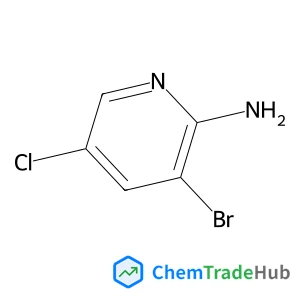
141290-59-71H-Indazole-6-carbon...
Compound Q&A
How should waste containing Dioctyl (2E)-2-butenedioate (CAS: 2997-85-5) be handled?
Waste containing Dioctyl (2E)-2-butenedioate (CAS: 2997-85-5) should be collecte...
2997-85-5Dioctyl (2E)-2-buten...
Compound Q&A
What industries use Sodium [(1,2-benzoxazol-3-ylmethyl)sulfonyl]azanide (CAS: 68291-98-5)?
Sodium [(1,2-benzoxazol-3-ylmethyl)sulfonyl]azanide is primarily used in pharmac...
68291-98-5Sodium [(1,2-benzoxa...
Compound Q&A
Are there alternatives to Dimethyl 4-(4,4,5,5-tetramethyl-1,3,2-dioxaborolan-2-yl)-2,6-pyridinedicarboxylate (CAS: 741709-66-0) in synthesis?
Dimethyl 4-(4,4,5,5-tetramethyl-1,3,2-dioxaborolan-2-yl)-2,6-pyridinedicarboxyla...
741709-66-0Dimethyl 4-(4,4,5,5-...
Compound Q&A
How should waste containing 2-Fluoro-6-hydrazinopyridine (CAS: 80714-39-2) be handled?
Waste containing 2-Fluoro-6-hydrazinopyridine (CAS: 80714-39-2) should be manage...
80714-39-22-Fluoro-6-hydrazino...
Compound Q&A
What is 6-Formyl-2-pyridinecarboxylic acid (CAS: 499214-11-8)?
6-Formyl-2-pyridinecarboxylic acid is an organic compound with the molecular for...
499214-11-86-Formyl-2-pyridinec...
Compound Q&A
What is the market or research trend for 3-(3,4-dimethoxyphenyl)-2,5-dimethyl-N-(2-morpholin-4-ylethyl)pyrazolo[1,5-a]pyrimidin-7-amine (CAS: 900874-91-1)?
Research trends for this compound indicate a focus on its potential applications...
900874-91-13-(3,4-dimethoxyphen...
Compound Q&A
How is 9H-Tribenzo[b,d,f]azepine (CAS: 29875-73-8) typically synthesized?
9H-Tribenzo[b,d,f]azepine is typically synthesized via a multi-step process invo...
29875-73-89H-Tribenzo[b,d,f]az...
Compound Q&A
How is 1-Cyclopropyl-7-ethoxy-6-fluoro-8-methoxy-4-oxo-1,4-dihydro-3-quinolinecarboxylic acid (CAS: 1797982-51-4) typically synthesized?
1-Cyclopropyl-7-ethoxy-6-fluoro-8-methoxy-4-oxo-1,4-dihydro-3-quinolinecarboxyli...
1797982-51-41-Cyclopropyl-7-etho...
Compound Q&A
How should waste containing Methyl 3-oxo-1,2,3,4-tetrahydro-6-quinoxalinecarboxylate (CAS: 671820-52-3) be handled?
Waste containing Methyl 3-oxo-1,2,3,4-tetrahydro-6-quinoxalinecarboxylate (CAS: ...
671820-52-3Methyl 3-oxo-1,2,3,4...
Source Journal
Physical Chemistry Chemical Physics

CiteScore:
5.5
Self-citation Rate:
10.3%
Articles per Year:
3036
Physical Chemistry Chemical Physics (PCCP) is an international journal co-owned by 19 physical chemistry and physics societies from around the world. This journal publishes original, cutting-edge research in physical chemistry, chemical physics and biophysical chemistry. To be suitable for publication in PCCP, articles must include significant innovation and/or insight into physical chemistry; this is the most important criterion that reviewers and Editors will judge against when evaluating submissions. The journal has a broad scope and welcomes contributions spanning experiment, theory, computation and data science. Topical coverage includes spectroscopy, dynamics, kinetics, statistical mechanics, thermodynamics, electrochemistry, catalysis, surface science, quantum mechanics, quantum computing and machine learning. Interdisciplinary research areas such as polymers and soft matter, materials, nanoscience, energy, surfaces/interfaces, and biophysical chemistry are welcomed if they demonstrate significant innovation and/or insight into physical chemistry. Joined experimental/theoretical studies are particularly appreciated when complementary and based on up-to-date approaches.
Recommended Compounds
![Sodium (2Z)-7-{[(2R)-2-amino-2-carboxyethyl]sulfanyl}-2-({[(1S)-2,2-dimethylcyclopropyl]carbonyl}amino)-2-heptenoate structure](https://static.chemtradehub.com/structs/811/81129-83-1-441c.webp "Sodium (2Z)-7-{[(2R)-2-amino-2-carboxyethyl]sulfanyl}-2-({[(1S)-2,2-dimethylcyclopropyl]carbonyl}amino)-2-heptenoate structure")
Sodium (2Z)-7-{[(2R)-2-amino-2-carboxyethyl]sulfanyl}-2-({[(1S)-2,2-dimethylcyclopropyl]carbonyl}amino)-2-heptenoate
CAS Number:
81129-83-1
Molecular Formula:
C16H25N2NaO5S
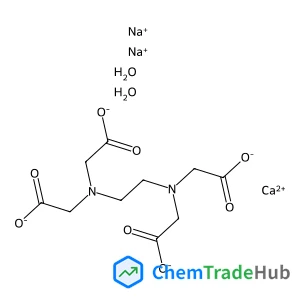
EthylenediaminetetraaceticacidcalciumDisodiumsalthydrate
CAS Number:
23411-34-9
Molecular Formula:
C10H16CaN2Na2O10

Recommended Suppliers




Disclaimer
This page provides academic journal information for reference and research purposes only. We are not affiliated with any journal publishers and do not handle publication submissions. For publication-related inquiries, please contact the respective journal publishers directly.
If you notice any inaccuracies in the information displayed, please contact us at support@chemtradehub.com. We will promptly review and address your concerns.