












![[4-(Heptyloxy)phenyl]boronic acid structure](https://static.chemtradehub.com/structs/136/136370-19-9-ad33.webp "[4-(Heptyloxy)phenyl]boronic acid structure")
Elucidation of the local structure of active titanium(iv) sites on silica-based phase-boundary catalysts for alkeneepoxidation with aqueous hydrogen peroxide
Literature Information
Publication Date
2004-03-26
DOI
10.1039/B316818B
Impact Factor
3.676
Authors
Keita Ikeue, Atsushi Watanabe, Bunsho Ohtani
View Original
Abstract
Structural and functional aspects of active titanium sites for phase boundary catalytic (PBC) epoxidation of 1-octene with hydrogen peroxide (H2O2) were investigated in detail using X-ray absorption fine structure (XAFS) analysis and ultraviolet and visible-light diffuse reflectance (UV-Vis-DR) spectroscopy. By analysis of the Ti K-edge X-ray absorption near edge fine structure (XANES) spectra of several titanium-loaded silica catalysts, the ratio of the amount of 4-coordinated titanium oxide (Ttet) to that of a 6-coordinated one (Toct) was determined. Monotonic increments of catalytic activity for epoxide production and efficiency of H2O2 utilization with the ratio Ttet/(Ttet + Toct) revealed that the highly active catalysts mainly include Ttet but not Toct. UV-Vis-DR spectra of samples with external surfaces partially covered with alkylsilyl groups indicated that there are at least two kinds of Ttet sites with different ligands. One site anchors an acidic hydroxyl (Ttet(OH)), giving absorption centered at the wavelength of ca. 230 nm and the other, exhibiting an absorption peak at the wavelength of ca. 210 nm, is directly attached to an alkylsilyl group (Ttet(OSiR)) formed via reaction of an acidic hydroxy of Ttet(OH) with an alkylsilane reagent. Since the catalysts have both an alkylsilyl-grafted hydrophobic surface and a hydroxy-terminated hydrophilic surface, it is postulated that the former is located on both hydrophilic (Ttet(OH,w)) and hydrophobic (Ttet(OH,o)) surfaces and the latter, Ttet(OSiR), exists only on the hydrophobic surface. From analyses of catalytic activities of several catalysts with different distributions of these Ttet sites, both Ttet(OH,o) and Ttet(OSiR) sites on the hydrophobic surface were proved to be active, while Ttet(OH,w) on the hydrophilic surface did not work for the present PBC system. Among the sites on the hydrophobic surface, moreover, it was found that a Ttet(OSiR) site acted as a more effective site for selective epoxidation when compared with Ttet(OH,o), which induced ring-opening of epoxide to give a by-product, 1,2-octanediol.
Related Literature
Strategies for optimizing the performance of carbazole thiophene appended unsymmetrical squaraine dyes for dye-sensitized solar cells
Cherumuttathu H. Suresh
2015-08-07
Paper
DOI: 10.1039/C5CP03371C
Electronic origin of the dependence of hydrogen bond strengths on nearest-neighbor and next-nearest-neighbor hydrogen bonds in polyhedral water clusters (H2O)n, n = 8, 20 and 24
Suehiro Iwata, Dai Akase, Misako Aida, Sotiris S. Xantheas
2016-06-28
Paper
DOI: 10.1039/C6CP02487D
Retraction: Atomic-scale simulation to study the dynamical properties and local structure of Cu–Zr and Ni–Zr metallic glass-forming alloys
M. H. Yang, Y. Li, J. H. Li, B. X. Liu
2016-07-12
Retraction
DOI: 10.1039/C6CP90176J
Enhanced electrochemical performance of a ZnO–MnO composite as an anode material for lithium ion batteries
Sahn Nahm, Won Il Cho, Chongmok Lee
2015-08-14
Paper
DOI: 10.1039/C5CP03375F
Enhancement of encaged electron concentration by Sr2+ doping and improvement of Gd3+ emission through controlling encaged anions in conductive C12A7 phosphors
Meng Zhang, Yuxue Liu, Hancheng Zhu, Duanting Yan, Jian Yang, Xinyang Zhang, Chunguang Liu, Changshan Xu
2016-03-31
Paper
DOI: 10.1039/C6CP02026G
Interaction between ionic liquid cation and water: infrared predissociation study of [bmim]+·(H2O)n clusters
Jonathan M. Voss, Brett M. Marsh, Jia Zhou, Etienne Garand
2016-06-29
Paper
DOI: 10.1039/C6CP02730J
Retracted Article: Origin of colossal permittivity in (In1/2Nb1/2)TiO2via broadband dielectric spectroscopy
Xiao-gang Zhao, Peng Liu, Yue-Chan Song, An-ping Zhang, Xiao-ming Chen, Jian-ping Zhou
2015-07-30
Paper
DOI: 10.1039/C5CP02741A
Two-dimensional Raman correlation spectroscopy reveals molecular structural changes during temperature-induced self-healing in polymers based on the Diels–Alder reaction
R. Geitner, M. Siegmann, T. W. Bocklitz, S. Gräfe, M. Schmitt
2015-06-01
Paper
DOI: 10.1039/C5CP02151K
You might also like
Compound Q&A
What precautions should be taken when handling 4-(2-Furylmethyl)thiomorpholine 1,1-dioxide (CAS: 79206-94-3)?
When handling 4-(2-Furylmethyl)thiomorpholine 1,1-dioxide (CAS: 79206-94-3), it ...
79206-94-34-(2-Furylmethyl)thi...
Compound Q&A
What precautions should be taken when handling 4-Chloro-N-[2-(4-morpholinyl)ethyl]benzamide (CAS: 71320-77-9)?
When handling 4-Chloro-N-[2-(4-morpholinyl)ethyl]benzamide (CAS: 71320-77-9), it...
71320-77-94-Chloro-N-[2-(4-mor...
Compound Q&A
How should waste containing 2-[2-(2-Methoxyethoxy)ethoxy]ethyl 4-methylbenzenesulfonate (CAS: 62921-74-8) be handled?
Waste containing this compound (CAS: 62921-74-8) should be handled according to ...
62921-74-82-[2-(2-Methoxyethox...
Compound Q&A
How should waste containing (S)-Methyl 2-amino-3-cyclohexylpropanoate be handled?
Waste containing (S)-Methyl 2-amino-3-cyclohexylpropanoate should be collected i...
40056-18-6(S)-Methyl 2-amino-3...
Compound Q&A
How is 5-({4-[(2S,4R)-4-Hydroxy-2-methyltetrahydro-2H-pyran-4-yl]-2-thienyl}sulfanyl)-1-methyl-1,3-dihydro-2H-indol-2-one (CAS: 166882-70-8) typically synthesized?
This compound can be synthesized using a multi-step process involving the conjug...
166882-70-85-({4-[(2S,4R)-4-Hyd...
Compound Q&A
Are there alternatives to (2E)-3-(3,4-Dichlorophenyl)acrylic acid (CAS: 7312-27-8) in synthesis?
There are several alternatives to (2E)-3-(3,4-Dichlorophenyl)acrylic acid in syn...
7312-27-8(2E)-3-(3,4-Dichloro...
Compound Q&A
How should Ethyl 6-(2-nitrophenyl)imidazo[2,1-b][1,3]thiazole-3-carboxylate (CAS: 925437-84-9) be stored?
Ethyl 6-(2-nitrophenyl)imidazo[2,1-b][1,3]thiazole-3-carboxylate (CAS: 925437-84...
925437-84-9Ethyl 6-(2-nitrophen...
Compound Q&A
How should waste containing 2-(1,3-Thiazol-2-yl)ethanamine (CAS: 18453-07-1) be handled?
Waste containing 2-(1,3-Thiazol-2-yl)ethanamine (CAS: 18453-07-1) should be coll...
18453-07-12-(1,3-Thiazol-2-yl)...
Compound Q&A
How is Methyl 5-iodo-2-methylbenzoate (CAS: 103440-54-6) typically synthesized?
Methyl 5-iodo-2-methylbenzoate can be synthesized through the iodination of meth...
103440-54-6Methyl 5-iodo-2-meth...
Compound Q&A
How is 5-Chloro[1,2,4]triazolo[1,5-a]pyridine (CAS: 1427399-34-5) typically synthesized?
5-Chloro[1,2,4]triazolo[1,5-a]pyridine is commonly synthesized via the condensat...
1427399-34-55-Chloro[1,2,4]triaz...
Source Journal
Physical Chemistry Chemical Physics

CiteScore:
5.5
Self-citation Rate:
10.3%
Articles per Year:
3036
Physical Chemistry Chemical Physics (PCCP) is an international journal co-owned by 19 physical chemistry and physics societies from around the world. This journal publishes original, cutting-edge research in physical chemistry, chemical physics and biophysical chemistry. To be suitable for publication in PCCP, articles must include significant innovation and/or insight into physical chemistry; this is the most important criterion that reviewers and Editors will judge against when evaluating submissions. The journal has a broad scope and welcomes contributions spanning experiment, theory, computation and data science. Topical coverage includes spectroscopy, dynamics, kinetics, statistical mechanics, thermodynamics, electrochemistry, catalysis, surface science, quantum mechanics, quantum computing and machine learning. Interdisciplinary research areas such as polymers and soft matter, materials, nanoscience, energy, surfaces/interfaces, and biophysical chemistry are welcomed if they demonstrate significant innovation and/or insight into physical chemistry. Joined experimental/theoretical studies are particularly appreciated when complementary and based on up-to-date approaches.
Recommended Compounds
![1-Naphthalenesulfonic acid, 2-[(2-hydroxy-1-naphthalenyl)azo]-, bariumsalt (2:1) structure](https://static.chemtradehub.com/structs/110/1103-38-4-0b33.webp "1-Naphthalenesulfonic acid, 2-[(2-hydroxy-1-naphthalenyl)azo]-, bariumsalt (2:1) structure")
1-Naphthalenesulfonic acid, 2-[(2-hydroxy-1-naphthalenyl)azo]-, bariumsalt (2:1)
CAS Number:
1103-38-4
Molecular Formula:
C20H14BaN2O4S
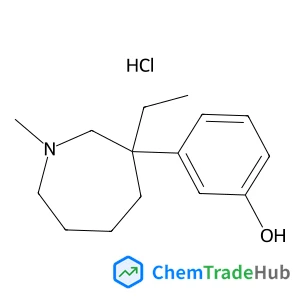
3-(3-Ethyl-1-methyl-3-azepanyl)phenol hydrochloride (1:1)
CAS Number:
59263-76-2
Molecular Formula:
C15H24ClNO
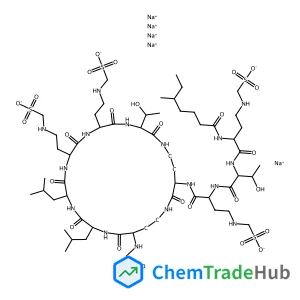
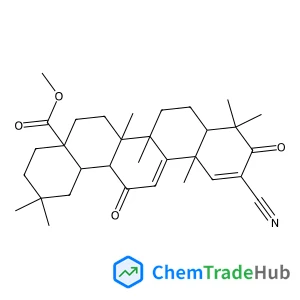
Methyl 2-cyano-3,12-dioxooleana-1,9(11)-dien-28-oate
CAS Number:
218600-53-4
Molecular Formula:
C32H43NO4
Recommended Suppliers







Disclaimer
This page provides academic journal information for reference and research purposes only. We are not affiliated with any journal publishers and do not handle publication submissions. For publication-related inquiries, please contact the respective journal publishers directly.
If you notice any inaccuracies in the information displayed, please contact us at support@chemtradehub.com. We will promptly review and address your concerns.