













The effect of local approximations in coupled-cluster wave functions on dipole moments and static dipole polarisabilities
Literature Information
Publication Date
2004-03-31
DOI
10.1039/B316709G
Impact Factor
3.676
Authors
Klaus Pflüger, Hans-Joachim Werner
View Original
Abstract
The influence of local approximations in electron correlation treatments on electric dipole moments and static dipole polarisabilities is examined for a test set of 16 molecules for the case of coupled-cluster singles and doubles (CCSD) theory. Utilising standard local approximations as originally proposed by Pulay and used in our previous work, the average errors relative to the corresponding conventional CCSD calculations amount to 0.48% for mean dipole polarisabilities and to 1.61% for dipole moments. The accuracy of the computed mean dipole polarisabilities can be reduced to 0.32% by extending the domains of the strong pairs, while for the dipole moments the domain extension reduces the error to 0.91%. It is found that orbital relaxation effects are much more important in the local than in the conventional case. Weak pairs contribute substantially to the computed dipole polarisabilities, but the effect of distant pairs is small and can be neglected. This means that linear scaling local electron correlation methods can be faithfully used to compute these molecular properties.
Related Literature
Microwave-assisted green synthesis of bile acid derivatives and evaluation of glucocorticoid receptor binding
Bojana R. Vasiljević, Edward T. Petri, Sofija S. Bekić, Andjelka S. Ćelić, Ljubica M. Grbović, Ksenija J. Pavlović
2020-11-19
Research Article
DOI: 10.1039/D0MD00311E
Posttranslational modifications of α-conotoxins: sulfotyrosine and C-terminal amidation stabilise structures and increase acetylcholine receptor binding
Thao N. T. Ho, Han Siean Lee, Shilpa Swaminathan, Lewis Goodwin, Nishant Rai, Brianna Ushay, Richard J. Lewis, K. Johan Rosengren, Anne C. Conibear
2021-07-26
Research Article
DOI: 10.1039/D1MD00182E
Highly improved performance of a film-based fluorescent sensor via a nanomesh scaffold strategy
Meng Liu, Dong Li, Kun Li, Haitao Xu, Jiufu Lu, Xianzhao Shao, Taihong Liu
2021-11-01
Communication
DOI: 10.1039/D1SD00016K
Hit-to-lead optimization of a benzene sulfonamide series for potential antileishmanial agents
Paul J. Koovits, Marco A. Dessoy, An Matheeussen, Louis Maes, Guy Caljon, Leonardo L. G. Ferreira, Rafael C. Chelucci, Simone Michelan-Duarte, Adriano D. Andricopulo, Simon Campbell, Jadel M. Kratz, Charles E. Mowbray, Luiz C. Dias
2020-08-25
Research Article
DOI: 10.1039/D0MD00165A
Exploring the chemical space of 1,2,3-triazolyl triclosan analogs for discovery of new antileishmanial chemotherapeutic agents
Julia Fernández de Luco, Alejandro I. Recio-Balsells, Diego G. Ghiano, Ana Bortolotti, Juán Manuel Belardinelli, Nina Liu, Pascal Hoffmann, Christian Lherbet, Peter J. Tonge, Babu Tekwani
2020-11-05
Research Article
DOI: 10.1039/D0MD00291G
You might also like
Compound Q&A
What are the main uses of 1-(3-Aminophenyl)-3-[(3R)-1-(3,3-dimethyl-2-oxobutyl)-2-oxo-5-(2-pyridinyl)-2,3-dihydro-1H-1,4-benzodiazepin-3-yl]urea (CAS: 155412-88-7)?
This compound is mainly used as an intermediate in the synthesis of antipsychoti...
155412-88-71-(3-Aminophenyl)-3-...
Compound Q&A
How should waste containing 1-(D-Ribofuranosyl)-1,4-dihydro-3-pyridinecarboxamide (CAS: 19132-12-8) be handled?
Waste containing 1-(D-Ribofuranosyl)-1,4-dihydro-3-pyridinecarboxamide (CAS: 191...
19132-12-81-(D-Ribofuranosyl)-...
Compound Q&A
What regulatory guidelines apply to 2-Methyl-2-propanyl 3-bromo-3-(hydroxymethyl)-1-azetidinecarboxylate (CAS: 2007919-81-3)?
2-Methyl-2-propanyl 3-bromo-3-(hydroxymethyl)-1-azetidinecarboxylate (CAS: 20079...
2007919-81-32-Methyl-2-propanyl ...
Compound Q&A
What is N-(4-Chloro-2-pyridinyl)acetamide (CAS: 245056-66-0)?
N-(4-Chloro-2-pyridinyl)acetamide (CAS: 245056-66-0) is a chemical compound with...
245056-66-0N-(4-Chloro-2-pyridi...
Compound Q&A
What is 5-Chloro-2-hydroxybenzoic acid (CAS: 321-14-2)?
5-Chloro-2-hydroxybenzoic acid, also known as 5-chlorosalicylic acid, is an arom...
321-14-25-Chloro-2-hydroxybe...
Compound Q&A
What precautions should be taken when handling 1,1-Dichloro-1-fluoroethane (CAS: 1717-00-6)?
When handling 1,1-Dichloro-1-fluoroethane (CAS: 1717-00-6), it is important to u...
1717-00-61,1-Dichloro-1-fluor...
Compound Q&A
What are the physical and chemical properties of Fmoc-(2S,3R)-3-phenylpyrrolidine-2-carboxylic acid (CAS: 281655-32-1)?
Fmoc-(2S,3R)-3-phenylpyrrolidine-2-carboxylic acid is a white crystalline solid ...
281655-32-1Fmoc-(2S,3R)-3-pheny...
Compound Q&A
What are the main uses of 4-Amino-5-bromo-2-pyridinecarboxylic acid (CAS: 1363381-01-4)?
4-Amino-5-bromo-2-pyridinecarboxylic acid is primarily used as a precursor in th...
1363381-01-44-Amino-5-bromo-2-py...
Compound Q&A
What precautions should be taken when handling (S)-tert-butyl 2-((2-(4-bromophenyl)-2-oxoethyl)carbamoyl)pyrrolidine-1-carboxylate (CAS: 1007881-98-2)?
Handling this compound should be done with personal protective equipment (PPE) i...
1007881-98-2(S)-tert-butyl 2-((2...
Compound Q&A
What precautions should be taken when handling 8-bromo-2,2-dimethyl-3,4-dihydro-2H-1,4-benzoxazin-3-one (CAS: 688363-73-7)?
When handling 8-bromo-2,2-dimethyl-3,4-dihydro-2H-1,4-benzoxazin-3-one, use prop...
688363-73-78-bromo-2,2-dimethyl...
Source Journal
Physical Chemistry Chemical Physics

CiteScore:
5.5
Self-citation Rate:
10.3%
Articles per Year:
3036
Physical Chemistry Chemical Physics (PCCP) is an international journal co-owned by 19 physical chemistry and physics societies from around the world. This journal publishes original, cutting-edge research in physical chemistry, chemical physics and biophysical chemistry. To be suitable for publication in PCCP, articles must include significant innovation and/or insight into physical chemistry; this is the most important criterion that reviewers and Editors will judge against when evaluating submissions. The journal has a broad scope and welcomes contributions spanning experiment, theory, computation and data science. Topical coverage includes spectroscopy, dynamics, kinetics, statistical mechanics, thermodynamics, electrochemistry, catalysis, surface science, quantum mechanics, quantum computing and machine learning. Interdisciplinary research areas such as polymers and soft matter, materials, nanoscience, energy, surfaces/interfaces, and biophysical chemistry are welcomed if they demonstrate significant innovation and/or insight into physical chemistry. Joined experimental/theoretical studies are particularly appreciated when complementary and based on up-to-date approaches.
Recommended Compounds
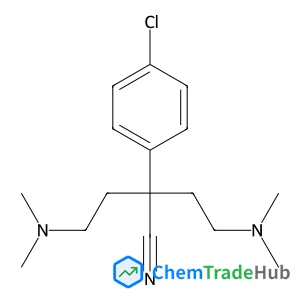
2-(4-Chlorophenyl)-4-(dimethylamino)-2-(2-(dimethylamino)ethyl)butanenitrile
CAS Number:
1246816-57-8
Molecular Formula:
C16H24ClN3
![Methyl 4-({[(2-methyl-2-propanyl)oxy]carbonyl}amino)bicyclo[2.2.2]octane-1-carboxylate structure](https://static.chemtradehub.com/structs/943/943845-74-7-b7e5.webp "Methyl 4-({[(2-methyl-2-propanyl)oxy]carbonyl}amino)bicyclo[2.2.2]octane-1-carboxylate structure")
Methyl 4-({[(2-methyl-2-propanyl)oxy]carbonyl}amino)bicyclo[2.2.2]octane-1-carboxylate
CAS Number:
943845-74-7
Molecular Formula:
C15H25NO4
Recommended Suppliers





Disclaimer
This page provides academic journal information for reference and research purposes only. We are not affiliated with any journal publishers and do not handle publication submissions. For publication-related inquiries, please contact the respective journal publishers directly.
If you notice any inaccuracies in the information displayed, please contact us at support@chemtradehub.com. We will promptly review and address your concerns.