












Quantifying lateral adsorbate interactions by kinetic Monte-Carlo simulations and density-functional theory: NO dissociation on Rh(100)
Literature Information
Publication Date
2004-03-09
DOI
10.1039/B314944G
Impact Factor
3.676
Authors
A. P. van Bavel, C. G. M. Hermse, M. J. P. Hopstaken, A. P. J. Jansen, J. J. Lukkien, J. W. Niemantsverdriet
View Original
Abstract
The dissociation of NO on Rh(100) surfaces has been modelled by kinetic Monte-Carlo (MC) simulations including nearest neighbour (NN) and next-nearest neighbour (NNN) interactions, and zero-coverage kinetic parameters obtained from experiments. Two approaches were performed to derive the lateral interactions. First, the interactions were quantified by fitting the MC model to the experimental data. All interactions between NO, N and O were found to be repulsive. Nearest-neighbour interactions involving atoms are typically on the order of 20–30 kJ mol−1; between molecules they are below 10 kJ mol−1. All next-nearest neighbour interactions were smaller than 10 kJ mol−1. The simulations show that at higher initial NO coverage, the nitrogen and oxygen atoms were created by dissociation form c(2 × 2) islands, thereby compressing the NO areas and impeding their dissociation. Second, interactions estimated using DFT calculations were significantly higher than the ones estimated from fitting the experiments. Monte-Carlo simulations based on interactions obtained from DFT provide a description that is only qualitatively useful.
Related Literature
Discovery of isoxazolyl-based inhibitors of Plasmodium falciparum cGMP-dependent protein kinase
Shams Ul Mahmood, Huimin Cheng, Sreedhar R. Tummalapalli, Ramappa Chakrasali, Rammohan R. Yadav Bheemanaboina, Tamara Kreiss, Agnieska Chojnowski, Tyler Eck, John J. Siekierka, David P. Rotella
2019-12-16
Research Article
DOI: 10.1039/C9MD00511K
2-Difluoromethylpyridine as a bioisosteric replacement of pyridine-N-oxide: the case of quorum sensing inhibitors
Thang Nguyen Quoc
2021-09-08
Research Article
DOI: 10.1039/D1MD00245G
Nanoscale, automated, high throughput synthesis and screening for the accelerated discovery of protein modifiers
Kai Gao, Shabnam Shaabani, Ruixue Xu, Tryfon Zarganes-Tzitzikas, Li Gao, Maryam Ahmadianmoghaddam, Matthew R. Groves, Alexander Dömling
2021-05-05
Research Article
DOI: 10.1039/D1MD00087J
Antibiotic administration in targeted nanoparticles protects the faecal microbiota of mice
Baris A. Borsa, Mert Sudagidan, Mehmet E. Aldag, Isik I. Baris, Elif E. Acar, Cagatay Acuner, Murat Kavruk, Veli C. Ozalp
2021-01-15
Research Article
DOI: 10.1039/D0MD00347F
Deglycase-activity oriented screening to identify DJ-1 inhibitors
Efrat Finkin-Groner, Yoshiyuki Fukase, Qingfei Zheng, Shan Sun, Mayako Michino, Robert W. Myers
2021-06-02
Research Article
DOI: 10.1039/D1MD00062D
Dual acting oximes designed for therapeutic decontamination of reactive organophosphates via catalytic inactivation and acetylcholinesterase reactivation
Kelly Yang, Racquel Harrison
2021-08-04
Research Article
DOI: 10.1039/D1MD00194A
Recent advances in synthetic and medicinal chemistry of phosphotyrosine and phosphonate-based phosphotyrosine analogues
Nikolai Makukhin, Alessio Ciulli
2020-10-15
Review Article
DOI: 10.1039/D0MD00272K
Collaborative virtual screening to elaborate an imidazo[1,2-a]pyridine hit series for visceral leishmaniasis
Yuichiro Akao, Stacie Canan, Yafeng Cao, Kevin Condroski, Ola Engkvist, Sachiko Itono, Rina Kaki, Chiaki Kimura, Thierry Kogej, Kazuya Nagaoka, Akira Naito, Hiromi Nakai, Garry Pairaudeau, Constantin Radu, Ieuan Roberts, Mitsuyuki Shimada, David Shum, Nao-aki Watanabe, Huanxu Xie, Shuji Yonezawa, Osamu Yoshida, Ryu Yoshida, Charles Mowbray, Benjamin Perry
2021-01-21
Research Article
DOI: 10.1039/D0MD00353K
You might also like
Compound Q&A
What are the main uses of 1-(3-Aminophenyl)-3-[(3R)-1-(3,3-dimethyl-2-oxobutyl)-2-oxo-5-(2-pyridinyl)-2,3-dihydro-1H-1,4-benzodiazepin-3-yl]urea (CAS: 155412-88-7)?
This compound is mainly used as an intermediate in the synthesis of antipsychoti...
155412-88-71-(3-Aminophenyl)-3-...
Compound Q&A
How should waste containing 1-(D-Ribofuranosyl)-1,4-dihydro-3-pyridinecarboxamide (CAS: 19132-12-8) be handled?
Waste containing 1-(D-Ribofuranosyl)-1,4-dihydro-3-pyridinecarboxamide (CAS: 191...
19132-12-81-(D-Ribofuranosyl)-...
Compound Q&A
What regulatory guidelines apply to 2-Methyl-2-propanyl 3-bromo-3-(hydroxymethyl)-1-azetidinecarboxylate (CAS: 2007919-81-3)?
2-Methyl-2-propanyl 3-bromo-3-(hydroxymethyl)-1-azetidinecarboxylate (CAS: 20079...
2007919-81-32-Methyl-2-propanyl ...
Compound Q&A
What is N-(4-Chloro-2-pyridinyl)acetamide (CAS: 245056-66-0)?
N-(4-Chloro-2-pyridinyl)acetamide (CAS: 245056-66-0) is a chemical compound with...
245056-66-0N-(4-Chloro-2-pyridi...
Compound Q&A
What is 5-Chloro-2-hydroxybenzoic acid (CAS: 321-14-2)?
5-Chloro-2-hydroxybenzoic acid, also known as 5-chlorosalicylic acid, is an arom...
321-14-25-Chloro-2-hydroxybe...
Compound Q&A
What precautions should be taken when handling 1,1-Dichloro-1-fluoroethane (CAS: 1717-00-6)?
When handling 1,1-Dichloro-1-fluoroethane (CAS: 1717-00-6), it is important to u...
1717-00-61,1-Dichloro-1-fluor...
Compound Q&A
What are the physical and chemical properties of Fmoc-(2S,3R)-3-phenylpyrrolidine-2-carboxylic acid (CAS: 281655-32-1)?
Fmoc-(2S,3R)-3-phenylpyrrolidine-2-carboxylic acid is a white crystalline solid ...
281655-32-1Fmoc-(2S,3R)-3-pheny...
Compound Q&A
What are the main uses of 4-Amino-5-bromo-2-pyridinecarboxylic acid (CAS: 1363381-01-4)?
4-Amino-5-bromo-2-pyridinecarboxylic acid is primarily used as a precursor in th...
1363381-01-44-Amino-5-bromo-2-py...
Compound Q&A
What precautions should be taken when handling (S)-tert-butyl 2-((2-(4-bromophenyl)-2-oxoethyl)carbamoyl)pyrrolidine-1-carboxylate (CAS: 1007881-98-2)?
Handling this compound should be done with personal protective equipment (PPE) i...
1007881-98-2(S)-tert-butyl 2-((2...
Compound Q&A
What precautions should be taken when handling 8-bromo-2,2-dimethyl-3,4-dihydro-2H-1,4-benzoxazin-3-one (CAS: 688363-73-7)?
When handling 8-bromo-2,2-dimethyl-3,4-dihydro-2H-1,4-benzoxazin-3-one, use prop...
688363-73-78-bromo-2,2-dimethyl...
Source Journal
Physical Chemistry Chemical Physics

CiteScore:
5.5
Self-citation Rate:
10.3%
Articles per Year:
3036
Physical Chemistry Chemical Physics (PCCP) is an international journal co-owned by 19 physical chemistry and physics societies from around the world. This journal publishes original, cutting-edge research in physical chemistry, chemical physics and biophysical chemistry. To be suitable for publication in PCCP, articles must include significant innovation and/or insight into physical chemistry; this is the most important criterion that reviewers and Editors will judge against when evaluating submissions. The journal has a broad scope and welcomes contributions spanning experiment, theory, computation and data science. Topical coverage includes spectroscopy, dynamics, kinetics, statistical mechanics, thermodynamics, electrochemistry, catalysis, surface science, quantum mechanics, quantum computing and machine learning. Interdisciplinary research areas such as polymers and soft matter, materials, nanoscience, energy, surfaces/interfaces, and biophysical chemistry are welcomed if they demonstrate significant innovation and/or insight into physical chemistry. Joined experimental/theoretical studies are particularly appreciated when complementary and based on up-to-date approaches.
Recommended Compounds

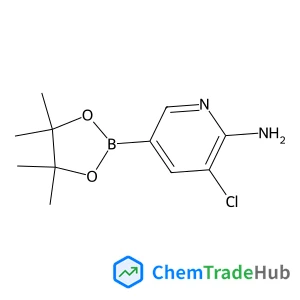
3-Chloro-5-(4,4,5,5-tetramethyl-1,3,2-dioxaborolan-2-yl)-2-pyridinamine
CAS Number:
1032758-99-8
Molecular Formula:
C11H16BClN2O2


Recommended Suppliers




Disclaimer
This page provides academic journal information for reference and research purposes only. We are not affiliated with any journal publishers and do not handle publication submissions. For publication-related inquiries, please contact the respective journal publishers directly.
If you notice any inaccuracies in the information displayed, please contact us at support@chemtradehub.com. We will promptly review and address your concerns.