












Significance of activation volumes for cation transport in glassy electrolytes
Literature Information
Publication Date
2004-02-12
DOI
10.1039/B314879C
Impact Factor
3.676
Authors
Malcolm D. Ingram, Corrie. T. Imrie, Ioannis Konidakis, Stephan Voss
View Original
Abstract
A new model is described for cation transport in glass, in which below Tg a dynamic equilibrium exists between ‘open’ and ‘closed’ sites. Cations migrate by hopping into a relatively small number of open sites, which must be just the right size for them to occupy. This model accounts plausibly for the apparent constancy of activation volumes (−RTdlnσ/dP) in single cation glasses, since the activation volumes are identified with the volumes of the open sites. The effect of increasing the external pressure is to close off some of these sites, thus reducing the number of ions which are free to move. This new approach draws emphasis away from the nature of ‘occupied’ to ‘unoccupied’ sites in glass; in this sense it is consistent with the ‘dynamic structure model’ proposed by Bunde et al.
Related Literature
Facile multi-dimensional profiling of chemical gradients at the millimetre scale
Chih-Lin Chen, Kai-Ta Hsieh, Ching-Fong Hsu
2015-10-27
Paper
DOI: 10.1039/C5AN01807B
Chicken, beams, and Campylobacter: rapid differentiation of foodborne bacteria via vibrational spectroscopy and MALDI-mass spectrometry
Howbeer Muhamadali, Danielle Weaver, Abdu Subaihi, Najla AlMasoud, Drupad K. Trivedi, David I. Ellis, Dennis Linton, Royston Goodacre
2015-10-26
Paper
DOI: 10.1039/C5AN01945A
Grating coupled SPR microarray analysis of proteins and cells in blood from mice with breast cancer
A. Mendoza, D. M. Torrisi, S. Sell, N. C. Cady, D. A. Lawrence
2015-10-30
Paper
DOI: 10.1039/C5AN01749A
Raman technologies in cancer diagnostics
Lauren A. Austin, Conor L. Evans
2015-10-22
Critical Review
DOI: 10.1039/C5AN01786F
High-resolution FTIR imaging of colon tissues for elucidation of individual cellular and histopathological features
Jayakrupakar Nallala, Gavin Rhys Lloyd, Neil Shepherd, Nick Stone
2015-11-02
Paper
DOI: 10.1039/C5AN01871D
Fluorescent visual quantitation of cell-secreted sialoglycoconjugates by chemoselective recognition and hybridization chain reaction
Yingying Xiong, Yunlong Chen, Lin Ding, Xiaoqiang Liu, Huangxian Ju
2019-06-07
Paper
DOI: 10.1039/C9AN00572B
Liquid biopsy for detection of actionable oncogenic mutations in human cancers and electric field induced release and measurement liquid biopsy (eLB)
Michael Tu, David Chia, Fang Wei, David Wong
2015-12-08
Minireview
DOI: 10.1039/C5AN01863C
Naked-eye nanobiosensor for therapeutic drug monitoring of methotrexate
H. Yockell-Lelièvre, N. Bukar, J. L. Toulouse
2015-07-29
Paper
DOI: 10.1039/C5AN00996K
Fluorescence polarization-based detection of cancer-related mutations using target-initiated rolling circle amplification
Woo Young Kwon, Byung Seok Cha, Seokjoon Kim, Sung Hyun Hwang, Ji Min Kim, Kalishwaralal Kalimuthu, Hyun Gyu Park, Ki Soo Park
2019-06-18
Communication
DOI: 10.1039/C9AN00429G
You might also like
Compound Q&A
How should waste containing (6-Bromo-2-naphthyl)oxy](dimethyl)(2-methyl-2-propanyl)silane be handled?
Waste containing (6-Bromo-2-naphthyl)oxy](dimethyl)(2-methyl-2-propanyl)silane (...
100751-65-3[(6-Bromo-2-naphthyl...
Compound Q&A
How is 7-Fluoro-4-isoquinolinecarboxylic acid (CAS: 1841081-40-0) typically synthesized?
7-Fluoro-4-isoquinolinecarboxylic acid can be synthesized via a multi-step proce...
1841081-40-07-Fluoro-4-isoquinol...
Compound Q&A
What are the physical and chemical properties of 2,3,5,6-Tetrabromothieno[3,2-b]thiophene (CAS: 124638-53-5)?
2,3,5,6-Tetrabromothieno[3,2-b]thiophene is a crystalline compound with a high m...
124638-53-52,3,5,6-Tetrabromoth...
Compound Q&A
Is 1-[4-(Benzylamino)-7,8-dihydro-5H-pyrano[4,3-d]pyrimidin-2-yl]-2-methyl-1H-indole-4-carboxamide (CAS: 1542705-92-9) safe?
1-[4-(Benzylamino)-7,8-dihydro-5H-pyrano[4,3-d]pyrimidin-2-yl]-2-methyl-1H-indol...
1542705-92-91-[4-(Benzylamino)-7...
Compound Q&A
What is the market or research trend for imidazo[5,1-d]-1,2,3,5-tetrazine-8-carboxylic acid, 3,4-dihydro-3-methyl-4-oxo- (CAS: 113942-30-6)?
The market for imidazo[5,1-d]-1,2,3,5-tetrazine-8-carboxylic acid, 3,4-dihydro-3...
113942-30-6Imidazo[5,1-d]-1,2,3...
Compound Q&A
What is 3-(Triisopropylsilyl)propiolaldehyde (CAS: 163271-80-5)?
3-(Triisopropylsilyl)propiolaldehyde is a synthetic organic compound with the CA...
163271-80-53-(Triisopropylsilyl...
Compound Q&A
What regulatory guidelines apply to 6-Nitro-2H-1,4-benzoxazin-3(4H)-one (CAS: 81721-87-1)?
6-Nitro-2H-1,4-benzoxazin-3(4H)-one (CAS: 81721-87-1) is subject to various regu...
81721-87-16-Nitro-2H-1,4-benzo...
Compound Q&A
How should waste containing (3-Fluorophenyl)(4-{[(2-methyl-2-propanyl)oxy]carbonyl}-1-piperazinyl)acetic acid (CAS: 885272-91-3) be handled?
Waste containing (3-Fluorophenyl)(4-{[(2-methyl-2-propanyl)oxy]carbonyl}-1-piper...
885272-91-3(3-Fluorophenyl)(4-{...
Compound Q&A
What are the physical and chemical properties of N,N'-4,4'-Biphenyldiyldiisonicotinamide (CAS: 55119-40-9)?
N,N'-4,4'-Biphenyldiyldiisonicotinamide is a white crystalline solid with a mole...
55119-40-9N,N'-4,4'-Biphenyldi...
Compound Q&A
What industries use 6-Bromo-8-fluoro-2-quinazolinol (CAS: 1036756-15-6)?
6-Bromo-8-fluoro-2-quinazolinol is primarily used in the pharmaceutical industry...
1036756-15-66-Bromo-8-fluoro-2-q...
Source Journal
Physical Chemistry Chemical Physics

CiteScore:
5.5
Self-citation Rate:
10.3%
Articles per Year:
3036
Physical Chemistry Chemical Physics (PCCP) is an international journal co-owned by 19 physical chemistry and physics societies from around the world. This journal publishes original, cutting-edge research in physical chemistry, chemical physics and biophysical chemistry. To be suitable for publication in PCCP, articles must include significant innovation and/or insight into physical chemistry; this is the most important criterion that reviewers and Editors will judge against when evaluating submissions. The journal has a broad scope and welcomes contributions spanning experiment, theory, computation and data science. Topical coverage includes spectroscopy, dynamics, kinetics, statistical mechanics, thermodynamics, electrochemistry, catalysis, surface science, quantum mechanics, quantum computing and machine learning. Interdisciplinary research areas such as polymers and soft matter, materials, nanoscience, energy, surfaces/interfaces, and biophysical chemistry are welcomed if they demonstrate significant innovation and/or insight into physical chemistry. Joined experimental/theoretical studies are particularly appreciated when complementary and based on up-to-date approaches.
Recommended Compounds
![(2S)-2-({[(2-Methyl-2-propanyl)oxy]carbonyl}amino)-4-pentynoic acid structure](https://static.chemtradehub.com/structs/630/63039-48-5-b66d.webp "(2S)-2-({[(2-Methyl-2-propanyl)oxy]carbonyl}amino)-4-pentynoic acid structure")
(2S)-2-({[(2-Methyl-2-propanyl)oxy]carbonyl}amino)-4-pentynoic acid
CAS Number:
63039-48-5
Molecular Formula:
C10H15NO4
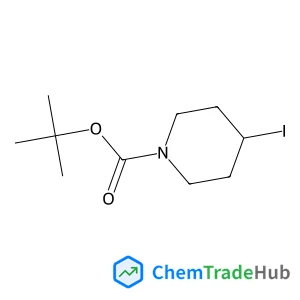
2-Methyl-2-propanyl 4-iodo-1-piperidinecarboxylate
CAS Number:
301673-14-3
Molecular Formula:
C10H18INO2
Recommended Suppliers





Disclaimer
This page provides academic journal information for reference and research purposes only. We are not affiliated with any journal publishers and do not handle publication submissions. For publication-related inquiries, please contact the respective journal publishers directly.
If you notice any inaccuracies in the information displayed, please contact us at support@chemtradehub.com. We will promptly review and address your concerns.