












The role of FA:K+ and FA:Na+ defects in laser light generation and color image formation at the (100) and (110) surface sites of AgCl and AgBr. First principles calculations
Literature Information
Publication Date
2004-01-05
DOI
10.1039/B311839H
Impact Factor
3.676
Authors
A. S. Shalabi, I. A. Z. Al-Ansari, K. Kh. Al-Naimi, M. A. Kamel, A. M. El-Mahdy, H. O. Taha, M. M. Shalaby
View Original
Abstract
FA:K+ and FA:Na+ color centers at the low coordination (100) and (110) surface sites of AgCl and AgBr thin films play important roles in providing tunable laser oscillation and color image sensitization. Double-well potentials at these sites are investigated using ab initio molecular electronic structure calculations. Quantum clusters were embedded in simulated Coulomb fields that closely approximate the Madelung fields of the host surfaces, and ions that are the nearest neighbors to the FA defect site were allowed to relax to equilibrium. The calculated Stokes shifted optical transition bands suggest that laser light generation is sensitive to (i) the lattice anion, (ii) the coordination number of surface ions, (iii) the dopant cation, (iv) the vibrational coupling mode, and (v) the choice of the basis set centered on the anion vacancy. An attempt has been made to explain these results in terms of Madelung potentials, electron affinities and optical–optical conversion efficiencies. All relaxed excited states of the defect-containing surfaces were deep below the lower edges of the conduction bands of the ground state defect-free surfaces, suggesting that FA:K+ and FA:Na+ are suitable laser defects. The probability of orientational destruction of the two centers, attributed to the assumed saddle point ion configurations along the 〈110〉 axis, was found to be dependent on the lattice anion, the coordination number of surface ions, and the dopant cation. For optical memories, a high recording sensitivity was assigned to FA:Na+ relative to FA:K+, to the (110) surface relative to the (100) surface, and to AgCl relative to AgBr. The dependence of exciton (energy) transfer on the lattice anion, the coordination number of surface ions, and the dopant cation was clarified. The Glasner–Tompkins empirical rule was generalized to include the surface coordination number and the dopant cation in addition to the lattice anion. As far as color image formation is concerned, the examined supersensitizer was found to increase the sensitizing capabilities of two primary dyes in the excited states by increasing the relative yield of quantum efficiency. The (110) surfaces of AgBr and AgCl were more sensitive than the corresponding (100) surfaces, and the AgBr thin film was found to be more sensitive than that of AgCl. Based on quasi Fermi levels, the difference in the sensitizing capabilities between the examined dyes in the excited states was determined.
Recommended Journals
Related Literature
Structural changes of noble metal catalysts during ignition and extinction of the partial oxidation of methane studied by advanced QEXAFS techniques
Jan-Dierk Grunwaldt, Matthias Beier, Bertram Kimmerle, Alfons Baiker, Maarten Nachtegaal, Bernd Griesebock, Dirk Lützenkirchen-Hecht, Jan Stötzel, Ronald Frahm
2009-07-28
Paper
DOI: 10.1039/B909872K
Static and thermodynamic properties of low-density supercritical 4He—breakdown of the Feynman–Hibbs approximation
Piotr Kowalczyk, Lorenzo Brualla, Piotr A. Gauden, Artur P. Terzyk
2009-08-14
Paper
DOI: 10.1039/B907165B
The conformational analysis and proton transfer of neuraminidase inhibitors: a theoretical study
Zhiwei Yang, Gang Yang, Yuangang Zu, Yujie Fu
2009-09-08
Paper
DOI: 10.1039/B909299D
Formation and stability of nanoemulsions with mixed ionic–nonionic surfactants
Lijuan Wang, Rico Tabor, Julian Eastoe, Xuefeng Li, Richard K. Heenan, Jinfeng Dong
2009-08-27
Paper
DOI: 10.1039/B912460H
From the molecular behaviors of fullerene derivatives C50X2 (X = H, F, Cl, Br, OH) to the general parallels among isostructural derivatives of fullerenes and carbon nanotubes
Xiufang Xu, Zhenfeng Shang, Ruifang Li, Zunsheng Cai, Xuezhuang Zhao
2009-07-15
Paper
DOI: 10.1039/B907688C
What are the factors that control non-aqueous/AOT/n-heptane reverse micelle sizes? A dynamic light scattering study
R. Dario Falcone, Juana J. Silber, N. Mariano Correa
2009-10-20
Communication
DOI: 10.1039/B917197E
Kinetic analysis of the rotation rate of light-driven unidirectional molecular motors
2009-08-11
Paper
DOI: 10.1039/B906611J
Gas phase fragmentation of protonated betaine and its clusters
Jean Ann Wyer, Steen Brøndsted Nielsen
2009-07-27
Paper
DOI: 10.1039/B909653A
You might also like
Compound Q&A
Is 6-(3-Fluorophenyl)picolinic acid (CAS: 887982-40-3) safe?
6-(3-Fluorophenyl)picolinic acid is generally considered safe for laboratory use...
887982-40-36-(3-Fluorophenyl)pi...
Compound Q&A
What industries use (3R)-3-Pyrrolidinol (CAS: 2799-21-5)?
(3R)-3-Pyrrolidinol is used in the pharmaceutical industry as a precursor for dr...
2799-21-5(3R)-3-Pyrrolidinol
Compound Q&A
What precautions should be taken when handling (4R,5R)-4,5-Diethoxycarbonyl-2,2-dimethyldioxolane (CAS: 59779-75-8)?
When handling (4R,5R)-4,5-Diethoxycarbonyl-2,2-dimethyldioxolane (CAS: 59779-75-...
59779-75-8(4R,5R)-4,5-Diethoxy...
Compound Q&A
How is 1-(6-Chloroimidazo[1,2-b]pyridazin-3-yl)ethanone (CAS: 90734-71-7) typically synthesized?
1-(6-Chloroimidazo[1,2-b]pyridazin-3-yl)ethanone is often synthesized via a mult...
90734-71-71-(6-Chloroimidazo[1...
Compound Q&A
What is the market or research trend for N-Ethyl-3,4-dimethylbenzylamine (CAS: 39180-83-1)?
The market for N-Ethyl-3,4-dimethylbenzylamine (CAS: 39180-83-1) remains steady,...
39180-83-1N-Ethyl-3,4-dimethyl...
Compound Q&A
What is Tert-butyl 3-(pyrrolidin-1-yl)azetidine-1-carboxylate (CAS: 1019008-21-9)?
Tert-butyl 3-(pyrrolidin-1-yl)azetidine-1-carboxylate is a chemical compound wit...
1019008-21-9Tert-butyl 3-(pyrrol...
Compound Q&A
What regulatory guidelines apply to 1-Bromo-3-chloro-2,4-dimethoxybenzene (CAS: 1228956-93-1)?
1-Bromo-3-chloro-2,4-dimethoxybenzene (CAS: 1228956-93-1) falls under the classi...
1228956-93-11-Bromo-3-chloro-2,4...
Compound Q&A
Is 8-Bromo-2-methyl-3,4-dihydroisoquinolin-1(2H)-one (CAS: 1368622-07-4) safe?
The safety of 8-Bromo-2-methyl-3,4-dihydroisoquinolin-1(2H)-one (CAS: 1368622-07...
1368622-07-48-Bromo-2-methyl-3,4...
Compound Q&A
Is Benzyl [(3S)-2,6-dioxo-3-piperidinyl]carbamate (CAS: 22785-43-9) safe?
Benzyl [(3S)-2,6-dioxo-3-piperidinyl]carbamate is generally safe when handled wi...
22785-43-9Benzyl [(3S)-2,6-dio...
Compound Q&A
How should 1-{[4-(4,4,5,5-Tetramethyl-1,3,2-dioxaborolan-2-yl)phenyl]sulfonyl}pyrrolidine (CAS: 928657-21-0) be stored?
1-{[4-(4,4,5,5-Tetramethyl-1,3,2-dioxaborolan-2-yl)phenyl]sulfonyl}pyrrolidine s...
928657-21-01-{[4-(4,4,5,5-Tetra...
Source Journal
Physical Chemistry Chemical Physics

CiteScore:
5.5
Self-citation Rate:
10.3%
Articles per Year:
3036
Physical Chemistry Chemical Physics (PCCP) is an international journal co-owned by 19 physical chemistry and physics societies from around the world. This journal publishes original, cutting-edge research in physical chemistry, chemical physics and biophysical chemistry. To be suitable for publication in PCCP, articles must include significant innovation and/or insight into physical chemistry; this is the most important criterion that reviewers and Editors will judge against when evaluating submissions. The journal has a broad scope and welcomes contributions spanning experiment, theory, computation and data science. Topical coverage includes spectroscopy, dynamics, kinetics, statistical mechanics, thermodynamics, electrochemistry, catalysis, surface science, quantum mechanics, quantum computing and machine learning. Interdisciplinary research areas such as polymers and soft matter, materials, nanoscience, energy, surfaces/interfaces, and biophysical chemistry are welcomed if they demonstrate significant innovation and/or insight into physical chemistry. Joined experimental/theoretical studies are particularly appreciated when complementary and based on up-to-date approaches.
Recommended Compounds
![2-[({[(2-Methyl-2-propanyl)oxy]carbonyl}amino)methyl]isonicotinic acid structure](https://static.chemtradehub.com/structs/473/473924-63-9-973b.webp "2-[({[(2-Methyl-2-propanyl)oxy]carbonyl}amino)methyl]isonicotinic acid structure")
2-[({[(2-Methyl-2-propanyl)oxy]carbonyl}amino)methyl]isonicotinic acid
CAS Number:
473924-63-9
Molecular Formula:
C12H16N2O4
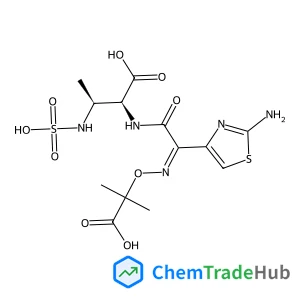
Aztreonam USP Related Compound A (Open-ring Aztreonam)
CAS Number:
87500-74-1
Molecular Formula:
C13H19N5O9S2
Recommended Suppliers





Disclaimer
This page provides academic journal information for reference and research purposes only. We are not affiliated with any journal publishers and do not handle publication submissions. For publication-related inquiries, please contact the respective journal publishers directly.
If you notice any inaccuracies in the information displayed, please contact us at support@chemtradehub.com. We will promptly review and address your concerns.