


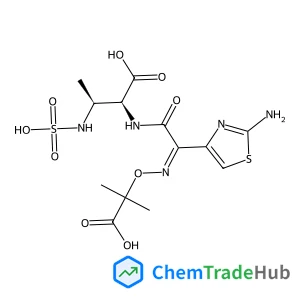
Aztreonam USP Related Compound A (Open-ring Aztreonam)
CAS Number:
87500-74-1
Molecular Formula:
C13H19N5O9S2
Yang Shaogui, Quan Xie, Li Xinyong, Liu Yazi, Chen Shuo, Chen Guohua
Nanocrystalline TiO2 composite thin ZnO/TiO2, Fe2O3/ZnO/TiO2 and Fe2O3/TiO2 films were developed on titanium substrates by applying dip-coating technique formed by the sol–gel method. Scanning electron microscopy (SEM) evaluated the surface characteristics of the films. Results on their structure and crystallinity were obtained by means of X-ray diffraction. The samples were also characterized by X-ray energy dispersive spectrometer (EDS) and ultraviolet-visible diffuse reflectance spectroscopy. The photocatalytic activity of these films towards photodegradation of pentachlorophenol pollutant was examined and their efficiency was compared to those of the different TiO2films. It has been shown that the film photocatalysts can efficiently decompose the pollutant. The photoelectrocatalytic degradation of PCP showed important variation that decreases in the order: ZnO/TiO2 > TiO2 > Fe2O3/ZnO/TiO2 > Fe2O3/TiO2. The results showed that Zn2+ doped could improve PEC activity of titania film electrode while Fe3+ doped can not improve that of titania film electrode.

Helvetica Chimica Acta

Proceedings of the National Academy of Sciences of the United States of America

Nature

Planta Medica

Journal of Catalysis

Journal of Physics and Chemistry of Solids

Journal of Organometallic Chemistry

Kinetics and Catalysis

Pure and Applied Chemistry

European Journal of Wood and Wood Products
Mausumi Goswami, E. Arunan
DOI: 10.1039/B907708A
Cao Li, Jing Zhang, Shuo Yang, Bo-Lan Li, Yong-Yong Li, Xian-Zheng Zhang, Ren-Xi Zhuo
DOI: 10.1039/B906306D
Björn A. Persson, Mikael Lund
DOI: 10.1039/B909179C
Jean-Claude Guillemin
DOI: 10.1039/B906045F
Henk Eshuis, Troy van Voorhis
DOI: 10.1039/B912085H
Fernando A. Castro, Hadjar Benmansour, Jacques-E. Moser, Carlos F. O. Graeff, Frank Nüesch, Roland Hany
DOI: 10.1039/B909512H
Yunlong Yu, Daqin Chen, Yuansheng Wang, Ping Huang, Fangyi Weng, Mutong Niu
DOI: 10.1039/B907065F
6-(3-Fluorophenyl)picolinic acid is generally considered safe for laboratory use...
(3R)-3-Pyrrolidinol is used in the pharmaceutical industry as a precursor for dr...
When handling (4R,5R)-4,5-Diethoxycarbonyl-2,2-dimethyldioxolane (CAS: 59779-75-...
1-(6-Chloroimidazo[1,2-b]pyridazin-3-yl)ethanone is often synthesized via a mult...
The market for N-Ethyl-3,4-dimethylbenzylamine (CAS: 39180-83-1) remains steady,...
Tert-butyl 3-(pyrrolidin-1-yl)azetidine-1-carboxylate is a chemical compound wit...
1-Bromo-3-chloro-2,4-dimethoxybenzene (CAS: 1228956-93-1) falls under the classi...
The safety of 8-Bromo-2-methyl-3,4-dihydroisoquinolin-1(2H)-one (CAS: 1368622-07...
Benzyl [(3S)-2,6-dioxo-3-piperidinyl]carbamate is generally safe when handled wi...
1-{[4-(4,4,5,5-Tetramethyl-1,3,2-dioxaborolan-2-yl)phenyl]sulfonyl}pyrrolidine s...

Physical Chemistry Chemical Physics (PCCP) is an international journal co-owned by 19 physical chemistry and physics societies from around the world. This journal publishes original, cutting-edge research in physical chemistry, chemical physics and biophysical chemistry. To be suitable for publication in PCCP, articles must include significant innovation and/or insight into physical chemistry; this is the most important criterion that reviewers and Editors will judge against when evaluating submissions. The journal has a broad scope and welcomes contributions spanning experiment, theory, computation and data science. Topical coverage includes spectroscopy, dynamics, kinetics, statistical mechanics, thermodynamics, electrochemistry, catalysis, surface science, quantum mechanics, quantum computing and machine learning. Interdisciplinary research areas such as polymers and soft matter, materials, nanoscience, energy, surfaces/interfaces, and biophysical chemistry are welcomed if they demonstrate significant innovation and/or insight into physical chemistry. Joined experimental/theoretical studies are particularly appreciated when complementary and based on up-to-date approaches.
![[4-Chloro-3-(diethylcarbamoyl)phenyl]boronic acid structure](https://static.chemtradehub.com/structs/871/871332-68-2-0e3b.webp "[4-Chloro-3-(diethylcarbamoyl)phenyl]boronic acid structure")
![4-[(2,4-Dihydroxyphenyl)diazenyl]-5-hydroxy-2,7-naphthalenedisulfonic acid structure](https://static.chemtradehub.com/structs/362/3627-01-8-79ac.webp "4-[(2,4-Dihydroxyphenyl)diazenyl]-5-hydroxy-2,7-naphthalenedisulfonic acid structure")
![Benzyl spiro[indole-3,4'-piperidine]-1(2H)-carboxylate hydrochloride (1:1) structure](https://static.chemtradehub.com/structs/159/159635-46-8-8de0.webp "Benzyl spiro[indole-3,4'-piperidine]-1(2H)-carboxylate hydrochloride (1:1) structure")



