











Photoinduced hole-transfer in semiconducting polymer/low-bandgap cyanine dye blends: evidence for unit charge separation quantum yield
Literature Information
Publication Date
2009-08-14
DOI
10.1039/B909512H
Impact Factor
3.676
Authors
Fernando A. Castro, Hadjar Benmansour, Jacques-E. Moser, Carlos F. O. Graeff, Frank Nüesch, Roland Hany
View Original
Abstract
Power-conversion efficiencies of organic heterojunction solar cells can be increased by using semiconducting donor–acceptor materials with complementary absorption spectra extending to the near-infrared region. Here, we used continuous wave fluorescence and absorption, as well as nanosecond transient absorption spectroscopy to study the initial charge transfer step for blends of a donor poly(p-phenylenevinylene) derivative and low-band gap cyanine dyes serving as electron acceptors. Electron transfer is the dominant relaxation process after photoexcitation of the donor. Hole transfer after cyanine photoexcitation occurs with an efficiency close to unity up to dye concentrations of ∼30 wt%. Cyanines present an efficient self-quenching mechanism of their fluorescence, and for higher dye loadings in the blend, or pure cyanine films, this process effectively reduces the hole transfer. Comparison between dye emission in an inert polystyrene matrix and the donor matrix allowed us to separate the influence of self-quenching and charge transfer mechanisms. Favorable photovoltaic bilayer performance, including high open-circuit voltages of ∼1 V confirmed the results from optical experiments. The characteristics of solar cells using different dyes also highlighted the need for balanced adjustment of the energy levels and their offsets at the heterojunction when using low-bandgap materials, and accentuated important effects of interface interactions and solid-state packing on charge generation and transport.
Related Literature
Nitrile-functionalized pyrrolidinium ionic liquids as solvents for cross-coupling reactions involving in situ generated nanoparticlecatalyst reservoirs
Ilaria Biondi, Manish Chaubey, Zhaofu Fei, Rosario Scopelliti, Christian G. Hartinger, Yongdan Li, Cinzia Chiappe, Paul J. Dyson
2009-12-21
Paper
DOI: 10.1039/B920025H
B-Site cation diffusivity of Mn and Cr in perovskite-type LaMnO3 with cation-deficit nonstoichiometry
Shogo Miyoshi, Manfred Martin
2009-03-13
Paper
DOI: 10.1039/B901208G
Electrodeposition of Zn and Au–Zn alloys at low temperature in an ionic liquid
Dimitar Borissov, Aparna Pareek, Frank Uwe Renner, Michael Rohwerder
2010-01-11
Communication
DOI: 10.1039/B919669B
Oxidation states of Co and Fe in Ba1−xSrxCo1−yFeyO3−δ (x, y = 0.2–0.8) and oxygen desorption in the temperature range 300–1273 K
Ashley S. Harvey, F. Jochen Litterst, Zhen Yang, Jennifer L. M. Rupp, Anna Infortuna, Ludwig J. Gauckler
2009-02-11
Paper
DOI: 10.1039/B819414A
Rotation dynamics of 2-methyl butane and n-pentane in MCM-22 zeolite: a molecular dynamics simulation study‡
Shiping Huang, Vincent Finsy, Jeroen Persoons, Mark T.F. Telling, Gino V. Baron, Joeri F.M. Denayer
2009-03-10
Paper
DOI: 10.1039/B819334G
Boundary effects on the electrical conductivity of pure and doped cerium oxide thin films
Marcus C. Göbel, Giuliano Gregori, Joachim Maier
2010-10-04
Paper
DOI: 10.1039/C0CP00385A
Ab initio study of the antiferromagnetic coupling in the wheel-shaped [Cu20Cl(OH)24(H2O)12(P8W48O184)]25– anion
Xavier López, José Luis Ramos, Josep M. Poblet
2010-01-27
Paper
DOI: 10.1039/B920442C
Undoped diamondnanoparticles: origins of surface redox chemistry
Katherine B. Holt
2010-01-06
Perspective
DOI: 10.1039/B920075D
Calibration of 57Fe isomer shift from ab initio calculations: can theory and experiment reach an agreement?
Reshmi Kurian, Michael Filatov
2010-02-01
Paper
DOI: 10.1039/B918655G
Electrical conductivity–defect structure correlation of variable-valence and fixed-valence acceptor-doped BaTiO3 in quenched state
Han-Ill Yoo, Tae-Sik Oh, Hyung-Soon Kwon, Dong-Kyu Shin, Jong-Sook Lee
2009-03-18
Paper
DOI: 10.1039/B822381P
You might also like
Compound Q&A
Is 6-(3-Fluorophenyl)picolinic acid (CAS: 887982-40-3) safe?
6-(3-Fluorophenyl)picolinic acid is generally considered safe for laboratory use...
887982-40-36-(3-Fluorophenyl)pi...
Compound Q&A
What industries use (3R)-3-Pyrrolidinol (CAS: 2799-21-5)?
(3R)-3-Pyrrolidinol is used in the pharmaceutical industry as a precursor for dr...
2799-21-5(3R)-3-Pyrrolidinol
Compound Q&A
What precautions should be taken when handling (4R,5R)-4,5-Diethoxycarbonyl-2,2-dimethyldioxolane (CAS: 59779-75-8)?
When handling (4R,5R)-4,5-Diethoxycarbonyl-2,2-dimethyldioxolane (CAS: 59779-75-...
59779-75-8(4R,5R)-4,5-Diethoxy...
Compound Q&A
How is 1-(6-Chloroimidazo[1,2-b]pyridazin-3-yl)ethanone (CAS: 90734-71-7) typically synthesized?
1-(6-Chloroimidazo[1,2-b]pyridazin-3-yl)ethanone is often synthesized via a mult...
90734-71-71-(6-Chloroimidazo[1...
Compound Q&A
What is the market or research trend for N-Ethyl-3,4-dimethylbenzylamine (CAS: 39180-83-1)?
The market for N-Ethyl-3,4-dimethylbenzylamine (CAS: 39180-83-1) remains steady,...
39180-83-1N-Ethyl-3,4-dimethyl...
Compound Q&A
What is Tert-butyl 3-(pyrrolidin-1-yl)azetidine-1-carboxylate (CAS: 1019008-21-9)?
Tert-butyl 3-(pyrrolidin-1-yl)azetidine-1-carboxylate is a chemical compound wit...
1019008-21-9Tert-butyl 3-(pyrrol...
Compound Q&A
What regulatory guidelines apply to 1-Bromo-3-chloro-2,4-dimethoxybenzene (CAS: 1228956-93-1)?
1-Bromo-3-chloro-2,4-dimethoxybenzene (CAS: 1228956-93-1) falls under the classi...
1228956-93-11-Bromo-3-chloro-2,4...
Compound Q&A
Is 8-Bromo-2-methyl-3,4-dihydroisoquinolin-1(2H)-one (CAS: 1368622-07-4) safe?
The safety of 8-Bromo-2-methyl-3,4-dihydroisoquinolin-1(2H)-one (CAS: 1368622-07...
1368622-07-48-Bromo-2-methyl-3,4...
Compound Q&A
Is Benzyl [(3S)-2,6-dioxo-3-piperidinyl]carbamate (CAS: 22785-43-9) safe?
Benzyl [(3S)-2,6-dioxo-3-piperidinyl]carbamate is generally safe when handled wi...
22785-43-9Benzyl [(3S)-2,6-dio...
Compound Q&A
How should 1-{[4-(4,4,5,5-Tetramethyl-1,3,2-dioxaborolan-2-yl)phenyl]sulfonyl}pyrrolidine (CAS: 928657-21-0) be stored?
1-{[4-(4,4,5,5-Tetramethyl-1,3,2-dioxaborolan-2-yl)phenyl]sulfonyl}pyrrolidine s...
928657-21-01-{[4-(4,4,5,5-Tetra...
Source Journal
Physical Chemistry Chemical Physics

CiteScore:
5.5
Self-citation Rate:
10.3%
Articles per Year:
3036
Physical Chemistry Chemical Physics (PCCP) is an international journal co-owned by 19 physical chemistry and physics societies from around the world. This journal publishes original, cutting-edge research in physical chemistry, chemical physics and biophysical chemistry. To be suitable for publication in PCCP, articles must include significant innovation and/or insight into physical chemistry; this is the most important criterion that reviewers and Editors will judge against when evaluating submissions. The journal has a broad scope and welcomes contributions spanning experiment, theory, computation and data science. Topical coverage includes spectroscopy, dynamics, kinetics, statistical mechanics, thermodynamics, electrochemistry, catalysis, surface science, quantum mechanics, quantum computing and machine learning. Interdisciplinary research areas such as polymers and soft matter, materials, nanoscience, energy, surfaces/interfaces, and biophysical chemistry are welcomed if they demonstrate significant innovation and/or insight into physical chemistry. Joined experimental/theoretical studies are particularly appreciated when complementary and based on up-to-date approaches.
Recommended Compounds

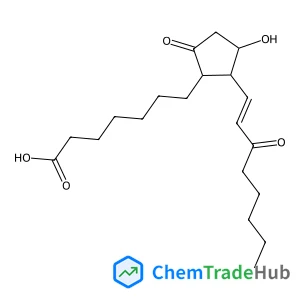
(11alpha,13E)-11-Hydroxy-9,15-dioxoprost-13-en-1-oic acid
CAS Number:
22973-19-9
Molecular Formula:
C20H32O5
![2-[({[(2-Methyl-2-propanyl)oxy]carbonyl}amino)methyl]isonicotinic acid structure](https://static.chemtradehub.com/structs/473/473924-63-9-973b.webp "2-[({[(2-Methyl-2-propanyl)oxy]carbonyl}amino)methyl]isonicotinic acid structure")
2-[({[(2-Methyl-2-propanyl)oxy]carbonyl}amino)methyl]isonicotinic acid
CAS Number:
473924-63-9
Molecular Formula:
C12H16N2O4
Recommended Suppliers







Disclaimer
This page provides academic journal information for reference and research purposes only. We are not affiliated with any journal publishers and do not handle publication submissions. For publication-related inquiries, please contact the respective journal publishers directly.
If you notice any inaccuracies in the information displayed, please contact us at support@chemtradehub.com. We will promptly review and address your concerns.