












![4-[(4-Bromophenyl)sulfonyl]thiomorpholine structure](https://static.chemtradehub.com/structs/223/223555-81-5-2d67.webp "4-[(4-Bromophenyl)sulfonyl]thiomorpholine structure")
Calamitic and discotic mesophases formed by kinetically controlled rod–disc alternation of molecular shape in a triphenylene–azobenzene mesogenic system
Literature Information
Publication Date
2003-06-18
DOI
10.1039/B301862H
Impact Factor
6.222
Authors
Yo Shimizu, Atsuhiko Kurobe, Hirosato Monobe, Naohiro Terasawa, Kenji Kiyohara, Kingo Uchida
View Original
Abstract
A triphenylene mesogen with the peripheral azobenzene units was found to show kinetically controlled bimesomorphism, with a metastable smectic and a stable hexagonal columnar (Colh) phases on cooling, which is caused by the rod–disc alternation of the molecular shape.
Related Literature
Model non-equilibrium molecular dynamics simulations of heat transfer from a hot gold surface to an alkylthiolate self-assembled monolayer
Yue Zhang, George L. Barnes, Tianying Yan, William L. Hase
2010-02-24
Paper
DOI: 10.1039/B923858C
Divalent carbon atom as the proton acceptor in hydrogen bonding
Mirosław Jabłoński, Marcin Palusiak
2009-05-07
Paper
DOI: 10.1039/B901968E
Supersonic jet UV spectrum and nonradiative processes of the thymine analogue 5-methyl-2-hydroxypyrimidine
Simon Lobsiger, Hans-Martin Frey, Samuel Leutwyler
2010-03-06
Paper
DOI: 10.1039/B924395J
Defect interactions and ionic transport in scandia stabilized zirconia
R. Devanathan, S. Thevuthasan, J. D. Gale
2009-04-22
Paper
DOI: 10.1039/B902764E
The photoionisation of two phenylcarbenes and their diazirine precursors investigated using synchrotron radiation
Bastian Noller, Patrick Hemberger, Ingo Fischer, Christian Alcaraz, Gustavo A. Garcia, Héloïse Soldi-Lose
2009-04-22
Paper
DOI: 10.1039/B823269E
Thermodynamic investigation of the binding of dissymmetric pyrenyl-gemini surfactants to DNA
Shawn D. Wettig, Rubena Deubry, Javed Akbar, Tranum Kaur, Haitang Wang, Tatiana Sheinin, Jamie W. Joseph, Roderick A. Slavcev
2010-03-25
Paper
DOI: 10.1039/B923817D
Comparison of the non-radiative decay mechanisms of 4-pyrimidinone and uracil: an ab initio study
Vassil B. Delchev, Andrzej L. Sobolewski, Wolfgang Domcke
2010-04-20
Paper
DOI: 10.1039/B922505F
Geometric and electronic structure of Pd/4-aminothiophenol/Au(111) metal–molecule–metal contacts: a periodic DFT study
2010-02-23
Paper
DOI: 10.1039/B923700C
Single-stranded DNA adsorption on chiral molecule coated Au surface: a molecular dynamics study
Haiqing Liang, Zhenyu Li, Jinlong Yang
2010-02-24
Paper
DOI: 10.1039/B923012B
Fluxional σ-bonds of 2,5,8-tri-tert-butyl-1,3-diazaphenalenyl dimers: stepwise [3,3], [5,5] and [7,7] sigmatropic rearrangementsviaπ-dimer intermediates
Yong-Hui Tian, Jingsong Huang, Miklos Kertesz
2010-03-23
Paper
DOI: 10.1039/B925259B
You might also like
Compound Q&A
What are the main uses of (3.beta.)-3-Hydroxy-N,N-dimethyl-chol-5-en-24-amide (CAS: 79066-03-8)?
(3.beta.)-3-Hydroxy-N,N-dimethyl-chol-5-en-24-amide (CAS: 79066-03-8) is primari...
79066-03-8(3.beta.)-3-Hydroxy-...
Compound Q&A
What regulatory guidelines apply to 5-(aminomethyl)-2-methoxyphenol (CAS: 89702-89-6)?
5-(Aminomethyl)-2-methoxyphenol (CAS: 89702-89-6) is classified under GHS as a s...
89702-89-65-(aminomethyl)-2-me...
Compound Q&A
What is Thieno[2,3-c]pyridin-7(6H)-one (CAS: 28981-13-7)?
Thieno[2,3-c]pyridin-7(6H)-one (CAS: 28981-13-7) is a heterocyclic organic compo...
28981-13-7Thieno[2,3-c]pyridin...
Compound Q&A
Is 1-[(6-Methoxy-3-pyridinyl)methyl]-4-piperidinamine dihydrochloride (CAS: 1185311-28-7) safe?
1-[(6-Methoxy-3-pyridinyl)methyl]-4-piperidinamine dihydrochloride is generally ...
1185311-28-71-[(6-Methoxy-3-pyri...
Compound Q&A
What regulatory guidelines apply to [(2E)-3-Phenyl-2-propen-1-yl]phosphonic acid (CAS: 146404-58-2)?
[(2E)-3-Phenyl-2-propen-1-yl]phosphonic acid (CAS: 146404-58-2) is regulated und...
146404-58-2[(2E)-3-Phenyl-2-pro...
Compound Q&A
What regulatory guidelines apply to 6-Bromo-7-methoxyquinoline (CAS: 1620515-86-7)?
6-Bromo-7-methoxyquinoline (CAS: 1620515-86-7) falls under the scope of the Glob...
1620515-86-76-Bromo-7-methoxyqui...
Compound Q&A
What industries use (2R)-1-(1-Benzofuran-2-yl)-N-propyl-2-pentanamine (CAS: 260550-89-8)?
This compound is primarily used in the pharmaceutical industry for the developme...
260550-89-8(2R)-1-(1-Benzofuran...
Compound Q&A
What are the main uses of 1-Ethyl-7-[2-methyl-6-(4H-1,2,4-triazol-3-yl)-3-pyridinyl]-3,5-dihydropyrazino[2,3-b]pyrazin-2(1H)-one (CAS: 1228013-15-7)?
1-Ethyl-7-[2-methyl-6-(4H-1,2,4-triazol-3-yl)-3-pyridinyl]-3,5-dihydropyrazino[2...
1228013-15-71-Ethyl-7-[2-methyl-...
Compound Q&A
Are there alternatives to {5-(Acryloylamino)-2-[(dimethylamino)methyl]phenyl}boronic acid (CAS: 1217500-78-1) in synthesis?
Alternative reagents such as 2-[(dimethylamino)methyl]phenylboronic acid or rela...
1217500-78-1{5-(Acryloylamino)-2...
Compound Q&A
What is 3-(Piperidin-4-yloxy)pyridine (CAS: 310881-48-2)?
3-(Piperidin-4-yloxy)pyridine (CAS: 310881-48-2) is an organic compound with the...
310881-48-23-(Piperidin-4-yloxy...
Source Journal
Chemical Communications

CiteScore:
8.6
Self-citation Rate:
4.7%
Articles per Year:
2458
ChemComm publishes urgent research which is of outstanding significance and interest to experts in the field, while also appealing to the journal’s broad chemistry readership. Our communication format is ideally suited to short, urgent studies that are of such importance that they require accelerated publication. Our scope covers all topics in chemistry, and research at the interface of chemistry and other disciplines (such as materials science, nanoscience, physics, engineering and biology) where there is a significant novelty in the chemistry aspects. Major topic areas covered include: Analytical Chemistry Catalysis Chemical Biology and medicinal chemistry Computational Chemistry and Machine Learning Energy and sustainable chemistry Environmental Chemistry Green Chemistry Inorganic Chemistry Materials Chemistry Nanoscience Organic Chemistry Physical Chemistry Polymer Chemistry Supramolecular Chemistry
Recommended Compounds
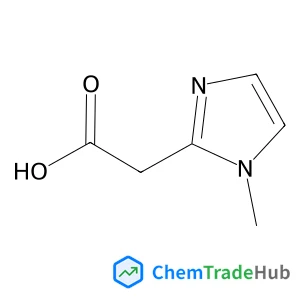
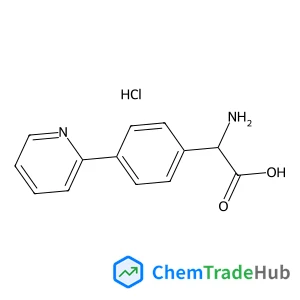
2-Amino-2-(4-(pyridin-2-YL)phenyl)acetic acid hydrochloride
CAS Number:
1135818-89-1
Molecular Formula:
C13H13ClN2O2
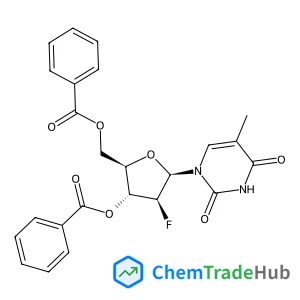
1-(3',5'-Di-O-benzoyl-2'-deoxy-2'-fluoro-b-D-arabinofuranosyl)thymine
CAS Number:
97614-47-6
Molecular Formula:
C24H21FN2O7
![Bis(N,N''-dimethylpiperazine)tetra[copper(I) iodide] structure](https://static.chemtradehub.com/structs/140/1401708-91-5-2b86.webp "Bis(N,N''-dimethylpiperazine)tetra[copper(I) iodide] structure")
Bis(N,N''-dimethylpiperazine)tetra[copper(I) iodide]
CAS Number:
1401708-91-5
Molecular Formula:
C12H28Cu4I4N4
Recommended Suppliers






Disclaimer
This page provides academic journal information for reference and research purposes only. We are not affiliated with any journal publishers and do not handle publication submissions. For publication-related inquiries, please contact the respective journal publishers directly.
If you notice any inaccuracies in the information displayed, please contact us at support@chemtradehub.com. We will promptly review and address your concerns.