


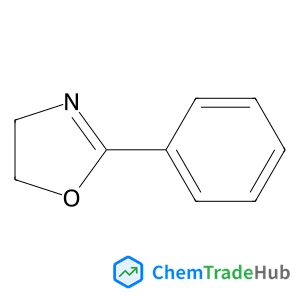
Divalent carbon atom as the proton acceptor in hydrogen bonding
Literature Information
Publication Date
2009-05-07
DOI
10.1039/B901968E
Impact Factor
3.676
Authors
Mirosław Jabłoński, Marcin Palusiak
View Original
Abstract
Proton-accepting properties of the divalent carbon atom in carbodiphosphoranes and their simple derivatives as well as in carbenes have been investigated. Both these groups of chemical compounds may be characterized by the formula CL2, where L is a σ electron donor. Therefore, the carbon atom within both these systems, being in its atomic state, can have one or two lone electron pairs and, as a result, it may form hydrogen bonds of the type D–H⋯CL2, where C acts as a proton acceptor. Complexes of C(NH3)2, C(PH3)2, C[P(CH3)3]2, CF2, CCl2, and imidazol-2-ylidene with such proton donors as H2O, HCF3, HCN and HCCH have been analyzed by means of high-level quantum chemical methods. Density functional theory (DFT) and second-order Møller–Plesset (MP2) approaches have been applied in conjunction with the aug-cc-pVTZ basis set. The electron density distribution calculated by means of the atoms in the molecules procedure has also been analyzed. Proton-accepting properties of the carbon atom are discussed in detail. It is shown that the divalent carbon atom in the group of chemical systems investigated should be treated as a normal proton acceptor, similar to the much more electronegative O or N atoms. Moreover, hydrogen bonds of the type D–H⋯CL2 within the complexes investigated have been found to be rather strong. The highest proton accepting ability of the carbon(0) atom found for the (NH3)2C derivative of carbodiphosphorane is explained on the basis of the Leffler–Hammond postulate. Within the group of carbenes, the strongest hydrogen bonds are formed by imidazol-2-ylidene. This is attributed to the significant aromatic character of the imidazol-2-ylidene ring that increases the proton-accepting properties of the carbene carbon atom.
Recommended Journals

Russian Journal of Organic Chemistry

Chemical Communications

Russian Journal of Coordination Chemistry

New Journal of Chemistry

Journal of Saudi Chemical Society

Chemistry Education Research and Practice

Russian Journal of Bioorganic Chemistry

Journal of Natural Medicines

Current Opinion in Solid State & Materials Science

Organic Process Research & Development
Related Literature
Cobalt porphyrin electrode films for electrocatalytic water oxidation
Ali Han, Hongxing Jia, Hao Ma, Shifan Ye, Haotian Wu, Haitao Lei, Yongzhen Han, Rui Cao, Pingwu Du
2014-04-15
Paper
DOI: 10.1039/C4CP00523F
Optical response of quantum-sized Ag and Au clusters – cage vs. compact structures and the remarkable insensitivity to compression
Robert L. Whetten, Xóchitl López-Lozano
2014-05-07
Paper
DOI: 10.1039/C4CP01277A
Long-term self-assembly of inorganic layered materials influenced by the local states of the interlayer cations
Kiminori Sato, Kazuomi Numata, Weili Dai, Michael Hunger
2014-04-22
Paper
DOI: 10.1039/C4CP00990H
TiO2(B) nanoparticle-functionalized WO3 nanorods with enhanced gas sensing properties
Hongxin Zhang, Shurong Wang, Yanshuang Wang, Jiedi Yang, Xueling Gao, Liwei Wang
2014-03-04
Paper
DOI: 10.1039/C4CP00356J
Oxygen vacancy formation and the ion migration mechanism in layered perovskite (Sr,La)3Fe2O7−δ
Isao Kagomiya, Keigo Jimbo, Ken-ichi Kakimoto, Masanobu Nakayama, Olivier Masson
2014-04-02
Paper
DOI: 10.1039/C4CP00736K
Identifying sp–sp2 carbon materials by Raman and infrared spectroscopies
Jinying Wang, Shuqing Zhang, Jingyuan Zhou, Rong Liu, Ran Du, Hua Xu, Zhongfan Liu, Jin Zhang, Zhirong Liu
2014-04-23
Paper
DOI: 10.1039/C4CP00539B
Molecular self-assembly at nanometer scale modulated surfaces: trimesic acid on Ag(111), Cu(111) and Ag/Cu(111)
Mahdi Sadeghzadeh Baviloliaei, Lars Diekhöner
2014-04-24
Paper
DOI: 10.1039/C4CP01429D
Adsorption of linear aliphatic α,ω-dithiols on plasmonic metal nanoparticles: a structural study based on surface-enhanced Raman spectra
I. Izquierdo-Lorenzo, S. Sanchez-Cortes
2014-04-15
Paper
DOI: 10.1039/C4CP00424H
Efficient water oxidation with organometallic iridium complexes as precatalysts
Anna Lewandowska-Andralojc, Dmitry E. Polyansky, Chiu-Hui Wang, Etsuko Fujita
2014-01-30
Paper
DOI: 10.1039/C3CP55101F
Improving BiVO4 photoanodes for solar water splitting through surface passivation
Yongqi Liang, Johannes Messinger
2014-05-01
Paper
DOI: 10.1039/C4CP00674G
You might also like
Compound Q&A
What precautions should be taken when handling 2-Chloro-1,2-bis(4-methylphenyl)ethanone (CAS: 71193-32-3)?
When handling 2-Chloro-1,2-bis(4-methylphenyl)ethanone (CAS: 71193-32-3), it is ...
71193-32-32-Chloro-1,2-bis(4-m...
Compound Q&A
What industries use 4-Ethoxy-3-(5-methyl-4-oxo-7-propyl-1,4-dihydroimidazo[5,1-f][1,2,4]triazin-2-yl)benzenesulfonyl chloride (CAS: 224789-26-8)?
4-Ethoxy-3-(5-methyl-4-oxo-7-propyl-1,4-dihydroimidazo[5,1-f][1,2,4]triazin-2-yl...
224789-26-84-Ethoxy-3-(5-methyl...
Compound Q&A
How should Methyl 3-Oxo-4-Androsten-17-Carboxylate (CAS: 2681-55-2) be stored?
Methyl 3-Oxo-4-Androsten-17-Carboxylate (CAS: 2681-55-2) should be stored in a c...
2681-55-2Methyl 3-Oxo-4-Andro...
Compound Q&A
What are the main uses of (R)-3-Amino-4-(3-hexylphenylamino)-4-oxobutylphosphonic acid (CAS: 909725-61-7)?
(R)-3-Amino-4-(3-hexylphenylamino)-4-oxobutylphosphonic acid is primarily used i...
909725-61-7(R)-3-Amino-4-(3-hex...
Compound Q&A
What regulatory guidelines apply to 2-Methyl-2-propanyl 3-amino-3-carbamoyl-1-azetidinecarboxylate (CAS: 1254120-14-3)?
2-Methyl-2-propanyl 3-amino-3-carbamoyl-1-azetidinecarboxylate (CAS: 1254120-14-...
1254120-14-32-Methyl-2-propanyl ...
Compound Q&A
Are there alternatives to (E)-4-(tert-Butoxy)-4-oxobut-2-enoic acid (CAS: 135355-96-3) in synthesis?
There are alternative reagents that can be used in synthesis instead of (E)-4-(t...
135355-96-3(E)-4-(tert-Butoxy)-...
Compound Q&A
What are the physical and chemical properties of [2-(3-Chlorophenyl)-1,3-thiazol-4-yl]methanol (CAS: 121202-20-8)?
[2-(3-Chlorophenyl)-1,3-thiazol-4-yl]methanol (CAS: 121202-20-8) is a crystallin...
121202-20-8[2-(3-Chlorophenyl)-...
Compound Q&A
What is the market or research trend for Methyl (2S)-[(4S)-2,2-dimethyl-1,3-dioxolan-4-yl]{[(4-methylphenyl)sulfonyl]oxy}acetate (CAS: 166249-17-8)?
The market and research trends for Methyl (2S)-[(4S)-2,2-dimethyl-1,3-dioxolan-4...
166249-17-8Methyl (2S)-[(4S)-2,...
Compound Q&A
What is the market or research trend for 1-Bromo-2-isocyanatoethane (CAS: 42865-19-0)?
The market for 1-Bromo-2-isocyanatoethane (CAS: 42865-19-0) is driven by its use...
42865-19-01-Bromo-2-isocyanato...
Compound Q&A
What are the main uses of 4-Nitro-D-phenylalanine hydrochloride (CAS: 147065-06-3)?
4-Nitro-D-phenylalanine hydrochloride (CAS: 147065-06-3) is primarily used in re...
147065-06-34-Nitro-D-phenylalan...
Source Journal
Physical Chemistry Chemical Physics

CiteScore:
5.5
Self-citation Rate:
10.3%
Articles per Year:
3036
Physical Chemistry Chemical Physics (PCCP) is an international journal co-owned by 19 physical chemistry and physics societies from around the world. This journal publishes original, cutting-edge research in physical chemistry, chemical physics and biophysical chemistry. To be suitable for publication in PCCP, articles must include significant innovation and/or insight into physical chemistry; this is the most important criterion that reviewers and Editors will judge against when evaluating submissions. The journal has a broad scope and welcomes contributions spanning experiment, theory, computation and data science. Topical coverage includes spectroscopy, dynamics, kinetics, statistical mechanics, thermodynamics, electrochemistry, catalysis, surface science, quantum mechanics, quantum computing and machine learning. Interdisciplinary research areas such as polymers and soft matter, materials, nanoscience, energy, surfaces/interfaces, and biophysical chemistry are welcomed if they demonstrate significant innovation and/or insight into physical chemistry. Joined experimental/theoretical studies are particularly appreciated when complementary and based on up-to-date approaches.
Recommended Compounds
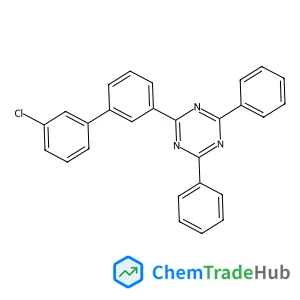
2-(3'-Chlorobiphenyl-3-yl)-4,6-diphenyl-1,3,5-triazine
CAS Number:
1443049-83-9
Molecular Formula:
C27H18ClN3
Recommended Suppliers




Disclaimer
This page provides academic journal information for reference and research purposes only. We are not affiliated with any journal publishers and do not handle publication submissions. For publication-related inquiries, please contact the respective journal publishers directly.
If you notice any inaccuracies in the information displayed, please contact us at support@chemtradehub.com. We will promptly review and address your concerns.