













Theoretical treatment of ion–molecular charge transfer reactions involving dimer radical ions
Literature Information
Publication Date
2003-05-01
DOI
10.1039/B300112A
Impact Factor
3.676
Authors
View Original
Abstract
For the first time spin evolution of radical ions participating in ion–molecular charge transfer reactions involving dimer radical ion and neutral monomer molecule (dimer–monomer charge transfer reaction) has been studied quantitatively. The peculiarity of the problem is that only a fragment (monomer) of a radical ion is changed in the course of the reaction. For this case the kinetic equations of the encounter theory for spin density matrix of a radical ion have been obtained. Calculations of EPR spectra of radical ions in the presence of dimer–monomer charge transfer reaction have been performed. The cases of small and large hyperfine coupling constants, slow and fast charge transfer reactions have been studied in detail. The shifts and broadening of the EPR spectral lines in these cases have been calculated.
Related Literature
An etched nanoporous Ge anode in a novel metal–air energy conversion cell
Sunghyun Uhm
2013-03-07
Paper
DOI: 10.1039/C3CP50885D
Complementary mechanistic properties of Fe- and Mn-doped aluminophosphates in the catalytic aerobic oxidation of hydrocarbons
Luis Gómez-Hortigüela, Furio Corà, C. Richard A. Catlow
2013-03-14
Paper
DOI: 10.1039/C3CP51079D
Photoinduced energy and charge transfer in a p-phenylene-linked dyad of boron dipyrromethene and monostyryl boron dipyrromethene
Roel Menting, Jian-Yong Liu, Ying-Si Huang, Dennis K. P. Ng, Beate Röder
2013-03-15
Paper
DOI: 10.1039/C3CP50576F
Reliable contact fabrication on nanostructured Bi2Te3-based thermoelectric materials
Shien-Ping Feng, Ya-Huei Chang, Jian Yang, Bed Poudel, Bo Yu, Zhifeng Ren, Gang Chen
2013-03-15
Communication
DOI: 10.1039/C3CP50993A
Low-lying excited-states of 5-benzyluracil
Marco Micciarelli, Carlo Altucci, Bartolomeo Della Ventura, Raffaele Velotta, Valer Toşa, Adán B. Gónzalez Pérez, Martin Pérez Rodríguez, Ángel R. de Lera, Attila Bende
2013-03-19
Paper
DOI: 10.1039/C3CP50343G
Electron tunneling from electronically excited states of isolated bisdisulizole-derived trianion chromophores following UV absorption
Marc-Oliver Winghart, Michael Kühn, Andreas-Neil Unterreiner, Thomas J. A. Wolf, Phuong D. Dau, Hong-Tao Liu, Dao-Ling Huang, Lai-Sheng Wang
2013-03-18
Paper
DOI: 10.1039/C3CP50497B
Interaction of CO2 with oxygen adatoms on rutile TiO2(110)
Xiao Lin, Zhi-Tao Wang, Igor Lyubinetsky, Bruce D. Kay, Zdenek Dohnálek
2013-01-10
Paper
DOI: 10.1039/C3CP44040K
Temperature and time dependence on ZnS microstructure and phases obtained through hydrothermal decomposition of diethyldithiocarbamate complexes
Guilherme Oliveira Siqueira, Tulio Matencio, Herculano Vieira da Silva, Yara Gonçalves de Souza, José Domingos Ardisson, Geraldo Magela de Lima, Arilza de Oliveira Porto
2013-03-04
Paper
DOI: 10.1039/C3CP50549A
Comparing molecular photofragmentation dynamics in the gas and liquid phases
Stephanie J. Harris, Daniel Murdock, Yuyuan Zhang, Thomas A. A. Oliver, Michael P. Grubb, Andrew J. Orr-Ewing, Gregory M. Greetham, Ian P. Clark, Michael Towrie, Stephen E. Bradforth, Michael N. R. Ashfold
2013-03-19
Perspective
DOI: 10.1039/C3CP50756D
You might also like
Compound Q&A
What precautions should be taken when handling 4-(2-Furylmethyl)thiomorpholine 1,1-dioxide (CAS: 79206-94-3)?
When handling 4-(2-Furylmethyl)thiomorpholine 1,1-dioxide (CAS: 79206-94-3), it ...
79206-94-34-(2-Furylmethyl)thi...
Compound Q&A
What precautions should be taken when handling 4-Chloro-N-[2-(4-morpholinyl)ethyl]benzamide (CAS: 71320-77-9)?
When handling 4-Chloro-N-[2-(4-morpholinyl)ethyl]benzamide (CAS: 71320-77-9), it...
71320-77-94-Chloro-N-[2-(4-mor...
Compound Q&A
How should waste containing 2-[2-(2-Methoxyethoxy)ethoxy]ethyl 4-methylbenzenesulfonate (CAS: 62921-74-8) be handled?
Waste containing this compound (CAS: 62921-74-8) should be handled according to ...
62921-74-82-[2-(2-Methoxyethox...
Compound Q&A
How should waste containing (S)-Methyl 2-amino-3-cyclohexylpropanoate be handled?
Waste containing (S)-Methyl 2-amino-3-cyclohexylpropanoate should be collected i...
40056-18-6(S)-Methyl 2-amino-3...
Compound Q&A
How is 5-({4-[(2S,4R)-4-Hydroxy-2-methyltetrahydro-2H-pyran-4-yl]-2-thienyl}sulfanyl)-1-methyl-1,3-dihydro-2H-indol-2-one (CAS: 166882-70-8) typically synthesized?
This compound can be synthesized using a multi-step process involving the conjug...
166882-70-85-({4-[(2S,4R)-4-Hyd...
Compound Q&A
Are there alternatives to (2E)-3-(3,4-Dichlorophenyl)acrylic acid (CAS: 7312-27-8) in synthesis?
There are several alternatives to (2E)-3-(3,4-Dichlorophenyl)acrylic acid in syn...
7312-27-8(2E)-3-(3,4-Dichloro...
Compound Q&A
How should Ethyl 6-(2-nitrophenyl)imidazo[2,1-b][1,3]thiazole-3-carboxylate (CAS: 925437-84-9) be stored?
Ethyl 6-(2-nitrophenyl)imidazo[2,1-b][1,3]thiazole-3-carboxylate (CAS: 925437-84...
925437-84-9Ethyl 6-(2-nitrophen...
Compound Q&A
How should waste containing 2-(1,3-Thiazol-2-yl)ethanamine (CAS: 18453-07-1) be handled?
Waste containing 2-(1,3-Thiazol-2-yl)ethanamine (CAS: 18453-07-1) should be coll...
18453-07-12-(1,3-Thiazol-2-yl)...
Compound Q&A
How is Methyl 5-iodo-2-methylbenzoate (CAS: 103440-54-6) typically synthesized?
Methyl 5-iodo-2-methylbenzoate can be synthesized through the iodination of meth...
103440-54-6Methyl 5-iodo-2-meth...
Compound Q&A
How is 5-Chloro[1,2,4]triazolo[1,5-a]pyridine (CAS: 1427399-34-5) typically synthesized?
5-Chloro[1,2,4]triazolo[1,5-a]pyridine is commonly synthesized via the condensat...
1427399-34-55-Chloro[1,2,4]triaz...
Source Journal
Physical Chemistry Chemical Physics

CiteScore:
5.5
Self-citation Rate:
10.3%
Articles per Year:
3036
Physical Chemistry Chemical Physics (PCCP) is an international journal co-owned by 19 physical chemistry and physics societies from around the world. This journal publishes original, cutting-edge research in physical chemistry, chemical physics and biophysical chemistry. To be suitable for publication in PCCP, articles must include significant innovation and/or insight into physical chemistry; this is the most important criterion that reviewers and Editors will judge against when evaluating submissions. The journal has a broad scope and welcomes contributions spanning experiment, theory, computation and data science. Topical coverage includes spectroscopy, dynamics, kinetics, statistical mechanics, thermodynamics, electrochemistry, catalysis, surface science, quantum mechanics, quantum computing and machine learning. Interdisciplinary research areas such as polymers and soft matter, materials, nanoscience, energy, surfaces/interfaces, and biophysical chemistry are welcomed if they demonstrate significant innovation and/or insight into physical chemistry. Joined experimental/theoretical studies are particularly appreciated when complementary and based on up-to-date approaches.
Recommended Compounds

(3beta,7beta,12beta)-3,7,12-Trihydroxy-11,15,23-trioxolanost-8-en-26-oic acid
CAS Number:
98665-22-6
Molecular Formula:
C30H44O8
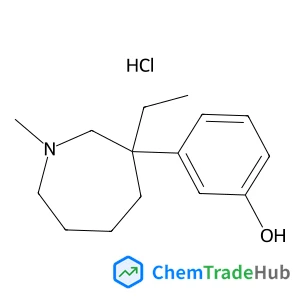
3-(3-Ethyl-1-methyl-3-azepanyl)phenol hydrochloride (1:1)
CAS Number:
59263-76-2
Molecular Formula:
C15H24ClNO

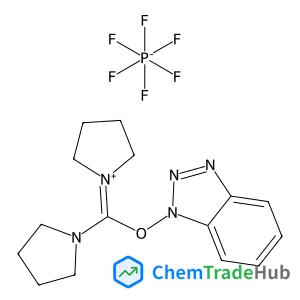
(1H-Benzotriazol-1-yloxy)(di-1-pyrrolidinyl)methylium hexafluorophosphate
CAS Number:
105379-24-6
Molecular Formula:
C15H21F6N5OP
Recommended Suppliers





Disclaimer
This page provides academic journal information for reference and research purposes only. We are not affiliated with any journal publishers and do not handle publication submissions. For publication-related inquiries, please contact the respective journal publishers directly.
If you notice any inaccuracies in the information displayed, please contact us at support@chemtradehub.com. We will promptly review and address your concerns.