












Tricriticality in the ternary system 3-methylpyridine/water/NaBr? The coexistence curves
Literature Information
Publication Date
2003-02-11
DOI
10.1039/B212337A
Impact Factor
3.676
Authors
Monika Wagner, Olimpiu Stanga, Wolffram Schröer
View Original
Abstract
The existence of a tricritical point was postulated recently for the ternary system water/3-methylpyridine/NaBr (J. Jacob et al., Phys. Rev. E, 1998, 58, 2188) because light-scattering measurements showed at high concentrations of the salt purely mean field behaviour with a critical exponent of the susceptibility γ = 1 instead of the Ising value γ = 1.24, which is found at low salt concentrations. However, in a preceding paper (Wagner et al., Phys. Chem. Chem. Phys., 2002, 4, 5300) we have reported measurements of the viscosities, which for all salt concentrations showed normal Ising criticality with a crossover to non-critical behaviour at large separations from the critical temperatures. In this paper we continue the research on this system and report refractive index measurements of the coexisting phases. For all salt concentrations (10–17 mass%) the critical exponents are consistent with Ising critical behaviour where the Lorenz–Lorentz function is taken as order parameter. The effective value of the critical exponent β is found to depend on the concentration of the salt. In the region of high salt concentration mean field tricriticality was expected with an exponent β = 1 while a value somewhat below the Ising value is found. The effective value of β is reduced at lower salt content. Essentially the same results are obtained when the mole, mass or volume fractions of the different components are taken as order parameter, where the compositions in the two phases are estimated on the basis of the separation temperatures determined for previously given concentrations.
Recommended Journals
Related Literature
Reactions of 5-mercaptoazoles and pyridine-2-thiones with acetylenic esters. Selectivity of the formation of novel fused thiazin-4-ones and thiazolidin-4-ones
Vasiliy A. Bakulev, Vera S. Berseneva, Natalia P. Belskaia, Yury Yu. Morzherin, Andreiy Zaitsev, Wim Dehaen, Ingrid Luyten, Suzanne Toppet
2002-12-05
Paper
DOI: 10.1039/B207854F
Azodicarboxylate-free esterification with triphenylphosphine mediated by flavin and visible light: method development and stereoselectivity control
Michal März, Michal Kohout, Tomáš Neveselý, Josef Chudoba, Dorota Prukała, Stanislaw Niziński, Marek Sikorski, Gotard Burdziński, Radek Cibulka
2018-09-03
Paper
DOI: 10.1039/C8OB01822G
Rhodium-catalyzed cyclization of acceptor-substituted biphenyl α-diazoketones: a study of the substitution effect on chemoselectivity
Kuo-Hsin Chen, Yi-Jung Chiang, Jia-Liang Zhu
2018-09-04
Paper
DOI: 10.1039/C8OB01489B
A pendant peptide endows a sunscreen with water-resistance
Aubrey J. Ellison
2018-09-10
Communication
DOI: 10.1039/C8OB01773E
Azlactone-based heterobifunctional linkers with orthogonal clickable groups: efficient tools for bioconjugation with complete atom economy
Hien The Ho, Alexandre Bénard, Gwenaël Forcher, Maël Le Bohec, Véronique Montembault, Sagrario Pascual, Laurent Fontaine
2018-09-19
Communication
DOI: 10.1039/C8OB01807C
Dependence of selective enclathration on types of cholic acid crystals
Nungruethai Yoswathananont, Kazuki Sada, Mikiji Miyata, Shigendo Akita, Kazunori Nakano
2002-11-29
Paper
DOI: 10.1039/B210544F
Facile synthesis of triphenylenes and triphenylene/phenanthrene fused heteroaromatics
Vijay Gupta, Satish K. Pandey, Ravi P. Singh
2018-09-14
Communication
DOI: 10.1039/C8OB01930D
Refined methods for the synthesis of meso-substituted A3- and trans-A2B-corroles
Daniel T. Gryko, Beata Koszarna
2002-12-09
Paper
DOI: 10.1039/B208950E
Catalytic asymmetric Tamura cycloaddition of homophthalic anhydrides with 2-arylidene-1,3-diones
Han Xu, Feng Sha, Qiong Li, Xin-Yan Wu
2018-09-19
Paper
DOI: 10.1039/C8OB01970C
Manganese(iii) acetate-mediated alkylation of β-keto esters and β-keto amides: an enantio- and diastereo-selective approach to substituted pyrrolidinones
Gregory Bar, Andrew F. Parsons, C. Barry Thomas
2002-12-13
Paper
DOI: 10.1039/B209123B
You might also like
Compound Q&A
Is 6-(3-Fluorophenyl)picolinic acid (CAS: 887982-40-3) safe?
6-(3-Fluorophenyl)picolinic acid is generally considered safe for laboratory use...
887982-40-36-(3-Fluorophenyl)pi...
Compound Q&A
What industries use (3R)-3-Pyrrolidinol (CAS: 2799-21-5)?
(3R)-3-Pyrrolidinol is used in the pharmaceutical industry as a precursor for dr...
2799-21-5(3R)-3-Pyrrolidinol
Compound Q&A
What precautions should be taken when handling (4R,5R)-4,5-Diethoxycarbonyl-2,2-dimethyldioxolane (CAS: 59779-75-8)?
When handling (4R,5R)-4,5-Diethoxycarbonyl-2,2-dimethyldioxolane (CAS: 59779-75-...
59779-75-8(4R,5R)-4,5-Diethoxy...
Compound Q&A
How is 1-(6-Chloroimidazo[1,2-b]pyridazin-3-yl)ethanone (CAS: 90734-71-7) typically synthesized?
1-(6-Chloroimidazo[1,2-b]pyridazin-3-yl)ethanone is often synthesized via a mult...
90734-71-71-(6-Chloroimidazo[1...
Compound Q&A
What is the market or research trend for N-Ethyl-3,4-dimethylbenzylamine (CAS: 39180-83-1)?
The market for N-Ethyl-3,4-dimethylbenzylamine (CAS: 39180-83-1) remains steady,...
39180-83-1N-Ethyl-3,4-dimethyl...
Compound Q&A
What is Tert-butyl 3-(pyrrolidin-1-yl)azetidine-1-carboxylate (CAS: 1019008-21-9)?
Tert-butyl 3-(pyrrolidin-1-yl)azetidine-1-carboxylate is a chemical compound wit...
1019008-21-9Tert-butyl 3-(pyrrol...
Compound Q&A
What regulatory guidelines apply to 1-Bromo-3-chloro-2,4-dimethoxybenzene (CAS: 1228956-93-1)?
1-Bromo-3-chloro-2,4-dimethoxybenzene (CAS: 1228956-93-1) falls under the classi...
1228956-93-11-Bromo-3-chloro-2,4...
Compound Q&A
Is 8-Bromo-2-methyl-3,4-dihydroisoquinolin-1(2H)-one (CAS: 1368622-07-4) safe?
The safety of 8-Bromo-2-methyl-3,4-dihydroisoquinolin-1(2H)-one (CAS: 1368622-07...
1368622-07-48-Bromo-2-methyl-3,4...
Compound Q&A
Is Benzyl [(3S)-2,6-dioxo-3-piperidinyl]carbamate (CAS: 22785-43-9) safe?
Benzyl [(3S)-2,6-dioxo-3-piperidinyl]carbamate is generally safe when handled wi...
22785-43-9Benzyl [(3S)-2,6-dio...
Compound Q&A
How should 1-{[4-(4,4,5,5-Tetramethyl-1,3,2-dioxaborolan-2-yl)phenyl]sulfonyl}pyrrolidine (CAS: 928657-21-0) be stored?
1-{[4-(4,4,5,5-Tetramethyl-1,3,2-dioxaborolan-2-yl)phenyl]sulfonyl}pyrrolidine s...
928657-21-01-{[4-(4,4,5,5-Tetra...
Source Journal
Physical Chemistry Chemical Physics

CiteScore:
5.5
Self-citation Rate:
10.3%
Articles per Year:
3036
Physical Chemistry Chemical Physics (PCCP) is an international journal co-owned by 19 physical chemistry and physics societies from around the world. This journal publishes original, cutting-edge research in physical chemistry, chemical physics and biophysical chemistry. To be suitable for publication in PCCP, articles must include significant innovation and/or insight into physical chemistry; this is the most important criterion that reviewers and Editors will judge against when evaluating submissions. The journal has a broad scope and welcomes contributions spanning experiment, theory, computation and data science. Topical coverage includes spectroscopy, dynamics, kinetics, statistical mechanics, thermodynamics, electrochemistry, catalysis, surface science, quantum mechanics, quantum computing and machine learning. Interdisciplinary research areas such as polymers and soft matter, materials, nanoscience, energy, surfaces/interfaces, and biophysical chemistry are welcomed if they demonstrate significant innovation and/or insight into physical chemistry. Joined experimental/theoretical studies are particularly appreciated when complementary and based on up-to-date approaches.
Recommended Compounds
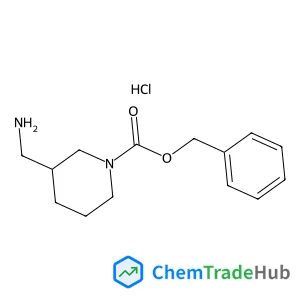
Benzyl 3-(aminomethyl)piperidine-1-carboxylate hydrochloride
CAS Number:
1186663-23-9
Molecular Formula:
C14H21ClN2O2
Recommended Suppliers





Disclaimer
This page provides academic journal information for reference and research purposes only. We are not affiliated with any journal publishers and do not handle publication submissions. For publication-related inquiries, please contact the respective journal publishers directly.
If you notice any inaccuracies in the information displayed, please contact us at support@chemtradehub.com. We will promptly review and address your concerns.