












Editorial: ChemComm beats the opposition
Literature Information
Publication Date
2003-09-20
DOI
10.1039/B211989G
Impact Factor
6.222
Authors
View Original
Abstract
The first page of this article is displayed as the abstract.
Related Literature
Density functional theory investigation of negative differential resistance and efficient spin filtering in niobium-doped armchair graphene nanoribbons
Jitendra Kumar, Harshal B. Nemade, P. K. Giri
2017-10-12
Paper
DOI: 10.1039/C7CP05921C
Thermodynamic assessment of the oxygen reduction activity in aqueous solutions
2017-10-18
Paper
DOI: 10.1039/C7CP05448C
Theoretical prediction of MXene-like structured Ti3C4 as a high capacity electrode material for Na ion batteries
Alice Hu, Chunyi Zhi
2017-10-16
Paper
DOI: 10.1039/C7CP06171D
Understanding the role of co-catalysts on silicon photocathodes using intensity modulated photocurrent spectroscopy
James E. Thorne, Yanyan Zhao, Da He, Shizhao Fan, Srinivas Vanka, Zetian Mi, Dunwei Wang
2017-10-24
Paper
DOI: 10.1039/C7CP06533G
Ionic liquids with anions based on fluorosulfonyl derivatives: from asymmetrical substitutions to a consistent force field model
Carlos E. S. Bernardes, Elena I. Lozinskaya, Yakov S. Vygodskii, José N. Canongia Lopes
2017-10-09
Paper
DOI: 10.1039/C7CP06081E
A rapid scan vacuum FTIR method for determining diffusion coefficients in viscous and glassy aerosol particles
Yun Zhang, Shu-Feng Pang, Jonathan P. Reid, Yun-Hong Zhang
2017-08-18
Paper
DOI: 10.1039/C7CP04473A
Catechol–cation adhesion on silica surfaces: molecular dynamics simulations
Yingtu Li, Mingrui Liao, Jian Zhou
2017-10-05
Paper
DOI: 10.1039/C7CP05284G
Curly arrows, electron flow, and reaction mechanisms from the perspective of the bonding evolution theory
Juan Andrés, Patricio González-Navarrete, Vicent Sixte Safont, Bernard Silvi
2017-10-16
Perspective
DOI: 10.1039/C7CP06108K
Chemical surface exchange of oxygen on CeO2−δ in an O2/H2O atmosphere
Xin Xu
2017-10-09
Paper
DOI: 10.1039/C7CP05969H
You might also like
Compound Q&A
What industries use (1R,3S)-1,3-Cyclopentanediol (CAS: 16326-97-9)?
(1R,3S)-1,3-Cyclopentanediol finds applications in various industries. In the ph...
16326-97-9(1R,3S)-1,3-Cyclopen...
Compound Q&A
What precautions should be taken when handling N'-[4-(Dimethylamino)phenyl]-N,N-dimethyl-1,4-benzenediamine (CAS: 637-31-0)?
When handling N'-[4-(Dimethylamino)phenyl]-N,N-dimethyl-1,4-benzenediamine, it i...
637-31-0N'-[4-(Dimethylamino...
Compound Q&A
Are there alternatives to 5-(2,4-Difluorophenyl)-2-methoxypyrimidine (CAS: 1352318-16-1) in synthesis?
There are several alternatives to 5-(2,4-Difluorophenyl)-2-methoxypyrimidine in ...
1352318-16-15-(2,4-Difluoropheny...
Compound Q&A
What regulatory guidelines apply to 1-(3-Methoxyphenoxy)propan-2-ol (CAS: 382141-68-6)?
1-(3-Methoxyphenoxy)propan-2-ol (CAS: 382141-68-6) must comply with the Globally...
382141-68-61-(3-Methoxyphenoxy)...
Compound Q&A
Is Tetrodotoxin Citrate (CAS: 18660-81-6) safe?
Tetrodotoxin Citrate is extremely dangerous and should be handled with extreme c...
18660-81-6Tetrodotoxin Citrate
Compound Q&A
What are the main uses of 2-Methyl-2-propanyl [(1R,3S)-3-hydroxycyclopentyl]carbamate (CAS: 225641-84-9)?
2-Methyl-2-propanyl [(1R,3S)-3-hydroxycyclopentyl]carbamate (CAS: 225641-84-9) i...
225641-84-92-Methyl-2-propanyl ...
Compound Q&A
How should waste containing 4-(2-Hydroxyhexafluoroisopropyl)Benzoic Acid (CAS: 16261-80-6) be handled?
Waste containing 4-(2-Hydroxyhexafluoroisopropyl)Benzoic Acid (CAS: 16261-80-6) ...
16261-80-64-(2-Hydroxyhexafluo...
Compound Q&A
How is 2-Methyl-2-proanyl {(2S)-1-[(benzyloxy)amino]-3-hydroxy-3-methyl-1-oxo-2-butanyl}carbamate (CAS: 102507-19-7) typically synthesized?
2-Methyl-2-proanyl {(2S)-1-[(benzyloxy)amino]-3-hydroxy-3-methyl-1-oxo-2-butanyl...
102507-19-72-Methyl-2-propanyl ...
Compound Q&A
What is Benzeneethanamine, α-ethyl-, hydrochloride (1:1) (CAS: 20735-15-3)?
Benzeneethanamine, α-ethyl-, hydrochloride (1:1) is an organic compound with the...
20735-15-3Benzeneethanamine, α...
Compound Q&A
Are there alternatives to 3-{(E)-[4-(Dimethylamino)phenyl]diazenyl}benzoic acid (CAS: 20691-84-3) in synthesis?
In the synthesis of compounds similar to 3-{(E)-[4-(Dimethylamino)phenyl]diazeny...
20691-84-33-{(E)-[4-(Dimethyla...
Source Journal
Chemical Communications

CiteScore:
8.6
Self-citation Rate:
4.7%
Articles per Year:
2458
ChemComm publishes urgent research which is of outstanding significance and interest to experts in the field, while also appealing to the journal’s broad chemistry readership. Our communication format is ideally suited to short, urgent studies that are of such importance that they require accelerated publication. Our scope covers all topics in chemistry, and research at the interface of chemistry and other disciplines (such as materials science, nanoscience, physics, engineering and biology) where there is a significant novelty in the chemistry aspects. Major topic areas covered include: Analytical Chemistry Catalysis Chemical Biology and medicinal chemistry Computational Chemistry and Machine Learning Energy and sustainable chemistry Environmental Chemistry Green Chemistry Inorganic Chemistry Materials Chemistry Nanoscience Organic Chemistry Physical Chemistry Polymer Chemistry Supramolecular Chemistry
Recommended Compounds
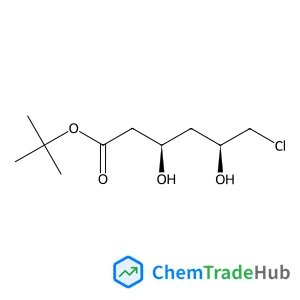
2-Methyl-2-propanyl (3R,5S)-6-chloro-3,5-dihydroxyhexanoate
CAS Number:
154026-93-4
Molecular Formula:
C10H19ClO4
Recommended Suppliers






Disclaimer
This page provides academic journal information for reference and research purposes only. We are not affiliated with any journal publishers and do not handle publication submissions. For publication-related inquiries, please contact the respective journal publishers directly.
If you notice any inaccuracies in the information displayed, please contact us at support@chemtradehub.com. We will promptly review and address your concerns.