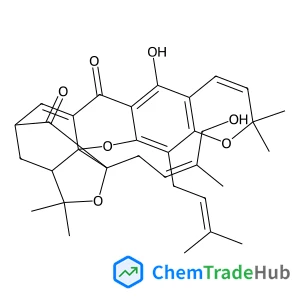
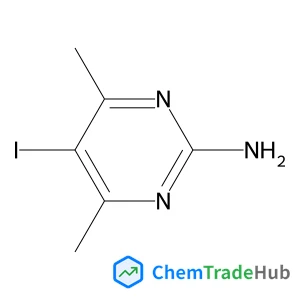
(3alpha,5beta,6alpha,7alpha)-6-Ethylcholane-3,7,24-triol
CAS Number:
1537866-49-1
Molecular Formula:
C26H46O3
Etsushi Nishikawa, Jun Yamamoto
A polycatenar mesogen consisting of a four aromatic ring system with three long alkoxy chains and a bulky perfluorinated substituent has been synthesized and found to show the polymorphism of a cubic phase, a columnar phase and a smectic A phase, including a structured, fluid, optically isotropic phase with the phase transformation between the smectic A phase and the isotropic phase occurring continuously.
Ivan Angelov, Liudmil Antonov
DOI: 10.1039/D1CP01378E
Ian Rouse, David Power, Erik G. Brandt, Matthew Schneemilch, Konstantinos Kotsis, Nick Quirke, Alexander P. Lyubartsev, Vladimir Lobaskin
DOI: 10.1039/D1CP01116B
Jozef Rakovský, Ondrej Votava
DOI: 10.1039/D1CP02639A
Zhendong Li
DOI: 10.1039/D1CP01075A
Luis Palomo, Fernando Gordillo Gámez, Ori Gidron, Juan Casado, Francisco J. Ramírez
DOI: 10.1039/D1CP01505B
Gustavo Cárdenas, Álvaro Pérez-Barcia, Marcos Mandado
DOI: 10.1039/D1CP03382D
Lian Yang, Xudong Liu, Yan Zhang, Yongsheng Yang, Ying Xue
DOI: 10.1039/D1CP01973B
Peter A. Banks, Luke Burgess, Michael T. Ruggiero
DOI: 10.1039/D1CP02496E
Yongjian Zang, Xuhua Li, Yizhen Zhao, He Wang, Dongxiao Hao, Lei Zhang, Zhiwei Yang, Xiaohui Yuan, Shengli Zhang
DOI: 10.1039/D1CP01611C
N-(4-Methoxybenzyl)-2-pyridinamine (CAS: 52818-63-0) is increasingly being used ...
When handling Ethyl 4-(2-chlorophenyl)-1,3-thiazole-2-carboxylate, appropriate p...
Diethyldiselane (CAS: 628-39-7) is classified under the Globally Harmonized Syst...
The market for oxocopper (CAS: 12053-18-8) is primarily driven by its use in cat...
The market for 5-{[(2-Methyl-2-propanyl)oxy]carbonyl}-5-azaspiro[2.4]heptane-7-c...
2-(1-Pyrrolidinyl)-4-pyridinamine is a chemical compound with the CAS number 359...
2-(3-Pyridinyl)-1-azabicyclo[2.2.2]octane (CAS: 91556-75-1) is a crystalline sol...
(S)-Alpha-allyl-proline hydrochloride is usually synthesized via a Wittig reacti...
3-Methyl-1,2-oxazole-5-carboxylic acid (CAS: 4857-42-5) is an organic compound w...
Lys-SMCC-DM1 is synthesized via a multi-step process involving the coupling of S...

ChemComm publishes urgent research which is of outstanding significance and interest to experts in the field, while also appealing to the journal’s broad chemistry readership. Our communication format is ideally suited to short, urgent studies that are of such importance that they require accelerated publication. Our scope covers all topics in chemistry, and research at the interface of chemistry and other disciplines (such as materials science, nanoscience, physics, engineering and biology) where there is a significant novelty in the chemistry aspects. Major topic areas covered include: Analytical Chemistry Catalysis Chemical Biology and medicinal chemistry Computational Chemistry and Machine Learning Energy and sustainable chemistry Environmental Chemistry Green Chemistry Inorganic Chemistry Materials Chemistry Nanoscience Organic Chemistry Physical Chemistry Polymer Chemistry Supramolecular Chemistry

![N-{15-[(2,5-Dioxo-1-pyrrolidinyl)oxy]-15-oxo-3,6,9,12-tetraoxapentadec-1-yl}-2-(2-propyn-1-yloxy)acetamide structure](https://static.chemtradehub.com/structs/210/2101206-92-0-2eb5.webp "N-{15-[(2,5-Dioxo-1-pyrrolidinyl)oxy]-15-oxo-3,6,9,12-tetraoxapentadec-1-yl}-2-(2-propyn-1-yloxy)acetamide structure")