












A novel three-dimensional coordination polymer constructed with mixed-valence dimeric copper(i,ii) units
Literature Information
Publication Date
2003-01-15
DOI
10.1039/B210914J
Impact Factor
6.222
Authors
Katsunori Mochizuki, Ho-Chol Chang, Xiao-Ming Chen, Ying Li, Susumu Kitagawa
View Original
Abstract
A novel three-dimensional coordination polymer with a mixed-valence localized copper(I,II) dimeric unit, [Cu2(4-pya)3]n (4-pya = 4-pyridinecarboxylate), was hydrothermally synthesized via a simultaneous in-situa redox and hydrolysis reaction of Cu(II) and 4-cyanopyridine and crystallographically characterized to be a twofold interpenetrated three-dimensional coordination network with a cubic [Cu16(4-pya)12] building unit.
Related Literature
In vitro and ex vivo measurement of the biophysical properties of blood using microfluidic platforms and animal models
Yang Jun Kang, Sang-Joon Lee
2018-04-11
Critical Review
DOI: 10.1039/C8AN00231B
Detection of cystic fibrosis transmembrane conductance regulator ΔF508 gene mutation using a paper-based nucleic acid hybridization assay and a smartphone camera
Karan Malhotra, M. Omair Noor, Ulrich J. Krull
2018-05-22
Paper
DOI: 10.1039/C8AN00509E
Systematic analysis of various ionic liquids by attenuated total reflectance spectroscopy (145–450 nm) and quantum chemical calculations
Ichiro Tanabe, Aki Suyama, Taiki Sato, Ken-ichi Fukui
2018-05-11
Paper
DOI: 10.1039/C8AN00563J
The role of ionic liquids in the biocatalytic evaluation of bisphenol levels as contaminant: an automatic approach
Ana Raquel Costa, Marieta L. C. Passos, Sarah A. P. Pereira, M. Lúcia M. F. S. Saraiva
2018-04-17
Paper
DOI: 10.1039/C8AN00154E
Facile fabrication of a 3,4,9,10-perylene tetracarboxylic acid functionalized graphene–multiwalled carbon nanotube–gold nanoparticle nanocomposite for highly sensitive and selective electrochemical detection of dopamine
Cong Zhang, Jujie Ren, Jiexin Zhou, Min Cui, Na Li, Bingkai Han, Qiang Chen
2018-05-11
Paper
DOI: 10.1039/C8AN00559A
Rapid and selective DNA-based detection of melamine using α-hemolysin nanopores
Yi You, Zhong Cao, Lei Liu, Hai-Chen Wu
2018-04-20
Paper
DOI: 10.1039/C8AN00580J
Optical guiding-based cell focusing for Raman flow cell cytometer
Abha Uppal
2018-04-25
Paper
DOI: 10.1039/C8AN00037A
Polydisperse emulsion digital assay to enhance time to detection and extend dynamic range in bacterial cultures enabled by a statistical framework
Samantha A. Byrnes, Elizabeth A. Phillips, Toan Huynh, Bernhard H. Weigl, Kevin P. Nichols
2018-05-21
Paper
DOI: 10.1039/C8AN00029H
You might also like
Compound Q&A
What is the market or research trend for N-(4-Methoxybenzyl)-2-pyridinamine (CAS: 52818-63-0)?
N-(4-Methoxybenzyl)-2-pyridinamine (CAS: 52818-63-0) is increasingly being used ...
52818-63-0N-(4-Methoxybenzyl)-...
Compound Q&A
What precautions should be taken when handling Ethyl 4-(2-chlorophenyl)-1,3-thiazole-2-carboxylate (CAS: 1050507-06-6)?
When handling Ethyl 4-(2-chlorophenyl)-1,3-thiazole-2-carboxylate, appropriate p...
1050507-06-6Ethyl 4-(2-chlorophe...
Compound Q&A
What regulatory guidelines apply to diethyldiselane (CAS: 628-39-7)?
Diethyldiselane (CAS: 628-39-7) is classified under the Globally Harmonized Syst...
628-39-7Diethyldiselane
Compound Q&A
What is the market or research trend for oxocopper (CAS: 12053-18-8)?
The market for oxocopper (CAS: 12053-18-8) is primarily driven by its use in cat...
12053-18-8oxocopper; oxo-(oxoc...
Compound Q&A
What is the market or research trend for 5-{[(2-Methyl-2-propanyl)oxy]carbonyl}-5-azaspiro[2.4]heptane-7-carboxylic acid?
The market for 5-{[(2-Methyl-2-propanyl)oxy]carbonyl}-5-azaspiro[2.4]heptane-7-c...
1268519-54-55-{[(2-Methyl-2-prop...
Compound Q&A
What is 2-(1-Pyrrolidinyl)-4-pyridinamine (CAS: 35981-63-6)?
2-(1-Pyrrolidinyl)-4-pyridinamine is a chemical compound with the CAS number 359...
35981-63-62-(1-Pyrrolidinyl)-4...
Compound Q&A
What are the physical and chemical properties of 2-(3-Pyridinyl)-1-azabicyclo[2.2.2]octane (CAS: 91556-75-1)?
2-(3-Pyridinyl)-1-azabicyclo[2.2.2]octane (CAS: 91556-75-1) is a crystalline sol...
91556-75-12-(3-Pyridinyl)-1-az...
Compound Q&A
How is (S)-Alpha-allyl-proline hydrochloride (CAS: 129704-91-2) typically synthesized?
(S)-Alpha-allyl-proline hydrochloride is usually synthesized via a Wittig reacti...
129704-91-2(S)-Alpha-allyl-prol...
Compound Q&A
What is 3-Methyl-1,2-oxazole-5-carboxylic acid (CAS: 4857-42-5)?
3-Methyl-1,2-oxazole-5-carboxylic acid (CAS: 4857-42-5) is an organic compound w...
4857-42-53-Methyl-1,2-oxazole...
Compound Q&A
How is Lys-SMCC-DM1 (CAS: 1281816-04-3) typically synthesized?
Lys-SMCC-DM1 is synthesized via a multi-step process involving the coupling of S...
1281816-04-3Lys-SMCC-DM1
Source Journal
Chemical Communications

CiteScore:
8.6
Self-citation Rate:
4.7%
Articles per Year:
2458
ChemComm publishes urgent research which is of outstanding significance and interest to experts in the field, while also appealing to the journal’s broad chemistry readership. Our communication format is ideally suited to short, urgent studies that are of such importance that they require accelerated publication. Our scope covers all topics in chemistry, and research at the interface of chemistry and other disciplines (such as materials science, nanoscience, physics, engineering and biology) where there is a significant novelty in the chemistry aspects. Major topic areas covered include: Analytical Chemistry Catalysis Chemical Biology and medicinal chemistry Computational Chemistry and Machine Learning Energy and sustainable chemistry Environmental Chemistry Green Chemistry Inorganic Chemistry Materials Chemistry Nanoscience Organic Chemistry Physical Chemistry Polymer Chemistry Supramolecular Chemistry
Recommended Compounds
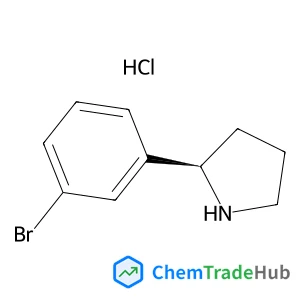
(2R)-2-(3-Bromophenyl)pyrrolidine hydrochloride (1:1)
CAS Number:
1391550-13-2
Molecular Formula:
C10H13BrClN
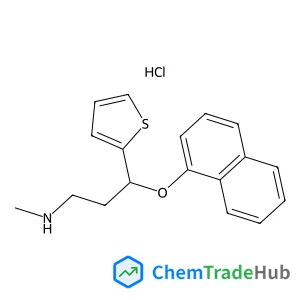
N-Methyl-3-(1-naphthyloxy)-3-(2-thienyl)-1-propanamine hydrochloride (1:1)
CAS Number:
1188266-11-6
Molecular Formula:
C18H20ClNOS
Recommended Suppliers





Disclaimer
This page provides academic journal information for reference and research purposes only. We are not affiliated with any journal publishers and do not handle publication submissions. For publication-related inquiries, please contact the respective journal publishers directly.
If you notice any inaccuracies in the information displayed, please contact us at support@chemtradehub.com. We will promptly review and address your concerns.