












Detection of cystic fibrosis transmembrane conductance regulator ΔF508 gene mutation using a paper-based nucleic acid hybridization assay and a smartphone camera
Literature Information
Publication Date
2018-05-22
DOI
10.1039/C8AN00509E
Impact Factor
4.616
Authors
Karan Malhotra, M. Omair Noor, Ulrich J. Krull
View Original
Abstract
Diagnostic technology that makes use of paper platforms in conjunction with the ubiquitous availability of digital cameras in cellular telephones and personal assistive devices offers opportunities for development of bioassays that are cost effective and widely distributed. Assays that operate effectively in aqueous solution require further development for implementation in paper substrates, overcoming issues associated with surface interactions on a matrix that offers a large surface-to-volume ratio and constraints on convective mixing. This report presents and compares two related methods for determination of oligonucleotides that serve as indicators of cystic fibrosis, differentiating between the normal wild-type sequence, and a mutant-type sequence that has a 3-base replacement. The transduction strategy operates by selective hybridization of oligonucleotide probes that are conjugated to fluorescent quantum dots, where hybridization of target sequences causes a molecular fluorophore to approach the quantum dot and become emissive through fluorescence resonance energy transfer. Detection can rely on hybridization of a target that is labelled with Cy3 fluorophore, or in the presence of an unlabelled target when a sandwich assay format is implemented with a labelled reporter oligonucleotide. Selectivity to determine the presence of mismatched sequences involves appropriate selection of nucleotide sequences to set melt temperatures, in conjunction with control of stringency conditions using formamide as a chaotrope. It was determined that both direct and sandwich assays on paper substrates are able to distinguish between wild-type and mutant-type samples.
Related Literature
Unravelling the microhydration frameworks of prototype PAH by infrared spectroscopy: naphthalene–(water)1–3
Kuntal Chatterjee, Tarun Kumar Roy, Jai Khatri, Gerhard Schwaab, Martina Havenith
2021-05-25
Paper
DOI: 10.1039/D1CP01789F
Room-temperature diffusion of metal clusters on graphene
Mohammad Zarshenas, Victor Gervilla, Davide G. Sangiovanni, Kostas Sarakinos
2021-05-24
Paper
DOI: 10.1039/D1CP00522G
Evaluation of nine condensed-phase force fields of the GROMOS, CHARMM, OPLS, AMBER, and OpenFF families against experimental cross-solvation free energies
Sadra Kashefolgheta, Shuzhe Wang, William E. Acree, Jr., Philippe H. Hünenberger
2021-04-30
Paper
DOI: 10.1039/D1CP00215E
Perspective of structural flexibility on selective inhibition towards CYP1B1 over CYP1A1 by α-naphthoflavone analogs
Ying Wang, Yupeng Zhang, Dong Wang, Zhaohu Luo, Fengjiao Zhang
2021-09-02
Paper
DOI: 10.1039/D1CP02541D
Absorption of self-propelled particles into a dense porous medium
Bing-shuang Qian, Wen-de Tian
2021-08-20
Paper
DOI: 10.1039/D1CP01234G
Thermo-osmotic pressure and resistance to mass transport in a vapor-gap membrane
Michael T. Rauter, Sondre K. Schnell, Bjørn Hafskjold, Signe Kjelstrup
2021-06-04
Paper
DOI: 10.1039/D0CP06556K
Atmospheric oxidation of fluoroalcohols initiated by ˙OH radicals in the presence of water and mineral dusts: mechanism, kinetics, and risk assessment
Feng-Yang Bai, Ming-Shuai Deng, Mei-Yan Chen, Lian Kong, Shuang Ni, Xiu-Mei Pan
2021-04-29
Paper
DOI: 10.1039/D1CP01324F
Mechanistic implications of Li–S cell function through modification of organo-sulfur cathode architectures
Lisa Djuandhi, Neeraj Sharma, Bruce C. C. Cowie, Thanh V. Nguyen, Aditya Rawal
2021-06-14
Paper
DOI: 10.1039/D1CP01838H
First principles investigations on the controversy of structural phase transitions in thorium dialuminide under pressure
Ashok K. Verma, P. Modak
2021-06-02
Paper
DOI: 10.1039/D1CP01771C
You might also like
Compound Q&A
What is the market or research trend for N-(4-Methoxybenzyl)-2-pyridinamine (CAS: 52818-63-0)?
N-(4-Methoxybenzyl)-2-pyridinamine (CAS: 52818-63-0) is increasingly being used ...
52818-63-0N-(4-Methoxybenzyl)-...
Compound Q&A
What precautions should be taken when handling Ethyl 4-(2-chlorophenyl)-1,3-thiazole-2-carboxylate (CAS: 1050507-06-6)?
When handling Ethyl 4-(2-chlorophenyl)-1,3-thiazole-2-carboxylate, appropriate p...
1050507-06-6Ethyl 4-(2-chlorophe...
Compound Q&A
What regulatory guidelines apply to diethyldiselane (CAS: 628-39-7)?
Diethyldiselane (CAS: 628-39-7) is classified under the Globally Harmonized Syst...
628-39-7Diethyldiselane
Compound Q&A
What is the market or research trend for oxocopper (CAS: 12053-18-8)?
The market for oxocopper (CAS: 12053-18-8) is primarily driven by its use in cat...
12053-18-8oxocopper; oxo-(oxoc...
Compound Q&A
What is the market or research trend for 5-{[(2-Methyl-2-propanyl)oxy]carbonyl}-5-azaspiro[2.4]heptane-7-carboxylic acid?
The market for 5-{[(2-Methyl-2-propanyl)oxy]carbonyl}-5-azaspiro[2.4]heptane-7-c...
1268519-54-55-{[(2-Methyl-2-prop...
Compound Q&A
What is 2-(1-Pyrrolidinyl)-4-pyridinamine (CAS: 35981-63-6)?
2-(1-Pyrrolidinyl)-4-pyridinamine is a chemical compound with the CAS number 359...
35981-63-62-(1-Pyrrolidinyl)-4...
Compound Q&A
What are the physical and chemical properties of 2-(3-Pyridinyl)-1-azabicyclo[2.2.2]octane (CAS: 91556-75-1)?
2-(3-Pyridinyl)-1-azabicyclo[2.2.2]octane (CAS: 91556-75-1) is a crystalline sol...
91556-75-12-(3-Pyridinyl)-1-az...
Compound Q&A
How is (S)-Alpha-allyl-proline hydrochloride (CAS: 129704-91-2) typically synthesized?
(S)-Alpha-allyl-proline hydrochloride is usually synthesized via a Wittig reacti...
129704-91-2(S)-Alpha-allyl-prol...
Compound Q&A
What is 3-Methyl-1,2-oxazole-5-carboxylic acid (CAS: 4857-42-5)?
3-Methyl-1,2-oxazole-5-carboxylic acid (CAS: 4857-42-5) is an organic compound w...
4857-42-53-Methyl-1,2-oxazole...
Compound Q&A
How is Lys-SMCC-DM1 (CAS: 1281816-04-3) typically synthesized?
Lys-SMCC-DM1 is synthesized via a multi-step process involving the coupling of S...
1281816-04-3Lys-SMCC-DM1
Source Journal
Analyst

CiteScore:
7.8
Self-citation Rate:
5.6%
Articles per Year:
653
Analyst publishes analytical and bioanalytical research that reports premier fundamental discoveries and inventions, and the applications of those discoveries, unconfined by traditional discipline barriers.
Recommended Compounds
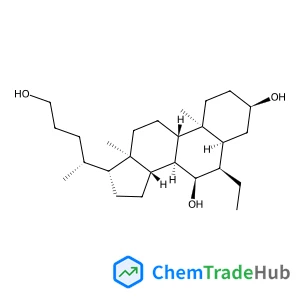
(3alpha,5beta,6alpha,7alpha)-6-Ethylcholane-3,7,24-triol
CAS Number:
1537866-49-1
Molecular Formula:
C26H46O3

Recommended Suppliers






Disclaimer
This page provides academic journal information for reference and research purposes only. We are not affiliated with any journal publishers and do not handle publication submissions. For publication-related inquiries, please contact the respective journal publishers directly.
If you notice any inaccuracies in the information displayed, please contact us at support@chemtradehub.com. We will promptly review and address your concerns.