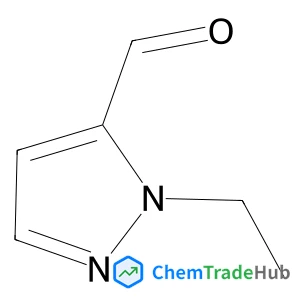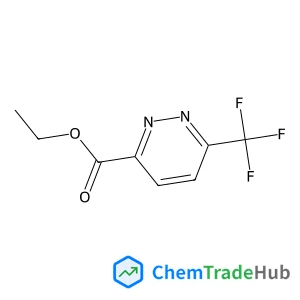
Ethyl 6-(trifluoromethyl)pyridazine-3-carboxylate
CAS Number:
1192155-06-8
Molecular Formula:
C8H7F3N2O2
Annamaria Quaranta, David J. McGarvey, Edward J. Land, Michael Brettreich, Stephan Burghardt, Hubert Schönberger, Andreas Hirsch, Najla Gharbi, Fathi Moussa, Sydney Leach, Heidi Göttinger, René V. Bensasson
The results of a laser flash photolysis investigation of a dendritic methano[60]fullerene octadeca-acid (DA) and its tert-butyl ester (DE) are reported. DE possesses photophysical properties typical of a [60]fullerene mono-adduct with a singlet oxygen quantum yield approaching unity in toluene and a triplet absorption spectrum with a maximum at 710 nm. In methanol DA also possesses properties typical of a [60]fullerene mono-adduct, but in aqueous solution its photophysical behaviour shows a degree of aggregation that is a function of pH and concentration. At pH 7.4 and higher, Coulombic repulsion between de-protonated carboxylate groups reduces the propensity to aggregation and dilute solutions (<∼10−4 M) of DA exhibit typical [60]fullerene mono-adduct behaviour, although the singlet oxygen yield of 0.75 is lower than in methanol (0.93). The rate constant for DA triplet state quenching by oxygen in water (pH 7.4) is relatively low, which reflects shielding of the hydrophobic C60 core by the dendrimer thus reducing the possibility of orbital overlap with oxygen due to restricted diffusion. Aggregation is evident from the UV-VIS absorption spectra at concentrations exceeding ∼10−4 M in water at pH 7.4, beyond which substantial positive deviations from the Beer–Lambert law are observed. In acidic solutions (pH 4.5) the degree of dissociation of the carboxylic acid groups is negligible and the lack of Coulombic repulsion between DA molecules leads to extensive aggregation, even in dilute solutions. In such solutions the singlet oxygen quantum yield is greatly reduced (∼0.13 at pH 4.5).
João Pina, J. Sérgio Seixas de Melo
DOI: 10.1039/B909113K
Daniela Künzel, Thomas Markert, Axel Groß, David M. Benoit
DOI: 10.1039/B907443K
Linda Aarts, Andries Meijerink
DOI: 10.1039/B913877C
Kaicong Cai, Chen Han, Jianping Wang
DOI: 10.1039/B910269H
Kristopher J. Elliott, Anthony Harriman, Loïc Le Pleux, Yann Pellegrin, Errol Blart, Cédric R. Mayer, Fabrice Odobel
DOI: 10.1039/B905548G
Francesco Sedona, Stefano Agnoli, Gaetano Granozzi, Giovanni Barcaro, Alessandro Fortunelli
DOI: 10.1039/B915641K
Rui Guo, Elizabeth M. Gardner, Ian R. Gould
DOI: 10.1039/B910804A
Zanyong Zhuang, Jing Zhang, Feng Huang, Yonghao Wang, Zhang Lin
DOI: 10.1039/B907967J
6-(3-Fluorophenyl)picolinic acid is generally considered safe for laboratory use...
(3R)-3-Pyrrolidinol is used in the pharmaceutical industry as a precursor for dr...
When handling (4R,5R)-4,5-Diethoxycarbonyl-2,2-dimethyldioxolane (CAS: 59779-75-...
1-(6-Chloroimidazo[1,2-b]pyridazin-3-yl)ethanone is often synthesized via a mult...
The market for N-Ethyl-3,4-dimethylbenzylamine (CAS: 39180-83-1) remains steady,...
Tert-butyl 3-(pyrrolidin-1-yl)azetidine-1-carboxylate is a chemical compound wit...
1-Bromo-3-chloro-2,4-dimethoxybenzene (CAS: 1228956-93-1) falls under the classi...
The safety of 8-Bromo-2-methyl-3,4-dihydroisoquinolin-1(2H)-one (CAS: 1368622-07...
Benzyl [(3S)-2,6-dioxo-3-piperidinyl]carbamate is generally safe when handled wi...
1-{[4-(4,4,5,5-Tetramethyl-1,3,2-dioxaborolan-2-yl)phenyl]sulfonyl}pyrrolidine s...

Physical Chemistry Chemical Physics (PCCP) is an international journal co-owned by 19 physical chemistry and physics societies from around the world. This journal publishes original, cutting-edge research in physical chemistry, chemical physics and biophysical chemistry. To be suitable for publication in PCCP, articles must include significant innovation and/or insight into physical chemistry; this is the most important criterion that reviewers and Editors will judge against when evaluating submissions. The journal has a broad scope and welcomes contributions spanning experiment, theory, computation and data science. Topical coverage includes spectroscopy, dynamics, kinetics, statistical mechanics, thermodynamics, electrochemistry, catalysis, surface science, quantum mechanics, quantum computing and machine learning. Interdisciplinary research areas such as polymers and soft matter, materials, nanoscience, energy, surfaces/interfaces, and biophysical chemistry are welcomed if they demonstrate significant innovation and/or insight into physical chemistry. Joined experimental/theoretical studies are particularly appreciated when complementary and based on up-to-date approaches.